10 Fascinating Facts About the Parthenon You Never Knew
I. Introduction
The Parthenon, an enduring symbol of ancient Greece, stands majestically on the Acropolis of Athens. This architectural masterpiece has captivated the hearts and minds of people for centuries. Constructed in the 5th century BC, it was dedicated to Athena, the goddess of wisdom and warfare, who was also the patroness of the city of Athens. The Parthenon represents the zenith of ancient Greek art and architecture, showcasing the values and beliefs of Athenian society.
As a significant cultural and historical monument, the Parthenon has played a pivotal role in shaping the identity of Athens and, by extension, Western civilization. Its beauty and grandeur continue to inspire admiration and scholarly study, making it one of the most important monuments in the world.
II. The Architectural Marvel
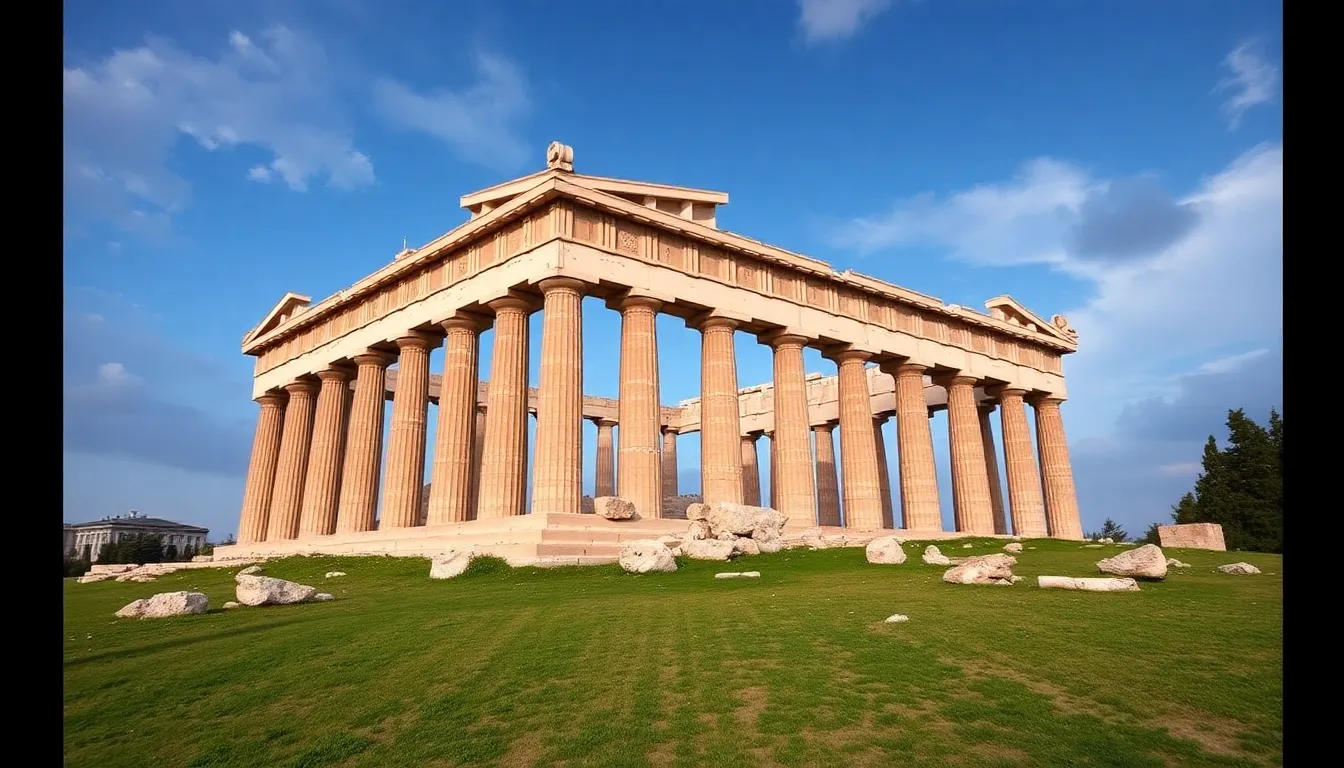
The design and construction techniques of the Parthenon are nothing short of revolutionary. Built primarily from Pentelic marble, the Parthenon measures approximately 69.5 meters in length and 30.9 meters in width. Its dimensions were carefully calculated to create an illusion of perfection, with slight curvature in the columns and steps to counteract optical illusions.
The Parthenon is a prime example of the Doric order, one of the three classical orders of ancient Greek architecture. This style is characterized by its simplicity and strength, featuring sturdy columns with fluted shafts and plain capitals. The Doric order’s significance lies in its representation of the values of strength and masculinity, mirroring the ideals of Athenian society.
Moreover, the Parthenon’s unique design incorporates several innovative features:
- Optical Refinements: Subtle curvature in the columns and the stylobate (the upper step of the temple) creates an illusion of straightness.
- Proportional Harmony: The temple adheres to strict mathematical ratios, contributing to its aesthetic appeal.
- Use of Entasis: Columns are slightly bulged, which enhances their appearance of strength and stability.
III. A Temple Dedicated to Athena
Athena was a central figure in Greek mythology, revered for her wisdom, courage, and strategic warfare. She was considered the protector of the city of Athens, and the Parthenon served as her principal temple. The term “Parthenon” itself translates to “of the virgin,” reflecting Athena’s status as a parthenos (virgin).
The temple housed a massive statue of Athena Parthenos, crafted by the renowned sculptor Phidias. This statue, made of gold and ivory, stood approximately 12 meters tall and was a stunning representation of the goddess. The Parthenon not only served as a religious site but also as a treasury and a symbol of Athenian wealth and power.
IV. The Parthenon’s Sculptural Masterpieces
The Parthenon is adorned with exquisite sculptures that exemplify the height of classical art. The Parthenon Marbles, also known as the Elgin Marbles, include a series of sculptures that once decorated the temple. These masterpieces include:
- The Frieze: A continuous band of relief sculptures depicting the Panathenaic procession, a festival held in honor of Athena.
- The Pediments: The triangular sections at either end of the temple, featuring scenes from mythology, including the birth of Athena and the contest between Athena and Poseidon.
- The Akroteria: Statues placed at the apex of the roof, which depicted various deities and mythological figures.
These works not only showcase incredible artistic skill but also convey important cultural narratives, reflecting the values and beliefs of ancient Athens.
V. Historical Significance and Symbolism
The Parthenon is not merely an architectural wonder; it stands as a potent symbol of democracy and Athenian power. Built during the height of the Athenian empire, it represented the city’s political and cultural dominance in the Greek world. The Parthenon served as a reminder of the achievements and ideals of Athenian democracy, highlighting the importance of civic pride and public participation.
Moreover, the Parthenon has transcended its original purpose to become a symbol of Western civilization. It represents the ideals of beauty, harmony, and rationality that have influenced art and architecture throughout history.
VI. The Parthenon Through the Ages
The history of the Parthenon is a tale of transformation and resilience. Throughout the centuries, it has undergone numerous changes in function and structure:
- Temple: Originally built as a temple to Athena, it served as a place of worship and a treasury.
- Christian Church: In the 6th century AD, the Parthenon was converted into a Christian church dedicated to the Virgin Mary.
- Islamic Mosque: During the Ottoman period, it was transformed into a mosque, complete with minarets.
- War Damage: The Parthenon suffered significant damage during the Venetian siege in 1687 when it was used as a gunpowder magazine.
Each of these transformations reflects the changing cultural and religious landscape of Greece, showcasing the Parthenon’s enduring significance through the ages.
VII. Restoration Efforts and Challenges
In recent decades, extensive restoration efforts have been undertaken to preserve the Parthenon for future generations. These projects aim to stabilize the structure, restore damaged sections, and protect it from environmental factors. Some notable restoration efforts include:
- Cleaning and Restoration: The removal of pollutants and restoration of the original marble surfaces.
- Structural Reinforcement: Implementation of modern engineering techniques to ensure stability.
- Research and Documentation: Ongoing studies to better understand the original construction techniques and materials used.
However, these restoration efforts face numerous challenges, including funding constraints, the need for specialized expertise, and the delicate balance between preservation and modernization.
VIII. Conclusion
The Parthenon is more than just a remarkable piece of architecture; it is a testament to the brilliance of ancient Greek civilization. From its stunning design and rich historical significance to its role as a symbol of democracy, the Parthenon continues to inspire awe and admiration. As we reflect on its enduring legacy, we are invited to explore the depths of its history and appreciate the artistry that has stood the test of time.
For those interested in delving deeper into the history and architecture of the Parthenon, a wealth of resources and scholarly works await, ensuring that the story of this magnificent monument continues to be told.