The Minotaur and the Nature of Evil in Greek Mythology
I. Introduction
The myth of the Minotaur is one of the most captivating tales from Greek mythology, embodying themes of monstrosity, moral complexity, and the struggle between good and evil. The story revolves around a half-man, half-bull creature that dwells within an elaborate maze known as the Labyrinth, designed to contain the beast and harbor the darkness it represents.
Evil is a pervasive theme in Greek mythology, often personified through various deities and creatures that challenge heroes and test their virtues. This article aims to explore the origins of the Minotaur, its significance as a representation of evil, and the broader implications of its myth in understanding human nature and morality.
II. The Origins of the Minotaur
A. The story of King Minos and the Labyrinth
The origins of the Minotaur can be traced back to King Minos of Crete, who sought to establish his dominance over the seas. To prove his worthiness as king, he prayed to Poseidon to send him a magnificent bull as a sign of favor. When Poseidon complied, Minos failed to sacrifice the bull as promised, leading to dire consequences.
B. The role of Pasiphaë and the curse of Aphrodite
As punishment for Minos’s betrayal, Poseidon cursed his wife, Pasiphaë, to fall in love with the very bull that Minos had spared. This unnatural desire resulted in the birth of the Minotaur, a creature that symbolized the chaos arising from disobedience and lust. The Minotaur, born of this curse, was not merely a monster but a manifestation of the consequences of human folly.
C. Symbolism of the Minotaur’s birth
The birth of the Minotaur serves as a potent symbol of the intertwining of human desires and the monstrous outcomes that can arise from them. It reflects the idea that within every individual lies the potential for both greatness and monstrosity, a duality that is essential to the understanding of evil in human nature.
III. The Minotaur as a Representation of Evil
A. Characteristics of the Minotaur as a monster
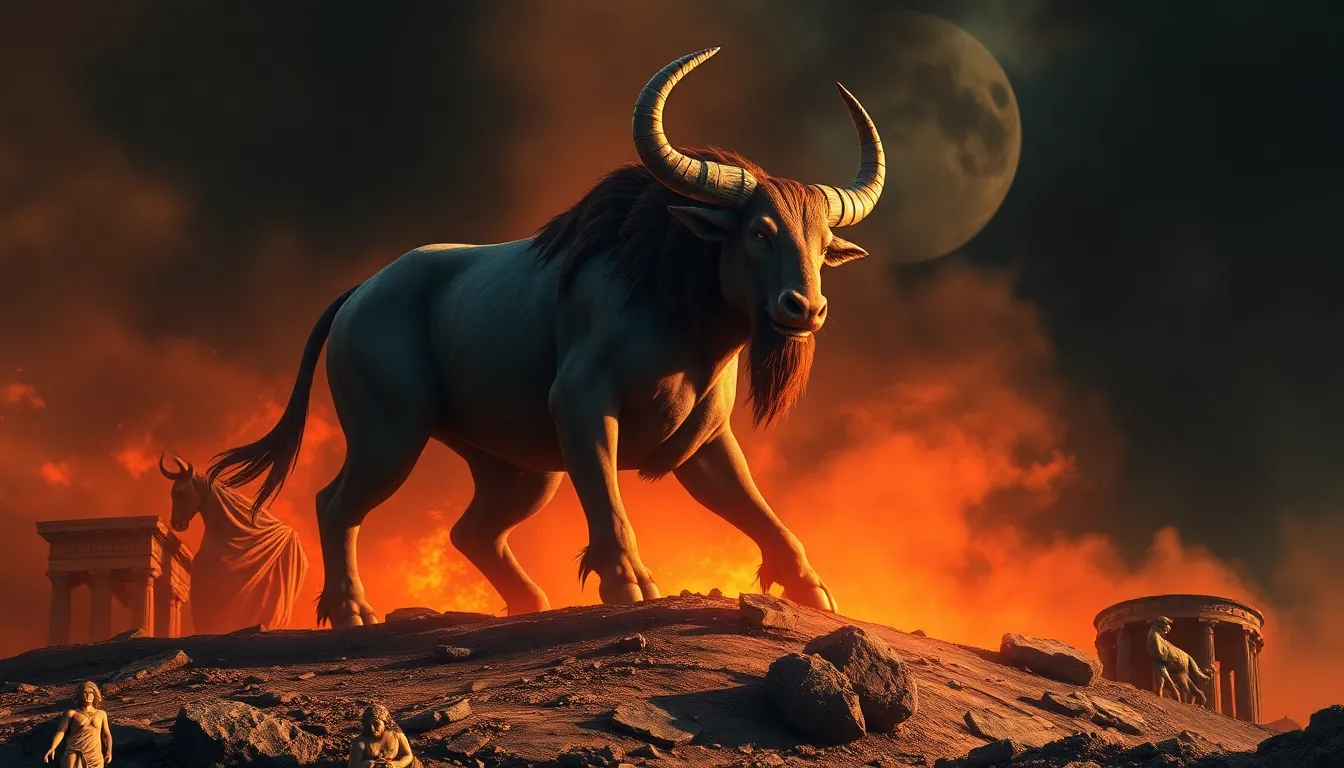
The Minotaur is often described as a fearsome monster, possessing the body of a man and the head of a bull. This grotesque form embodies the fear of the unknown and the chaotic aspects of nature that lie outside the bounds of civilization. The creature’s insatiable hunger for human flesh further emphasizes its role as a harbinger of death and destruction.
B. The duality of human and beast
One of the most compelling aspects of the Minotaur is its embodiment of duality. The creature represents the conflict between civilization and savagery, intellect and instinct. This duality speaks to the broader themes of Greek mythology, where heroes often grapple with their own inner demons and the darker sides of their nature.
C. The Minotaur’s role as an antagonist in the myth
As an antagonist, the Minotaur serves as a formidable obstacle for those who seek to confront it. Its existence prompts a moral inquiry into the nature of evil, leading to questions about fate, free will, and the consequences of one’s actions. The Minotaur stands as a reminder of the darkness that resides within every individual and the potential for evil that can emerge when one succumbs to base desires.
IV. The Labyrinth: A Symbol of Moral Complexity
A. The design and purpose of the Labyrinth
Designed by the architect Daedalus, the Labyrinth was a complex maze intended to contain the Minotaur. Its intricate structure symbolizes the moral complexities of human existence, where the path to understanding and righteousness is often fraught with confusion and entrapment. Just as one can become lost in the Labyrinth, individuals can find themselves ensnared by their own moral dilemmas.
B. Themes of entrapment and choice
The Labyrinth represents not only physical entrapment but also the psychological and moral choices individuals must navigate in life. The winding paths reflect the often convoluted process of making ethical decisions, where the distinction between right and wrong becomes obscured.
C. How the Labyrinth reflects the nature of evil
In this way, the Labyrinth mirrors the nature of evil, which is rarely straightforward. It challenges heroes like Theseus to confront their own fears and uncertainties, illustrating that the journey to confront evil often involves grappling with the darkest parts of oneself.
V. Heroes and the Confrontation with Evil
A. Theseus as the hero figure
Theseus, the Athenian hero, emerges as the figure tasked with confronting the Minotaur. His journey symbolizes the struggle between good and evil, as he must navigate the treacherous Labyrinth while also facing his own inner conflicts. Theseus embodies the virtues of courage, intelligence, and sacrifice, essential qualities for overcoming the monstrous evil represented by the Minotaur.
B. The journey of facing the Minotaur
Theseus’s descent into the Labyrinth is not just a physical journey but also a metaphorical one. Armed with a ball of thread given to him by Ariadne, he represents the human quest for clarity amidst chaos. This thread serves as a guide, symbolizing hope and the possibility of finding one’s way through moral ambiguity.
C. The significance of courage and sacrifice in overcoming evil
The act of confronting the Minotaur requires immense bravery, as it represents the struggle against not only external evil but also the internal battles that each individual faces. The Minotaur’s defeat signifies the triumph of light over darkness, emphasizing the importance of courage and sacrifice in the fight against evil.
VI. The Minotaur in Cultural Interpretation
A. Representation in art and literature
The Minotaur has captivated artists and writers throughout history, serving as a powerful symbol of the struggle against inner demons and societal evils. From ancient pottery depicting the creature’s defeat to modern literature exploring its psychological significance, the Minotaur’s legacy endures.
B. The Minotaur in modern adaptations
In contemporary culture, the Minotaur has appeared in various forms, from novels to films, often reinterpreted to reflect modern anxieties about identity, monstrosity, and morality. These adaptations continue to explore themes of duality, showcasing the Minotaur as a multifaceted symbol of human conflict.
C. Changing perceptions of evil through the Minotaur’s story
The evolution of the Minotaur’s representation in culture mirrors changing societal perceptions of evil. Where once the Minotaur was viewed simply as a monster to be vanquished, modern interpretations often delve into the complexities of its existence, challenging audiences to consider the roots of evil and the circumstances that give rise to monstrosity.
VII. The Minotaur and Human Psychology
A. The Minotaur as a metaphor for inner turmoil
The Minotaur’s existence can be seen as a metaphor for the inner struggles that individuals face. It embodies the darker aspects of human psychology, including anger, fear, and the capacity for violence. This duality invites reflection on the nature of evil within oneself and the societal pressures that can contribute to its manifestation.
B. Exploring the nature of evil within oneself
By confronting the Minotaur, individuals are urged to confront their own inner demons. This psychological interpretation places the Minotaur not just as an external foe but as a reflection of the chaos and darkness that exists within humanity, prompting discussions about morality, ethics, and personal responsibility.
C. The relevance of the Minotaur in contemporary discussions of morality
In today’s society, the Minotaur’s story remains relevant as it provokes critical thought about the nature of evil and the complexities of human behavior. Discussions surrounding mental health, societal influence, and the capacity for violence resonate with the themes presented in the myth of the Minotaur, making it a powerful narrative for understanding modern morality.
VIII. Conclusion
The myth of the Minotaur offers profound insights into the nature of evil, illustrating how monstrosity can arise from human desires and societal failures. Through the lens of this myth, we explore the duality within ourselves and the moral complexities of our choices. The enduring legacy of the Minotaur serves as a reminder of the fine line between civilization and savagery, urging us to confront our inner beasts.
As we reflect on the nature of evil in modern society