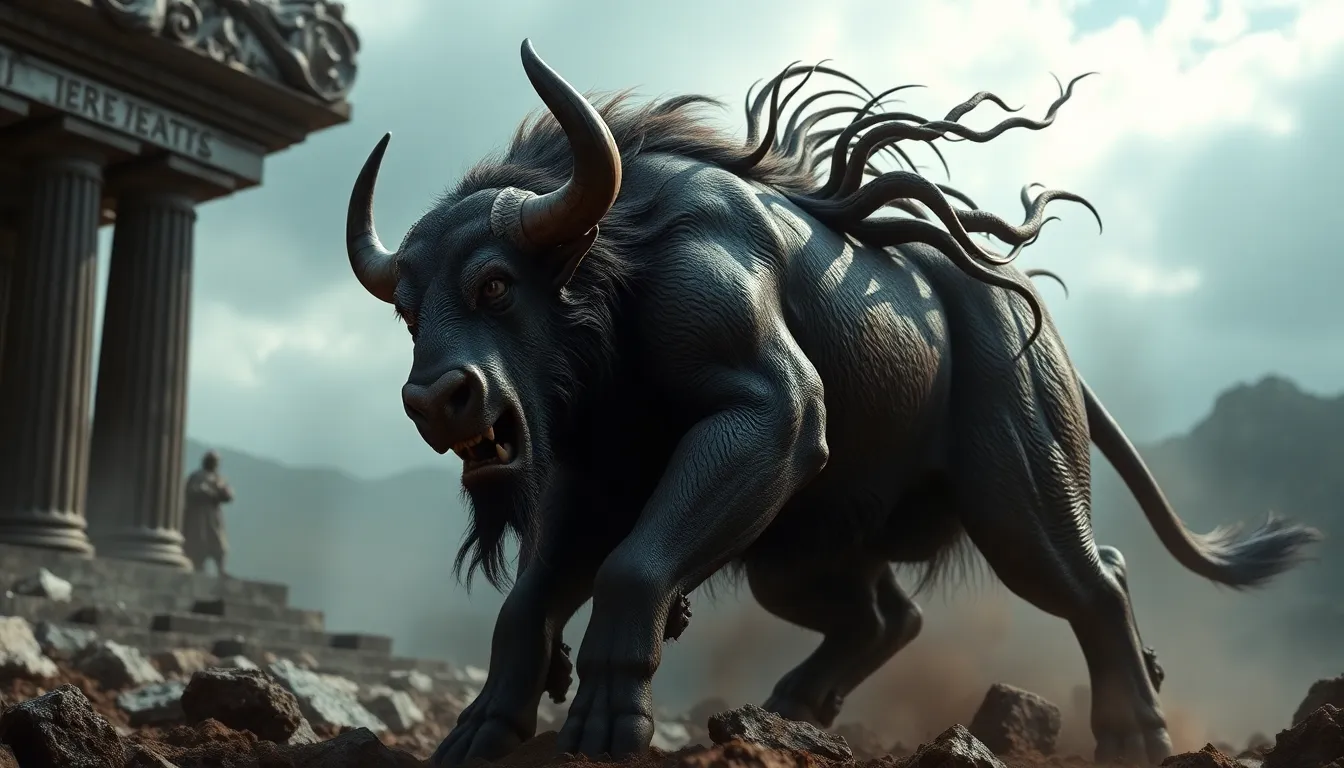
The Minotaur: A Study of Power Dynamics in Greek Myths
I. Introduction
The myth of the Minotaur is one of the most compelling tales from Greek mythology, encapsulating themes of power, control, and the struggle against fate. The story revolves around a creature that is part man and part bull, born from the unnatural union between Pasiphaë, the wife of King Minos of Crete, and a majestic bull. This narrative serves as a window into the intricate power dynamics that permeate Greek mythology, reflecting societal structures and human relationships.
This article aims to explore the origins of the Minotaur, the symbolism of the Labyrinth, the theme of sacrifice, and the heroism of Theseus, as well as the gender dynamics present in the myth. Through this exploration, we will uncover the enduring significance of the Minotaur myth in understanding the complexities of power and identity in both ancient and modern contexts.
II. The Origins of the Minotaur
A. The birth of the Minotaur: A tale of desire and punishment
The origins of the Minotaur are rooted in a tragic tale of desire and divine retribution. King Minos, wanting to prove his legitimacy as a ruler, prayed to Poseidon for a magnificent bull to sacrifice. When the bull arrived, however, Minos was captivated by its beauty and kept it, sacrificing a lesser bull instead. In retaliation, Poseidon cursed Pasiphaë to fall in love with the bull, leading to the birth of the Minotaur, a creature that symbolized the unnatural consequences of human desire and divine punishment.
B. Key figures: Pasiphaë, King Minos, and Daedalus
Several key figures play crucial roles in the Minotaur myth:
- Pasiphaë: The wife of Minos, whose forbidden love for the bull leads to the birth of the Minotaur.
- King Minos: The ruler of Crete, who struggles with the consequences of his actions and the curse placed upon his family.
- Daedalus: The master craftsman tasked with constructing the Labyrinth to contain the Minotaur, symbolizing human ingenuity and the darker aspects of creation.
C. Symbolism of the Minotaur as a hybrid creature
The Minotaur, as a hybrid being, embodies the clash between civilization and primal instincts. His existence challenges the boundaries of humanity, representing the consequences of unchecked desire and the chaos that can ensue when nature and civilization collide. In many ways, the Minotaur serves as a metaphor for the darker aspects of human nature lurking beneath the surface of society.
III. The Labyrinth: A Metaphor for Control and Entrapment
A. The construction of the Labyrinth by Daedalus
To contain the Minotaur, Daedalus designed the Labyrinth, an intricate maze that was nearly impossible to escape. This construction not only served a practical purpose but also represented the elaborate systems of control that societies impose on individuals. The Labyrinth stands as a testament to human creativity and the lengths to which one will go to maintain power and control over that which is perceived as a threat.
B. The Labyrinth as a representation of power structures
The Labyrinth can be seen as an allegory for the power structures within ancient Greek society. It reflects how individuals often find themselves trapped within societal expectations and norms, much like the Minotaur trapped within the maze. The complexity of the Labyrinth symbolizes the challenges that one faces when trying to navigate through the intricacies of power dynamics.
C. The psychological implications of entrapment in Greek myths
Entrapment is a recurring theme in Greek mythology, often representing the struggle against fate and the quest for autonomy. The psychological implications of such entrapment speak to the human condition, illustrating the fear of losing control and the desire for freedom. Through the lens of the Minotaur myth, we can explore how these themes resonate with the struggles of individuals in both ancient and modern societies.
IV. The Role of Sacrifice in the Power Dynamics
A. The tribute of Athenian youths to the Minotaur
As part of a peace treaty after a conflict with Athens, King Minos demanded the tribute of seven Athenian youths and seven maidens to be sent to Crete, where they would meet their fate in the Labyrinth. This sacrifice illustrates the theme of power and submission, where the lives of the innocent are bartered to appease a ruler’s wrath.
B. Themes of sacrifice and submission in Greek society
The act of sacrifice in this narrative mirrors the broader themes of submission and control that permeate Greek society. It reflects how those in power often exploit the vulnerable, forcing them into situations of peril for the sake of maintaining order and dominance.
C. The moral implications of power and victimization
The Minotaur myth forces us to confront the moral implications of power dynamics. It raises questions about the ethics of sacrifice and the cost of power, urging us to reflect on how those in authority can manipulate the lives of others for their own gain. The victims in this story, the Athenian youths, symbolize the collateral damage of political machinations and the often-unseen consequences of power struggles.
V. Theseus: The Hero and the Challenge to Power
A. The character of Theseus and his motivations
Theseus emerges as the hero of the story, driven by a desire to save the Athenian youths and challenge the oppressive rule of King Minos. His motivations reflect the archetypal hero’s journey, representing the quest for justice and the defiance of tyrannical power.
B. The journey into the Labyrinth: A quest for agency
As Theseus ventures into the Labyrinth, he embodies the struggle for agency in a world dominated by forces beyond his control. Armed with a sword and a ball of thread provided by Ariadne, he symbolizes the hope of liberation against the entrapment represented by the Minotaur.
C. The defeat of the Minotaur as a subversion of power
The defeat of the Minotaur stands as a powerful subversion of the established order. It signifies the triumph of human agency over monstrous tyranny, illustrating that even the most formidable powers can be challenged and overcome. Theseus’s victory serves as an inspiration for those who seek to resist oppression and reclaim their autonomy.
VI. Gender Dynamics and the Minotaur Myth
A. The roles of female characters: Ariadne and Pasiphaë
The Minotaur myth is rich with female characters who play pivotal roles in the narrative. Ariadne, the daughter of King Minos, defies her father’s authority by aiding Theseus, while Pasiphaë represents the consequences of desire and the complexity of female agency in a patriarchal society.
B. Analysis of masculinity and femininity in the myth
The juxtaposition of masculinity and femininity in the myth reveals the dynamics of power and vulnerability. While Theseus embodies the heroic ideal, Pasiphaë’s tragic fate illustrates the dangers faced by women who challenge societal norms. This interplay invites us to consider how gender influences power relations within the context of the myth.
C. The intersection of power and gender in Greek culture
The Minotaur myth ultimately reflects the intersection of power and gender in Greek culture, highlighting how societal structures shape the experiences of both men and women. The narrative serves as a critique of the patriarchy, revealing the complexities and contradictions inherent in the roles assigned to individuals based on their gender.
VII. The Legacy of the Minotaur in Modern Interpretations
A. The Minotaur in literature, art, and popular culture
The Minotaur continues to captivate modern audiences, appearing in various forms of literature, art, and popular culture. From novels and plays to films and video games, the myth has been reinterpreted and adapted to reflect contemporary issues and themes.
B. Contemporary themes of power and identity in retellings
Recent retellings of the Minotaur story often explore themes of power, identity, and the struggle for agency. These narratives provide insight into the human experience, reflecting modern anxieties about control, conformity, and the search for self in a complex world.
C. The Minotaur as a symbol of societal fears and conflicts
The Minotaur has also become a symbol of societal fears and