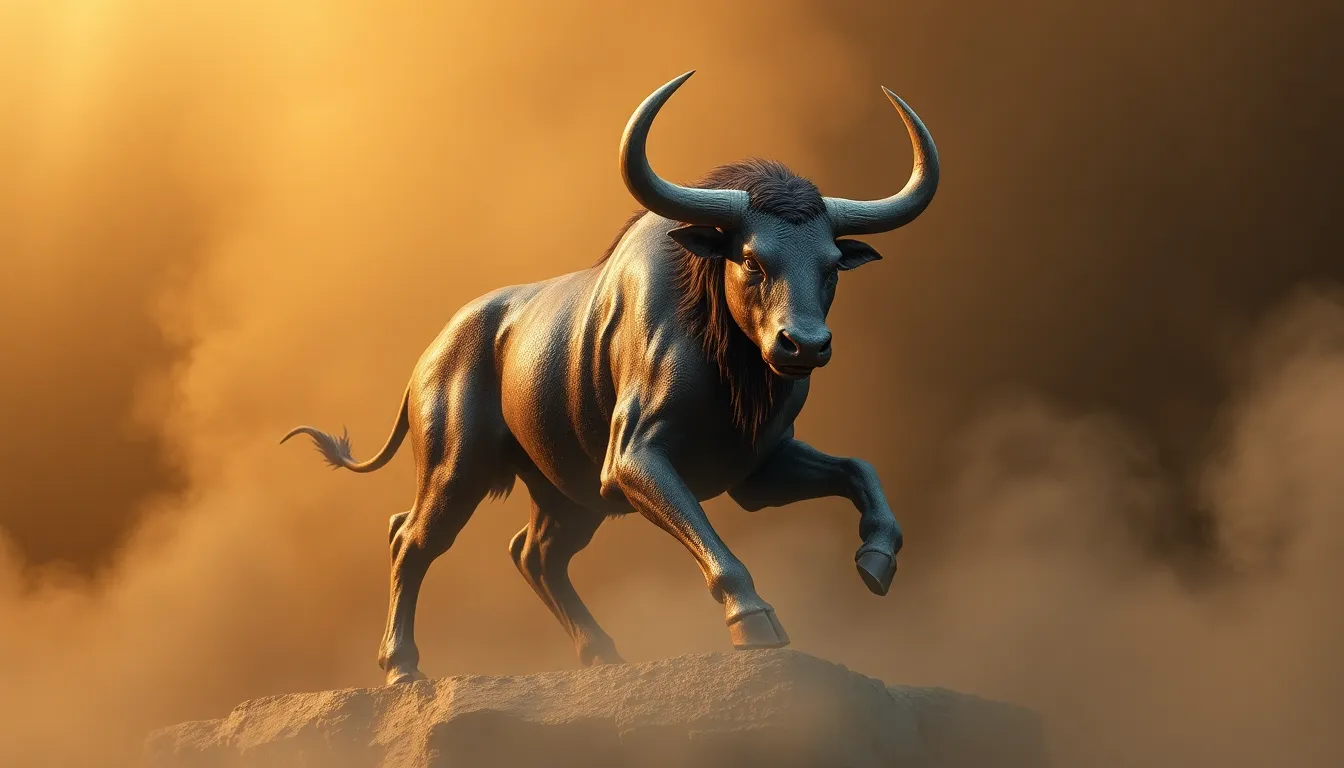
The Minotaur and Its Place in the Greek Pantheon
I. Introduction
The Minotaur is one of the most intriguing figures in Greek mythology, a creature that embodies both human and beastly traits. With the body of a man and the head of a bull, the Minotaur’s legend is steeped in themes of power, sacrifice, and the complexities of existence.
In Greek mythology, the Minotaur represents the darker aspects of human nature and the consequences of hubris and desire. This article aims to explore the origins of the Minotaur, its narratives, symbolism, and significance within the broader context of Greek mythology.
II. Origins of the Minotaur
A. Birth of the Minotaur: The curse of Pasiphaë
The story of the Minotaur begins with Pasiphaë, the wife of King Minos of Crete. Pasiphaë was cursed by the god Poseidon to fall in love with a beautiful bull as punishment for Minos’ dishonesty in a sacrifice. Her unnatural desire led to the creation of the Minotaur, a grotesque offspring that was half-man, half-bull.
B. The role of King Minos and the Labyrinth
To hide the shame of the Minotaur, King Minos commissioned the architect Daedalus to build the Labyrinth, a complex maze designed to contain the beast. The Labyrinth was so intricate that once inside, no one could find their way out. Minos then used the Minotaur to exact revenge on Athens, demanding tribute in the form of young men and women to be sacrificed to the creature.
C. Symbolism of the Minotaur in ancient Greek culture
The Minotaur symbolizes the consequences of unchecked desire and the brutality of human nature. It reflects the darker side of humanity and serves as a reminder of the dangers that lurk within. In ancient Greek culture, the Minotaur also represented the conflict between civilization and savagery.
III. The Minotaur in Mythological Narratives
A. The story of Theseus and the Minotaur
The most famous narrative involving the Minotaur is the tale of Theseus, the hero who volunteered to be sent into the Labyrinth. Armed with courage and the help of Princess Ariadne, who provided him with a ball of thread to navigate the maze, Theseus confronted the Minotaur and ultimately killed the beast, symbolizing the triumph of order over chaos.
B. The significance of Ariadne’s thread
Ariadne’s thread is a powerful symbol of guidance and ingenuity. It represents the resourcefulness needed to navigate the complexities of life and the journey toward self-discovery. By following the thread, Theseus not only defeats the Minotaur but also finds his way back, signifying the importance of knowledge and support in overcoming challenges.
C. Themes of heroism and sacrifice in the tale
The story of Theseus and the Minotaur is rich with themes of heroism, sacrifice, and the battle between good and evil. Theseus embodies the archetypal hero who confronts fear and danger for the greater good, and his victory over the Minotaur represents the triumph of civilization over barbarism.
IV. The Minotaur’s Symbolic Representations
A. Interpretations of the Minotaur as a metaphor
The Minotaur can be interpreted as a metaphor for the duality of human nature—the struggle between our primal instincts and our civilized selves. It highlights the internal conflicts that arise from our desires and urges.
B. The duality of man and beast
The Minotaur serves as a representation of the beast within humanity. It reflects the idea that within each person lies a mixture of civilized behavior and primal instincts, suggesting a continuous battle between the two.
C. The Minotaur as a representation of human fears and desires
The Minotaur embodies human fears, particularly the fear of losing control to one’s baser instincts. It also represents desires that can lead to destruction, serving as a cautionary tale about the consequences of unchecked passions.
V. The Minotaur’s Place in the Greek Pantheon
A. Comparison with other mythological creatures
In the pantheon of Greek mythology, the Minotaur stands alongside other hybrid creatures, such as the Centaur and the Chimera. Each of these beings symbolizes the blend of human and animal traits, representing different aspects of the human experience.
B. The Minotaur’s connections to gods and heroes
The Minotaur’s story is intertwined with various gods and heroes, particularly Poseidon, who instigated the curse that led to its birth, and Theseus, who defeated the creature. This connection highlights the interplay between divine influence and human action in Greek mythology.
C. The Minotaur’s status in the hierarchy of mythological beings
While the Minotaur may not be a god, its formidable presence places it among significant mythological beings. It serves as a reminder of the consequences of divine meddling in human affairs and the resulting chaos that can ensue.
VI. Artistic Representations of the Minotaur
A. The Minotaur in ancient art and architecture
The Minotaur has been a popular subject in ancient Greek art, often depicted in pottery and sculpture. These representations capture the creature’s terrifying nature and the drama surrounding its myth.
B. Modern interpretations in literature and film
In modern storytelling, the Minotaur continues to inspire various interpretations. From novels to films, the creature is often reimagined, symbolizing the struggle between humanity and its darker impulses.
C. The enduring legacy of the Minotaur in popular culture
The Minotaur’s legacy persists in contemporary culture, serving as a powerful symbol in literature, art, and psychology. Its archetypal nature allows it to resonate with audiences across generations.
VII. The Minotaur in Modern Context
A. Psychological interpretations and relevance today
Psychologically, the Minotaur represents the inner conflicts we face, particularly regarding our fears and desires. The labyrinth serves as a metaphor for the complexities of the human mind, where individuals navigate their thoughts and emotions.
B. The Minotaur as a symbol in contemporary discourse
In contemporary discussions, the Minotaur often appears as a symbol of societal issues, such as the struggle against oppression and the fight for self-identity. It invites reflection on personal and cultural battles.
C. Influence on modern storytelling and character archetypes
The Minotaur has influenced countless narratives, serving as a character archetype that embodies conflict, transformation, and the quest for understanding. Its story encourages exploration of duality and the human condition.
VIII. Conclusion
The Minotaur holds a significant place in Greek mythology, representing the intersection of human desires and fears. Its story illustrates timeless themes of heroism, sacrifice, and the struggle between order and chaos.
As we reflect on the Minotaur’s legacy, it is clear that its influence extends far beyond ancient Greece, captivating our imaginations and challenging us to confront our inner beasts. The enduring fascination with the Minotaur reminds us of the complexities of the human experience and the narratives that shape our understanding of ourselves.