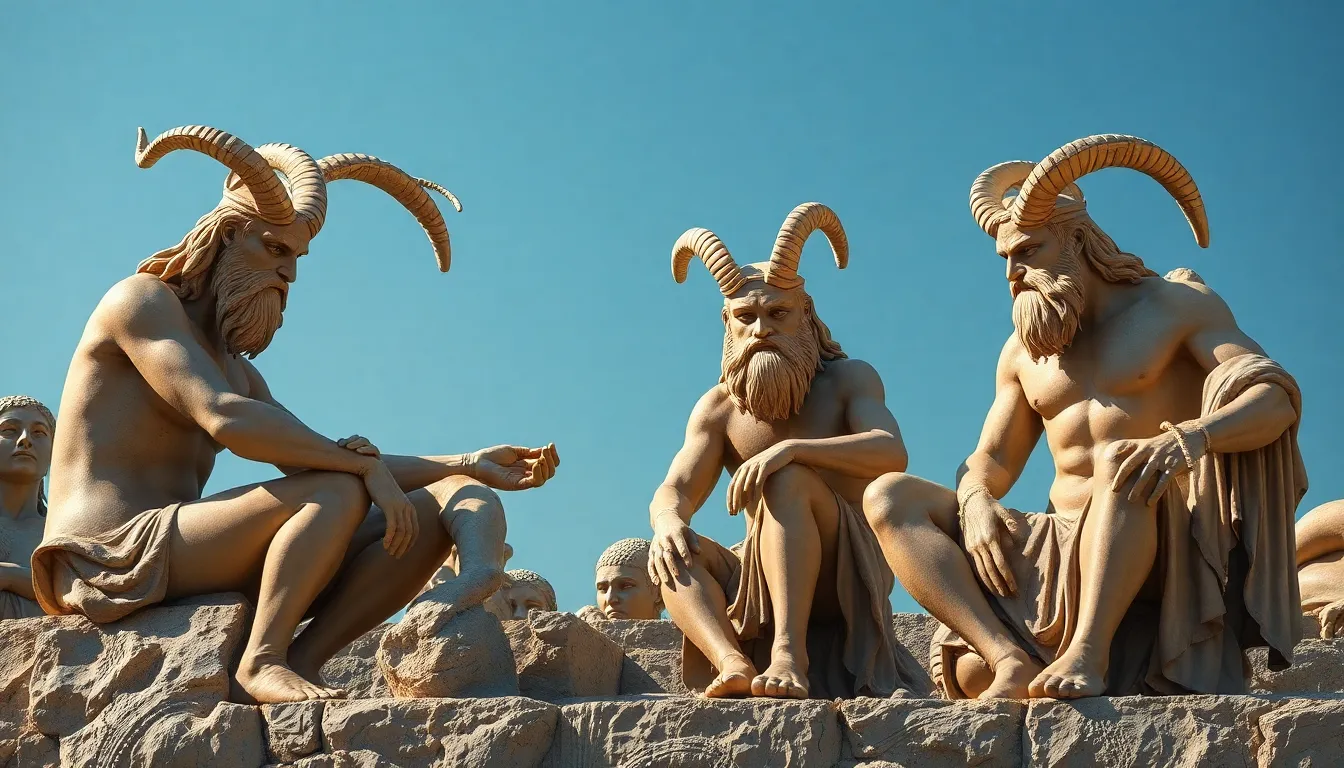
Satyrs and the Concept of Masculinity in Ancient Greece
I. Introduction
Satyrs are fascinating figures in Greek mythology, representing a blend of human and animal traits, often depicted with pointed ears, tails, and a penchant for revelry. These creatures embody a unique aspect of masculinity that was both celebrated and critiqued in ancient Greek culture. Understanding Satyrs is crucial for grasping the complexities of masculinity as it was perceived during this period.
In ancient Greece, masculinity was not merely a biological fact; it was a social construct imbued with expectations, behaviors, and ideals. The purpose of this article is to explore the intricate relationship between Satyrs and the concept of masculinity, illuminating how these mythological beings reflect the cultural values and tensions of their time.
II. The Role of Satyrs in Greek Mythology
A. Characteristics and appearance of Satyrs
Satyrs are typically portrayed as half-human, half-goat beings, characterized by their animalistic features and exuberant personalities. They are often depicted with:
- Short, stocky builds
- Pointed ears and animalistic faces
- Long, curling horns
- A fondness for wine, music, and dance
These traits combine to create a distinct representation of masculinity that is both wild and playful.
B. Mythological stories featuring Satyrs
Satyrs appear in various mythological tales, often associated with themes of indulgence and chaos. One notable story is their involvement in the retinue of Dionysus, the god of wine and ecstasy, where they engage in wild celebrations and festivities.
In another tale, the Satyr Marsyas challenges Apollo to a musical contest, showcasing their artistic abilities as well as their hubris, which ultimately leads to Marsyas’s tragic downfall.
C. Satyrs as companions of Dionysus
As companions of Dionysus, Satyrs serve a critical role in the god’s mythology. They are often seen participating in the Bacchanalia—orgiastic festivals celebrating wine and fertility. Through their association with Dionysus, Satyrs highlight the duality of masculinity, embodying both the joyous and destructive aspects of male behavior.
III. The Symbolism of Satyrs
A. Satyrs as representations of primal instincts
Satyrs symbolize the primal, instinctual side of humanity. They represent unrestrained desires, particularly those related to:
- Sexuality
- Hedonism
- Nature
This connection to primal instincts reflects a more chaotic form of masculinity, one that contrasts with the rational ideals upheld by other male figures in mythology.
B. Their connection to fertility and nature
In many myths, Satyrs are associated with fertility, representing the virility of nature and the life force inherent in the natural world. Their close ties to the wilderness symbolize a masculinity that is deeply connected to the earth and its cycles, often celebrating life but also highlighting the potential for excess and disorder.
C. Contrast between civilized and wild aspects of masculinity
The portrayal of Satyrs also serves as a contrast to the more ‘civilized’ aspects of masculinity represented by gods such as Apollo or heroic figures like Heracles. While the latter are often depicted as rational, disciplined, and heroic, Satyrs embody the wild, untamed side of male nature, challenging the societal expectations of masculinity.
IV. Satyrs and the Male Archetype
A. Comparison with other male figures in Greek mythology
When compared to other male archetypes, Satyrs stand out for their embodiment of excess and hedonism. While figures like Odysseus represent cunning and strategic thinking, Satyrs are unrestrained, seeking pleasure and revelry above all else.
B. Satyrs as embodiments of hedonism and excess
Satyrs epitomize the idea of living for the moment, often indulging in wine, music, and physical pleasures. This portrayal raises questions about the limits of masculinity in ancient society and the potential consequences of unchecked desires.
C. The balance between rationality and instinct
The tension between rationality and instinct is a central theme in the representation of Satyrs. Their wild nature serves as a foil to the more rational heroes of mythology, suggesting that a balance between these forces is essential for a complete understanding of masculinity.
V. Satyrs in Art and Literature
A. Depictions of Satyrs in ancient Greek art
Satyrs were popular subjects in ancient Greek art, often depicted in pottery, sculptures, and frescoes. These artworks typically highlight their playful and festive nature, showcasing scenes of revelry and dance.
B. Literary references to Satyrs in plays and poetry
Literature from ancient Greece also features Satyrs prominently. Playwrights such as Aristophanes incorporated Satyrs into their works, using them to explore themes of excess, sexuality, and the absurdities of human behavior.
C. Interpretation of Satyrs in modern adaptations
In modern interpretations, Satyrs continue to capture the imagination, often reimagined in literature, film, and art as symbols of freedom and the untamed aspects of human nature. Their legacy persists in contemporary discussions about masculinity and identity.
VI. The Reception of Satyrs and Masculinity in Ancient Greek Society
A. Social attitudes toward masculinity and male behavior
Ancient Greek society had complex views on masculinity, often celebrating the heroic and rational while simultaneously acknowledging the value of the primal and instinctual. Satyrs, as embodiments of the latter, reflect societal tensions regarding male behavior.
B. Satyrs as a reflection of societal norms and values
Satyrs can be seen as a mirror to societal norms, representing both the celebration of masculinity and the dangers of excess. Their role in rituals and celebrations underscores the importance of balance in the expression of male identity.
C. The role of Satyrs in rituals and festivals
In festivals dedicated to Dionysus, Satyrs played a crucial role, participating in rites that blurred the lines between civilization and chaos. These events exemplified the cultural acceptance of wild masculinity while also serving as a cautionary reminder of its potential pitfalls.
VII. Critiques and Reinterpretations of Satirical Masculinity
A. Analysis of Satyrs in contemporary discourse
In contemporary discourse, Satyrs are often analyzed through various lenses, including psychological, cultural, and gender studies. They can represent the complexities of masculinity, including its often contradictory nature.
B. Feminist and queer perspectives on Satyrs and masculinity
Feminist and queer theorists have offered critical perspectives on Satyrs, examining how their representations challenge traditional notions of masculinity. They highlight the fluidity of gender and the potential for reinterpreting Satyrs as symbols of resistance against rigid gender binaries.
C. The evolution of the Satyr archetype in modern contexts
The Satyr archetype has evolved significantly in modern contexts, often reimagined as figures of liberation and sexual freedom. This evolution reflects broader changes in societal attitudes towards masculinity and gender identity.
VIII. Conclusion
In summary, Satyrs serve as a rich symbol of masculinity in ancient Greek mythology, encapsulating the tension between civilized and wild aspects of male identity. Their significance extends beyond mere myth; they offer insights into the cultural values and norms of ancient Greece that continue to resonate today.
Reflecting on the lasting impact of Satyrs, we recognize their role in shaping contemporary understandings of masculinity, prompting discussions on gender and identity that remain relevant. The exploration of Satyrs in Greek mythology invites us to consider the complexities of masculinity and the diverse ways it can be expressed and understood in modern society.