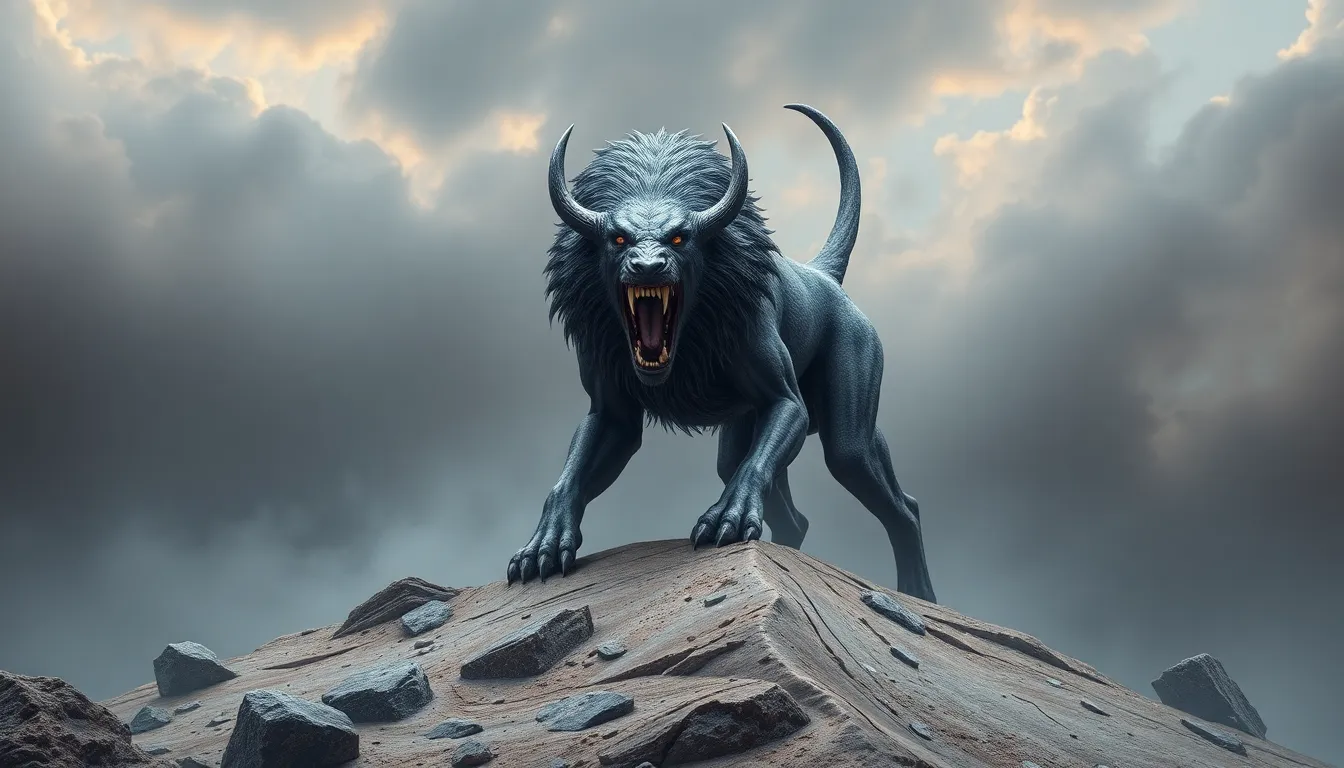
The Fearsome Nature of Cerberus: An Analysis of His Myth
I. Introduction to Cerberus
Cerberus, the three-headed dog, is one of the most iconic figures in Greek mythology. Known primarily as the guardian of the Underworld, Cerberus has captivated the imaginations of people for centuries. His fearsome nature and ferocious demeanor serve as a powerful symbol of the barriers between the living and the dead. In many myths, he embodies the finality of death and the inescapability of the afterlife.
As the guardian of the Underworld, Cerberus plays a significant role in ancient Greek culture, representing the transition one must make from life to death. His presence serves not only to protect the realm of Hades but also to instill a sense of fear regarding the afterlife.
II. The Origins of Cerberus
A. Parentage and birth of Cerberus
Cerberus is often described as the offspring of the monstrous Typhon and Echidna, a half-woman, half-serpent creature. This lineage is significant as it links Cerberus to other legendary monsters in Greek mythology. His fearsome parentage sets the stage for his role as a terrifying guardian.
B. Role of Hades and the significance of the Underworld in ancient Greek culture
Hades, the god of the Underworld, played a crucial role in shaping Cerberus’ destiny. As the ruler of the dead, Hades required a guardian to ensure that souls did not escape the Underworld. The Underworld itself was a place of mystery and fear, embodying the ancient Greeks’ complex views on death and the afterlife.
III. Physical Description and Characteristics
A. Depictions of Cerberus in ancient art and literature
Cerberus is often depicted in ancient art as a massive, fearsome creature with three heads, a serpent-like tail, and a fierce demeanor. Various ancient texts describe him as having a mane of snakes, further emphasizing his monstrous nature. These artistic representations serve to highlight Cerberus’ role as a formidable guardian.
B. Symbolism of his three heads and serpentine features
The three heads of Cerberus symbolize various aspects of death and the afterlife:
- Past: One head gazes backward, representing memories and the souls that have passed.
- Present: The second head looks forward, symbolizing the current state of souls in the Underworld.
- Future: The third head looks outward, reflecting the fate that awaits all living beings.
His serpentine features, such as the snake-like tail, further enhance the idea of danger and the unknown, making him a fitting guardian of the realm of the dead.
IV. Cerberus in Mythological Tales
A. Key myths involving Cerberus (e.g., Heracles’ Twelfth Labor)
Cerberus is prominently featured in several mythological tales, most notably in the story of Heracles’ Twelfth Labor. Heracles was tasked with capturing Cerberus and bringing him to the surface world without using weapons. This labor exemplifies the hero’s strength and bravery, as he faced a creature renowned for its ferocity.
B. Cerberus as a representation of death and the afterlife
In various myths, Cerberus serves as a representation of death itself. His role as a guardian ensures that the dead do not wander back to the land of the living, thereby maintaining the natural order. He is often seen as a test for heroes, reflecting their understanding of mortality and the afterlife.
V. The Role of Cerberus in Greek Religion
A. Cerberus’ function in funerary practices
Cerberus played a significant role in ancient Greek funerary practices. He was often invoked during rituals meant to honor the dead and ensure safe passage to the Underworld. Offerings were made to appease Cerberus, as it was believed that a favorable encounter could ensure a smooth transition for the deceased.
B. Worship and offerings made to Cerberus in ancient rituals
In some regions, Cerberus was worshipped as a deity of the Underworld. Offerings could include:
- Meat and bones, reflecting his carnivorous nature.
- Libations of wine or honey, meant to pacify the guardian.
- Incense and other rituals intended to honor the dead and invite Cerberus’ protection.
These practices underscore the deep-seated belief in the importance of respecting the boundaries between life and death.
VI. Psychological Interpretations of Cerberus
A. Cerberus as a symbol of fear and the unknown
Psychologically, Cerberus can be viewed as a symbol of the fear of death and the unknown aspects of the afterlife. His monstrous visage evokes a primal fear that resonates with many individuals. He embodies the notion that death is an inevitable part of life, and confronting it is a daunting task.
B. Analysis of Cerberus in modern psychology and literature
In modern literature and psychology, Cerberus has been analyzed as a representation of personal demons and internal struggles. His three heads can symbolize the multifaceted nature of human fears:
- Fear of mortality
- Fear of the unknown
- Fear of loss and grief
This interpretation sheds light on why Cerberus continues to be a compelling figure in storytelling and art.
VII. Cerberus in Popular Culture
A. Representation of Cerberus in contemporary media (movies, books, video games)
Cerberus has made a significant impact on popular culture, appearing in numerous forms of media. Movies, books, and video games have all drawn inspiration from his myth:
- Movies: Films like “Hercules” and “Clash of the Titans” feature Cerberus as a formidable challenge for the hero.
- Books: In literature, Cerberus often symbolizes the trials and tribulations faced by protagonists, echoing his role in myth.
- Video Games: Games such as “God of War” and “Hades” feature Cerberus as a character that players must confront, highlighting his enduring legacy.
B. Influence of Cerberus on popular conceptions of monsters and guardians
Cerberus has influenced the portrayal of monsters and guardians in popular culture. His image has become synonymous with the idea of a fierce protector, often depicted as a creature that must be either overcome or befriended. This duality adds depth to his character and allows for various interpretations in modern narratives.
VIII. Conclusion
Cerberus remains a significant figure in mythology and culture, symbolizing the fear of death and the mysteries of the afterlife. His role as the guardian of the Underworld has made him an enduring icon, not only in ancient Greek beliefs but also in contemporary society.
The legacy of Cerberus continues to resonate with audiences today, reminding us of the universal themes of mortality and the unknown. As we explore the myths and stories surrounding Cerberus, we gain insight into our own fears and the cultural significance of death and the afterlife.