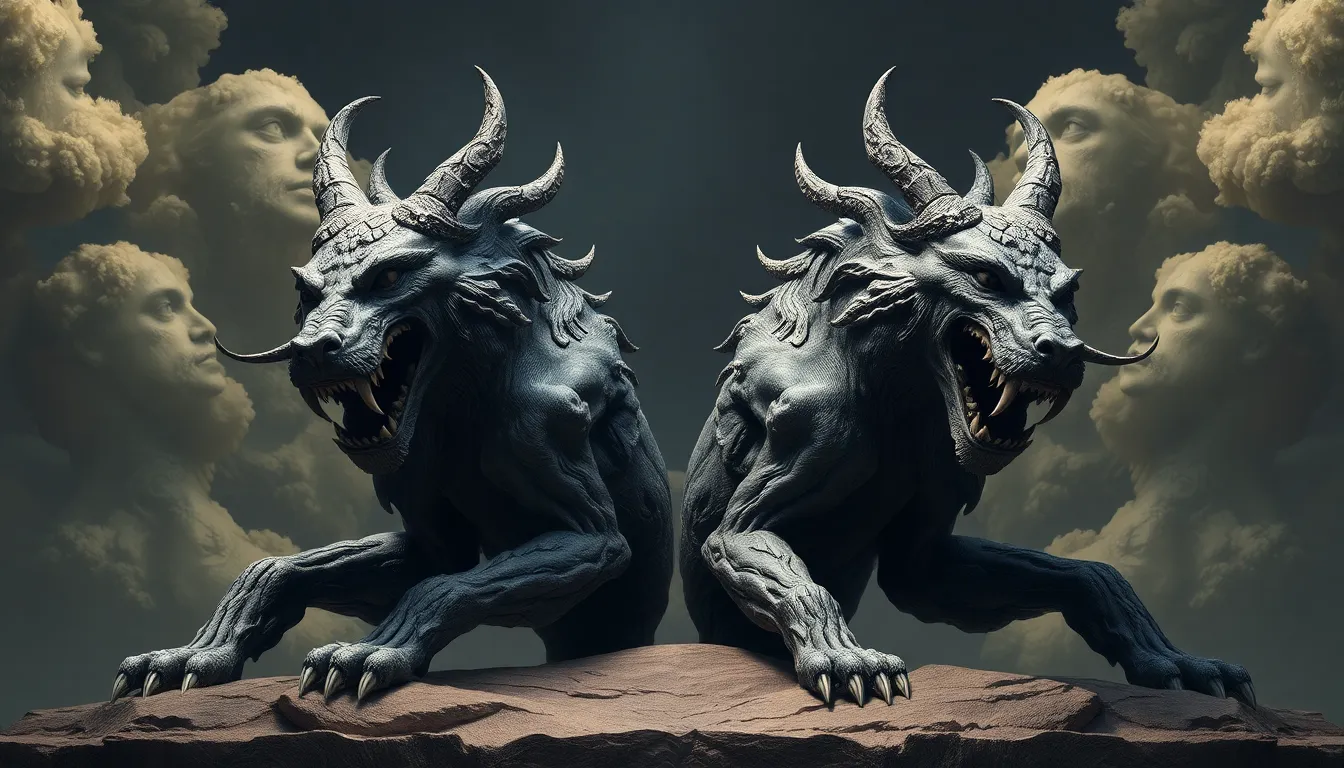
The Myth of Cerberus: A Study in Duality and Complexity
I. Introduction
Cerberus, the three-headed dog that guards the gates of the Underworld, is one of the most enigmatic figures in Greek mythology. His fierce reputation and monstrous appearance have made him a symbol of death and the afterlife. However, the complexity of his character extends beyond mere ferocity, revealing a deeper narrative about protection, fear, and duality.
Examining mythological figures such as Cerberus allows us to glean insights into ancient cultures, their fears, and their values. Myths are not just stories; they embody the psychological and cultural frameworks of the societies that created them. This article aims to explore the duality and complexity of Cerberus, highlighting his role as both a guardian and a fearsome creature.
II. The Origins of Cerberus in Mythology
The origins of Cerberus can be traced back to early Greek texts, where he is first mentioned in the works of Hesiod and Homer. As the offspring of the monstrous Echidna and Typhon, Cerberus belongs to a lineage of fearsome creatures, which include the Chimera and the Nemean Lion.
In the hierarchy of Greek mythology, Cerberus is not simply a beast; he is a crucial figure in the Underworld, serving as the guardian of Hades. His family lineage places him among the most formidable entities in Greek lore, highlighting the interplay between chaos and order that he embodies.
III. Cerberus as the Guardian of the Underworld
Cerberus’s primary role is to guard the entrance to the Underworld, preventing the escape of the dead and the intrusion of the living. This duty is significant for several reasons:
- Protection of the realm: As a guardian, Cerberus ensures that the balance between life and death is maintained.
- Symbol of barriers: He represents the boundary that separates the living from the dead, embodying the fear of the unknown that lies beyond death.
- Necessary force: Cerberus acts as a necessary force within the mythological framework, reflecting the inevitability of death and the importance of respecting its boundaries.
IV. The Duality of Cerberus: Friend or Foe?
Cerberus is often portrayed as a fierce monster, instilling terror in those who dare to approach the gates of the Underworld. However, this portrayal is only one side of his character. There are instances where Cerberus aids heroes:
- Heracles: In one of his twelve labors, Heracles was tasked with capturing Cerberus. Instead of defeating him, Heracles demonstrated his strength by subduing the beast, which signifies the potential for coexistence between man and monster.
- Other heroes: Various myths suggest that Cerberus could be approached peacefully, showcasing his more benevolent aspects.
This conflict in Cerberus’s nature reflects the broader theme of duality in mythology, where figures embody both good and evil, protection and danger. Cerberus serves as a reminder that fearsome entities can also possess qualities that resonate with humanity.
V. Cerberus in Art and Literature
Cerberus has been a prominent subject in ancient art, often depicted as a monstrous dog with three heads, guarding the gates of the Underworld. His image can be found in:
- Sculptures: Classical sculptures often illustrate Cerberus in dynamic poses, emphasizing his ferocity and strength.
- Vases: Ancient Greek pottery frequently features scenes of heroes confronting Cerberus, encapsulating the tension between man and beast.
In literature, Cerberus appears in works from antiquity to modern times. He is a significant figure in:
- Classical texts: Mentioned in Homer’s “The Odyssey” and Virgil’s “Aeneid,” where he serves to enhance the dramatic tension of the Underworld.
- Modern adaptations: Contemporary films and novels often reinterpret Cerberus, sometimes as a tragic figure or a misunderstood guardian, showcasing his multifaceted character.
The evolution of Cerberus’s image through the ages reflects changing cultural attitudes toward fear, death, and protection.
VI. The Psychological Interpretation of Cerberus
From a psychological perspective, Cerberus can be seen as a representation of inner fears and anxieties. His three heads symbolize the complexity of human emotions, embodying:
- Fear of death: Cerberus serves as a manifestation of our existential fears and the unknown that accompanies death.
- Inner conflict: The duality of Cerberus reflects the conflict within human nature, where protection and danger coexist.
In this light, Cerberus becomes a symbol of both protection and danger, illustrating the delicate balance between the two. Understanding Cerberus in this way offers a deeper insight into the human psyche and the fears that haunt it.
VII. Cerberus in Contemporary Culture
In recent years, Cerberus has experienced a resurgence in modern media. He appears in:
- Films: Movies depicting mythological themes often feature Cerberus as a central figure, showcasing his role as a guardian of the underworld.
- Video games: Cerberus is a popular character in video games, often portrayed as a formidable foe or a mythic companion.
These reinterpretations highlight the ongoing relevance of Cerberus in discussions of duality and the human experience. Modern adaptations often explore themes of redemption, fear, and understanding, allowing audiences to connect with this ancient figure in new ways.
VIII. Conclusion
The myth of Cerberus reveals a complex character steeped in duality and symbolism. As both a guardian and a fearsome beast, Cerberus embodies the conflict between life and death, protection and danger. His enduring legacy in mythology and contemporary culture underscores the importance of understanding duality in mythological figures.
In reflecting on Cerberus, we acknowledge the complexity of the human experience and the fears that accompany it. Cerberus serves as a reminder that within every monster lies a story worth telling, one that resonates with our own fears and aspirations.