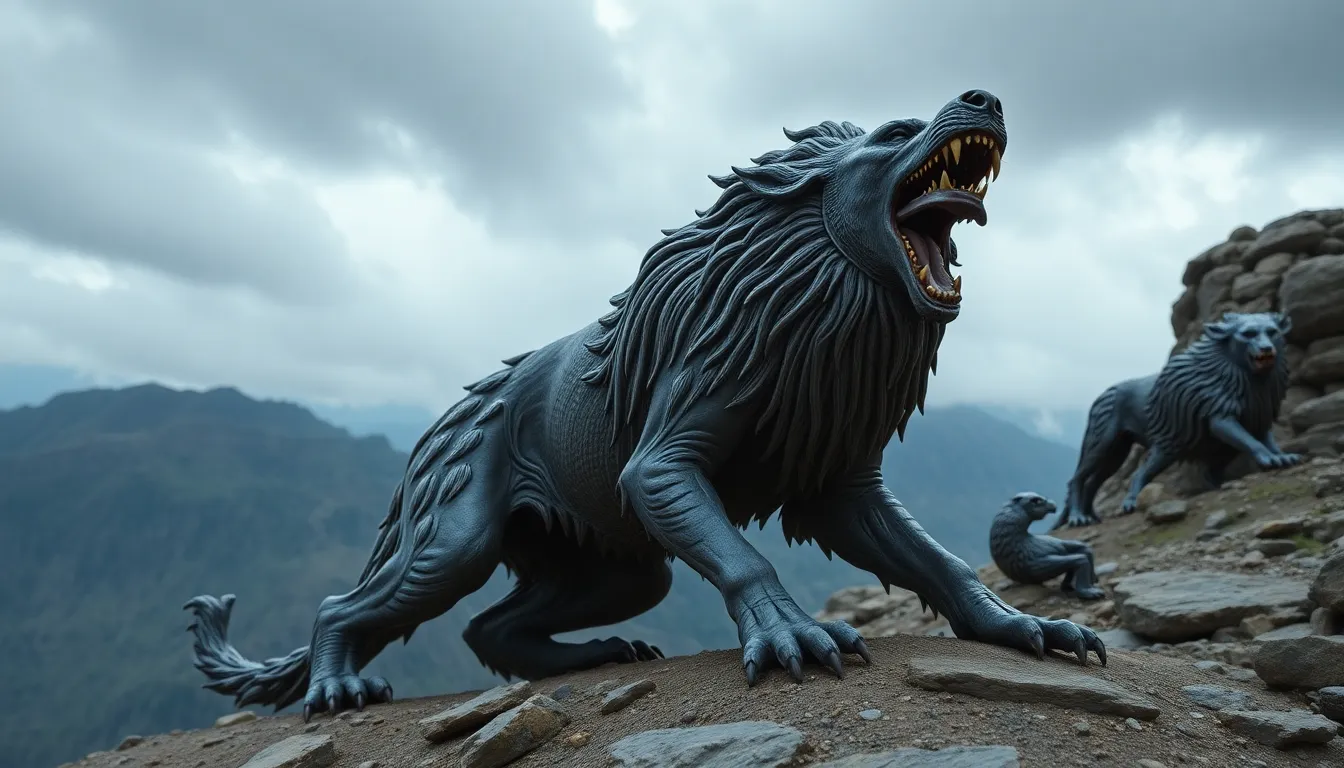
The Evolution of Cerberus in Literature and Film
Introduction to Cerberus: The Three-Headed Guardian
Cerberus, the formidable three-headed dog of Greek mythology, stands as a symbol of the boundaries between the living and the dead. As the guardian of the Underworld, Cerberus is tasked with preventing the escape of souls and ensuring that the dead do not disturb the living. This creature, often depicted with a serpent’s tail and a mane of snakes, embodies the fearsome aspects of death and the afterlife.
In Greek mythology, Cerberus is not just a monster; he represents the complexity of life and death, guarding the entrance to Hades and serving as a reminder of mortality. His importance in mythological tales has made him a significant figure in various narratives throughout history.
Cerberus in Ancient Literature
Ancient texts provide some of the earliest depictions of Cerberus, showcasing his role in mythological narratives. In Homer’s “The Iliad,” although Cerberus is not explicitly mentioned, the themes of death and the afterlife are prevalent, setting the stage for the later development of his character. Virgil’s “Aeneid,” on the other hand, features a more direct encounter with Cerberus, where the hero Aeneas must confront the beast while navigating the Underworld.
Cerberus’s most famous myth involves the hero Heracles (Hercules), who was tasked with capturing the beast as one of his twelve labors. This encounter highlights not just the strength and ferocity of Cerberus but also the courage and ingenuity of Heracles. The myth serves as an allegory for overcoming one’s fears and facing the inevitability of death.
Transition to Medieval and Renaissance Interpretations
As literature evolved, so did the representations of Cerberus. During the Middle Ages, Cerberus began to be depicted in a more symbolic light. Dante Alighieri’s “Inferno” features a harrowing portrayal of Cerberus, who guards the gluttonous in the third circle of Hell. This depiction emphasizes Cerberus’s role as a punisher, a symbol of sin and retribution in the afterlife.
- Cerberus as a guardian of the damned
- Representation of sin through his ferocity
- Impact on cultural views of the afterlife
The Renaissance further transformed Cerberus into a complex character, often reflecting the human condition and the moral struggles of humanity. Artists and writers began to explore themes of redemption and punishment through the lens of Cerberus’s character.
Cerberus in 19th and Early 20th Century Literature
The 19th century saw Cerberus become a prominent figure in Gothic literature and Romanticism. Authors like Edgar Allan Poe and H.P. Lovecraft incorporated elements of Cerberus into their works, often representing him as a harbinger of doom or an embodiment of existential dread.
- Poe’s use of death and the macabre
- Lovecraft’s cosmic horror and the unknown
- Cerberus as a metaphor for internal struggles
Through this lens, Cerberus transitioned from merely a mythological guardian to a symbol of the darker aspects of human nature, reflecting the anxieties of the time.
The Rise of Cerberus in Modern Literature
In contemporary literature, Cerberus has experienced a resurgence, particularly within the genres of fantasy and horror. Authors like Neil Gaiman and Rick Riordan have reimagined Cerberus for modern audiences, blending mythology with contemporary themes.
Notable works include:
- Neil Gaiman’s “American Gods” – Cerberus embodies the old gods’ struggle for relevance in a modern world.
- Rick Riordan’s “Percy Jackson” series – Cerberus is portrayed with a mix of menace and humor, appealing to younger readers.
This evolution showcases Cerberus as a multifaceted character, capable of both fear and charm, reflecting the complexities of modern storytelling.
Cerberus in Film: From Classic to Contemporary
The cinematic portrayal of Cerberus has also evolved significantly over the years. Early films, such as “Hercules” and “The 7th Voyage of Sinbad,” depicted Cerberus as a straightforward monster, focusing on his fearsome appearance and role as a guardian of the Underworld.
In contemporary cinema, Cerberus has been reimagined, showcasing a more nuanced character. Films like “Harry Potter and the Sorcerer’s Stone” and “Clash of the Titans” present Cerberus as a creature with depth, often eliciting sympathy from the audience.
- “Harry Potter and the Sorcerer’s Stone” – Cerberus is portrayed as a guardian of treasure, with a more playful demeanor.
- “Clash of the Titans” – Cerberus embodies the traditional ferocity but is also tied to themes of heroism.
This shift reflects a broader trend in film to humanize mythological figures, allowing audiences to connect with them on a more emotional level.
Cerberus in Video Games and Popular Culture
Cerberus has also made a significant impact in the realm of video games and popular culture. Games like “God of War” and “Dante’s Inferno” feature Cerberus in prominent roles, often as formidable enemies that players must confront.
His influence extends beyond gaming, permeating various aspects of pop culture, including:
- Toys and collectibles
- Merchandise inspired by Cerberus
- References in music and art
This widespread presence underscores Cerberus’s status as a cultural icon, illustrating his enduring appeal across generations.
Conclusion: The Enduring Legacy of Cerberus
Throughout history, Cerberus has transcended time and media, evolving from a fearsome guardian of the Underworld to a multifaceted character in modern storytelling. His significance as a cultural icon continues to resonate in literature, film, and beyond, symbolizing the eternal struggle between life and death.
As Cerberus adapts to contemporary narratives, he reminds us of our own fears and the complexities of existence. Whether as a monstrous guardian or a misunderstood creature, Cerberus remains a powerful figure in the human imagination, reflecting our deepest anxieties and hopes.