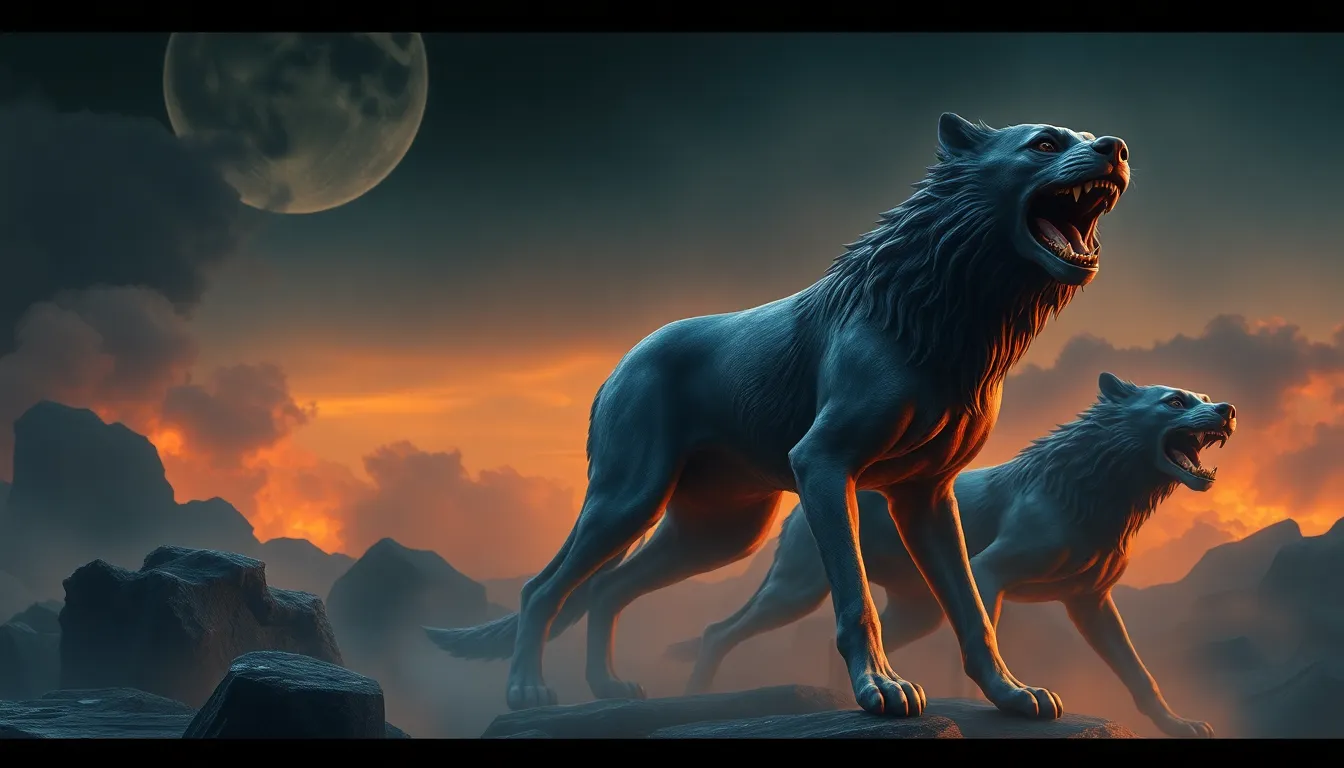
The Role of Cerberus in the Myths of the Underworld
I. Introduction
Cerberus, often depicted as a monstrous three-headed dog, holds a crucial place in Greek mythology as the guardian of the Underworld. His fierce demeanor and terrifying looks serve as a potent symbol of the finality of death and the mystery of the afterlife. The Underworld itself, a significant element in ancient Greek beliefs, was seen as a realm where souls went after death, governed by the god Hades.
This article aims to explore the origins, roles, and cultural significance of Cerberus, highlighting his importance in the myths of the Underworld and his enduring legacy in modern interpretations.
II. Origins of Cerberus
A. Birth and lineage of Cerberus
Cerberus is the offspring of the monstrous Echidna and Typhon, two of the most fearsome creatures in Greek mythology. Echidna, often referred to as the “Mother of Monsters,” and Typhon, known as the “Father of All Monsters,” contributed to Cerberus’s formidable nature.
B. Description and characteristics of the beast
Cerberus is traditionally depicted with three heads, each representing different aspects of death and the afterlife. He is often illustrated with a serpent’s tail and snakes protruding from his back, emphasizing his menacing presence. The three heads allow him to watch over the entrance to the Underworld, ensuring that no soul escapes and that no living beings enter without permission.
C. Symbolism of Cerberus in Greek mythology
- Guardian of the Dead: Cerberus symbolizes the boundary between the living and the dead.
- Fear of Death: His monstrous form represents humanity’s fear of the unknown in death.
- Protector of Secrets: Cerberus guards the secrets of the Underworld, reflecting the mysteries of the afterlife.
III. Cerberus as the Guardian of the Underworld
A. Role of Cerberus in Greek mythology
Cerberus serves as the primary guardian of the Underworld, preventing the living from entering and ensuring that the dead remain where they belong. His very presence acts as a deterrent to those who might seek to defy the natural order of life and death.
B. Responsibilities as the gatekeeper of Hades
- Preventing souls from escaping the Underworld.
- Controlling the entrance for the living who wish to communicate with the dead.
- Maintaining the balance between the realms of the living and the dead.
C. The significance of guarding the entrance to the afterlife
The act of guarding the entrance to the afterlife is not merely about restriction; it embodies the ancient Greeks’ reverence for death and the afterlife. Cerberus represents the finality of death and the importance of respecting the dead and their resting place.
IV. Cerberus in Mythological Stories
A. Notable myths featuring Cerberus
Cerberus is prominently featured in several key myths, demonstrating his role and significance in Greek storytelling.
1. Heracles’ Twelve Labors
One of the most famous stories involving Cerberus is Heracles’ final labor, where he is tasked with capturing the beast and bringing him to the surface. This labor symbolizes the hero’s confrontation with death and his triumph over fear.
2. Orpheus and Eurydice
In the story of Orpheus, the musician descends into the Underworld to retrieve his beloved Eurydice. Cerberus is initially a formidable obstacle, but Orpheus uses his enchanting music to soothe the beast, allowing him to pass. This tale highlights the themes of love, loss, and the power of art.
B. Cerberus’s interactions with heroes and mortals
Cerberus’s encounters with heroes often reflect the struggle between life and death, showcasing the courage needed to face mortality. While he is a fearsome guardian, he is also portrayed as a being that can be appeased or outsmarted.
C. Themes of fear and respect associated with Cerberus
The presence of Cerberus in these myths embodies the duality of fear and respect for death. While he is a terrifying figure, he also commands a sense of awe, reminding mortals of the inevitability of death and the importance of the afterlife.
V. Cerberus in Art and Literature
A. Depictions of Cerberus in ancient art
Cerberus has been a popular subject in ancient Greek art, often depicted in vase paintings, sculptures, and mosaics. Artists used his image to convey the themes of the Underworld and the afterlife.
B. Influence on later literature and popular culture
Throughout history, Cerberus has influenced various literary works and cultural depictions. From Dante’s “Inferno” to modern fantasy novels, his character often symbolizes the challenges associated with death and the afterlife.
C. Cerberus as a symbol in modern storytelling
- In literature, Cerberus often represents the struggle against fate.
- In films and games, he is commonly portrayed as a powerful adversary.
- His image is used to evoke themes of loyalty and protection.
VI. Comparative Mythology
A. Similar figures in other mythologies (e.g., Anubis, Fenrir)
Cerberus is not unique to Greek mythology; various cultures have similar figures that serve as guardians of the afterlife:
- Anubis: The Egyptian god associated with mummification and the afterlife, often depicted as a jackal.
- Fenrir: In Norse mythology, a monstrous wolf destined to play a significant role in Ragnarok.
B. Analysis of the role of guardians in various cultures
Guardians of the afterlife often represent the fear and respect associated with death across different cultures. They serve as symbols of protection and the boundary between the known and unknown.
C. The universal theme of death and the afterlife
The presence of guardian figures like Cerberus across various mythologies highlights the universal human concern with death and the afterlife, showcasing a shared cultural understanding of mortality.
VII. Cerberus in Modern Interpretations
A. Cerberus in contemporary media (films, games, etc.)
In modern media, Cerberus appears in various forms, from animated films to video games. His character often embodies the themes of loyalty, fear, and the supernatural.
B. Symbolic meanings in modern contexts
Today, Cerberus symbolizes the challenges one must face in life, particularly regarding mortality and the acceptance of death as a part of existence.
C. The enduring legacy of Cerberus in popular culture
Cerberus’s legacy continues to thrive in popular culture, serving as a powerful symbol that resonates with audiences. His imagery is often used to evoke strong emotions related to death, loyalty, and the unknown.
VIII. Conclusion
Cerberus occupies a vital role in the myths of the Underworld, representing the complexities of death and the afterlife. His character serves as both a fearsome guardian and a symbol of the inevitable reality of mortality.
The continued fascination with Cerberus attests to the enduring power of myth in exploring the human experience. As a cultural and symbolic figure, Cerberus remains a potent reminder of the mysteries that lie beyond life and the respect we owe to those who have passed on.