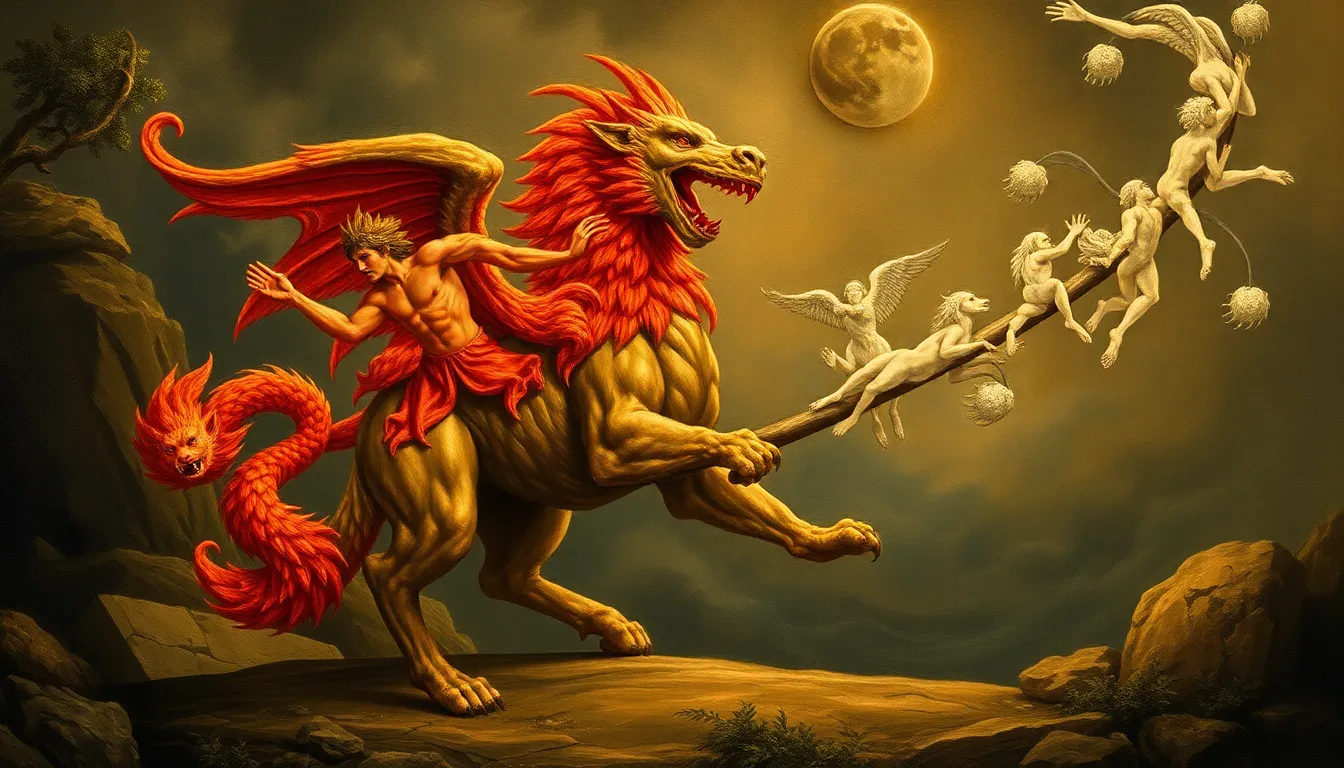
Chimera in Art: How Ancient Artists Depicted the Fearsome Beast
I. Introduction to the Chimera
The Chimera is one of the most iconic creatures in Greek mythology, known for its terrifying appearance and formidable presence. This beast, often depicted as a hybrid of a lion, goat, and serpent, has fascinated artists and mythologists alike since ancient times.
The origins of the Chimera can be traced back to the ancient texts of Homer and Hesiod, where it is described as a monstrous fire-breathing creature. Its significance extends beyond mere mythology, symbolizing chaos and the unknown in both ancient and modern cultures. In this article, we will explore how ancient artists captured the essence of the Chimera in their works, reflecting the creature’s complexity and the fears it embodied.
II. The Mythological Background of the Chimera
The Chimera appears prominently in Greek mythology, particularly within the context of heroic narratives. It is often associated with the legend of Bellerophon, a hero who, with the aid of the winged horse Pegasus, defeated the beast. This tale not only highlights the Chimera’s ferocity but also emphasizes themes of heroism and the struggle against overwhelming odds.
The anatomy of the Chimera is striking: it typically has the body of a lion, a goat’s head protruding from its back, and a serpent’s tail. Each part of the Chimera carries significant symbolic weight:
- Lion: Represents strength and nobility.
- Goat: Symbolizes stubbornness and untamed nature.
- Serpent: Often associated with treachery and danger.
These attributes contribute to the Chimera’s role in ancient stories as a representation of chaos and the natural world’s unpredictability.
III. Early Artistic Representations
The Chimera was a popular subject in ancient Greek pottery and vase painting, where it was often depicted in various scenes of combat or as part of a larger mythological narrative. Artists of the time employed a range of styles and techniques to capture the beast’s fearsome nature.
Common artistic styles include:
- Black-Figure Technique: Early vase painters used this method to create detailed images of the Chimera, highlighting its ferocity.
- Red-Figure Technique: This later style allowed for greater detail and expression, showcasing the Chimera in dynamic poses.
Through these early depictions, artists conveyed symbolism that spoke to the fears and values of ancient Greek society. The Chimera was not just a monster; it represented the chaos that could upend the order of civilization.
IV. The Chimera in Sculpture
In addition to pottery, the Chimera found a place in ancient sculpture, where artists could explore its form in three dimensions. Notable sculptures from ancient Greece and Rome often depicted the Chimera in dramatic poses, emphasizing its viciousness and the challenge it posed to heroes.
The significance of three-dimensional representations lies in their ability to engage the viewer from multiple angles, creating a more immersive experience. One famous example is the Chimera of Arezzo, a bronze sculpture from the 5th century BCE that captures the creature in mid-roar, its features exaggerated to evoke fear.
Case studies of famous Chimera sculptures include:
- Chimera of Arezzo: This piece showcases the beast’s terrifying visage and intricate detailing.
- Reliefs from the Temple of Apollo: These carvings depict the Chimera alongside other mythological figures, reinforcing its status in the pantheon of monsters.
V. The Chimera in Roman Art
As the Roman Empire expanded, it adopted many aspects of Greek culture, including its artistic representations of mythological figures. Roman artists adapted Greek depictions of the Chimera, often incorporating it into mosaics and frescoes.
The influence of the Chimera on Roman art can be seen in:
- Mosaics: Intricate floor mosaics often featured the Chimera, showcasing its symbolism of chaos amidst the order of Roman life.
- Frescoes: Wall paintings incorporated the Chimera into larger mythological scenes, enriching the narrative context.
When comparing Greek and Roman artistic interpretations, one can observe a shift in focus from the raw ferocity of the Chimera to a more stylized and decorative representation, reflecting the Roman appreciation for beauty and order.
VI. The Chimera in Later Art Movements
The fascination with the Chimera did not diminish with the fall of the Roman Empire. During the Renaissance, there was a resurgence of interest in classical themes, including the Chimera. Artists began to explore the creature in new contexts, often interpreting it through their unique perspectives.
Examples of Chimera depictions in medieval and Renaissance art include:
- Medieval Manuscripts: Illuminated texts featured the Chimera as a symbol of evil or chaos.
- Renaissance Paintings: Artists like Peter Paul Rubens depicted the Chimera in dynamic compositions, exploring themes of conflict and duality.
Over time, the representation of the Chimera evolved from a fearsome beast into a more nuanced symbol, reflecting changing cultural attitudes toward monstrosity and chaos.
VII. Symbolism and Interpretation of the Chimera in Art
The Chimera’s artistic legacy is deeply intertwined with psychological and cultural implications. Artists used the Chimera to explore themes of fear, monstrosity, and the duality of nature.
Key interpretations include:
- Fear and Monstrosity: The Chimera embodies humanity’s fear of the unknown and the chaotic aspects of nature.
- Duality and Conflict: The hybrid nature of the Chimera serves as a metaphor for internal conflict and the struggle between order and chaos.
Through their works, artists invited viewers to confront these themes, often reflecting their own societal anxieties and aspirations.
VIII. Conclusion
The Chimera’s artistic legacy is a testament to its enduring fascination in both ancient and modern contexts. From its origins in Greek mythology to its interpretations in contemporary art, the Chimera continues to captivate the imagination.
Today, the Chimera remains a powerful symbol of chaos and complexity, influencing artists and storytellers across various mediums. The impact of ancient representations on modern interpretations highlights the timeless nature of this fearsome beast and its ability to resonate with audiences throughout history.