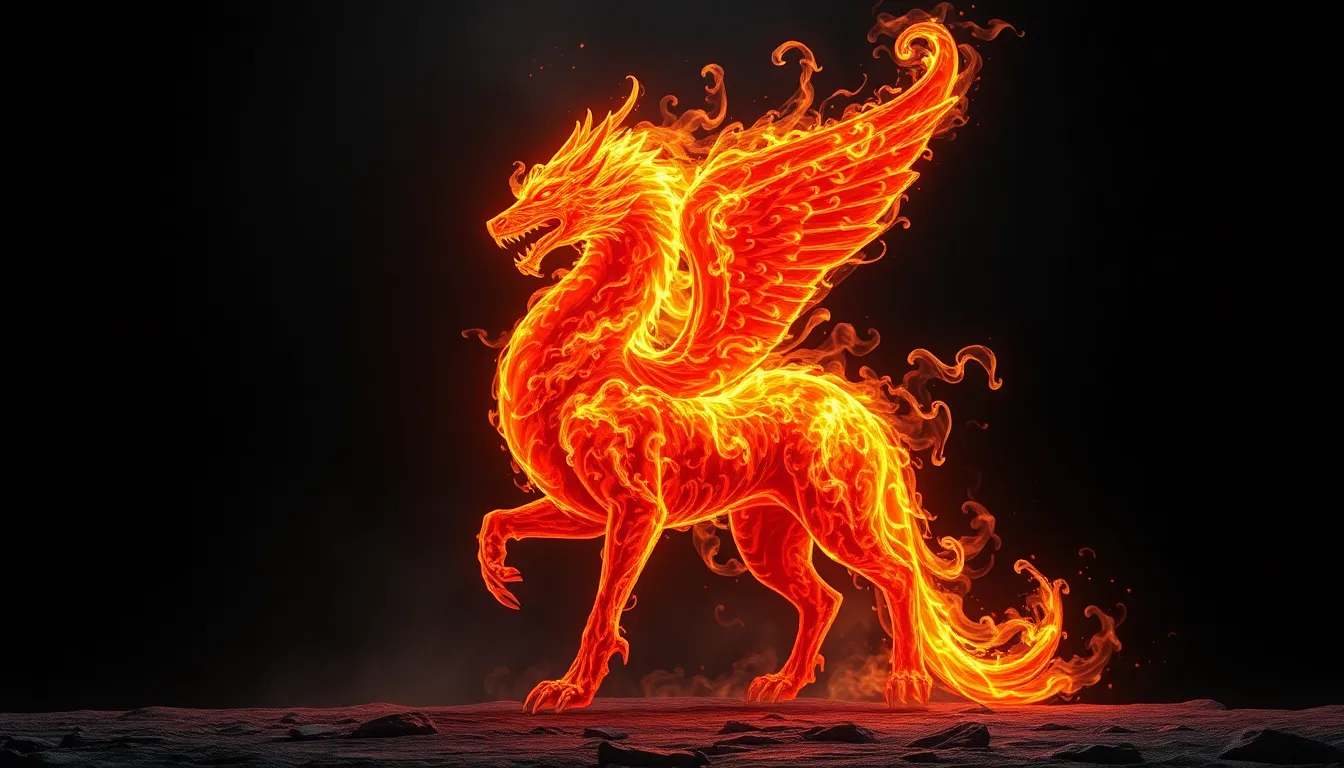
The Chimera and Its Connection to the Element of Fire
I. Introduction
The Chimera is one of the most fascinating creatures in Greek mythology, embodying a blend of ferocity and intrigue. This monster, often depicted with the body of a lion, the head of a goat protruding from its back, and a serpent for a tail, represents the chaotic and unpredictable aspects of nature. Central to the Chimera’s narrative is its iconic ability to breathe fire, linking it inexorably to the element of fire, which holds vast significance in various cultures and mythologies.
Fire is universally recognized as a powerful element, symbolizing both destruction and creation. It serves as a catalyst for transformation and is often associated with divine power and human passion. This article seeks to explore the deep connection between the Chimera and the element of fire, examining its mythological origins, symbolism, and enduring legacy in art and culture.
II. The Mythological Origins of the Chimera
In Greek mythology, the Chimera is described as a fearsome beast that ravaged the land of Lycia. It is often portrayed as a hybrid creature with three distinct heads and the ability to breathe fire, making it one of the most formidable opponents of the heroes of Greek tales.
The Chimera’s lineage is notable; it is said to be the offspring of Typhon and Echidna, both of whom are associated with chaos and monstrosity. This lineage contributes to the Chimera’s monstrous characteristics, including its fire-breathing ability, which is a key element in its narrative.
Fire plays a crucial role in the Chimera’s story, symbolizing not only its destructive capabilities but also the fear it instilled in those who encountered it. The flames that erupted from its mouth represented an uncontrollable force of nature, embodying the chaos that the Chimera brought to the world.
III. Symbolism of Fire in Mythology
Fire is a multifaceted symbol in mythology, representing both destruction and creation. It is a force that can consume and obliterate, yet it also provides warmth, light, and the means for transformation. In many mythologies, fire is associated with:
- Destruction: The ability to annihilate and render landscapes barren.
- Creation: The spark of life and the transformative power of heat.
- Transformation: A means of metamorphosis, often seen in the alchemical processes.
- Power: A symbol of divine authority and human passion.
When examining other mythological creatures, fire often serves as a common thread. For instance, dragons in various cultures are frequently depicted as fire-breathing entities, echoing the Chimera’s characteristics and further establishing fire’s role as a symbol of chaos and power.
IV. The Chimera’s Fire Breathing Ability
The Chimera’s most striking feature is undoubtedly its ability to breathe fire. This terrifying characteristic not only serves as a weapon against its foes but also symbolizes its ferocity and dominance in the mythological landscape. The act of breathing fire can be understood on both biological and symbolic levels.
Biologically, the Chimera’s fire-breathing ability can be seen as an exaggerated representation of the natural instincts of predators. Symbolically, it embodies the idea of uncontrollable rage and the destructive nature of unchecked power. The flames that the Chimera emits are not just physical manifestations; they represent the inner turmoil and chaos that resides within its monstrous form.
Throughout history, artists have depicted the Chimera in various forms, often emphasizing its flames. These artistic representations highlight the mesmerizing yet terrifying nature of fire, capturing the duality of beauty and destruction.
V. The Chimera in Art and Literature
The Chimera has captured the imagination of artists and writers throughout history. In ancient art, it is often depicted in sculptures and pottery, showcasing its fierce appearance and fiery ability. Modern interpretations have also emerged, with the Chimera appearing in various forms across literature, films, and video games.
Literary references to the Chimera often emphasize its fiery attributes, serving as a metaphor for inner demons and external threats. In contemporary culture, the Chimera continues to symbolize the struggle between humanity and the monstrous, reflecting our fears and aspirations.
Notable artistic depictions include:
- Ancient Greek pottery showing heroic battles with the Chimera.
- Renaissance paintings that explore the creature’s complexities.
- Modern fantasy art that reinterprets the Chimera in new and exciting ways.
VI. The Element of Fire in Alchemy and Philosophy
Fire has been a significant element in alchemical traditions, representing transformation and the process of refining materials. In alchemy, fire is often associated with the spirit and the soul’s journey toward perfection. The Chimera, with its fire-breathing ability, can be viewed as an alchemical symbol in its own right, embodying the transformative power of fire.
Philosophically, fire has been interpreted as a force of change, representing passion, desire, and the drive for knowledge. The Chimera’s connection to fire reflects the dual nature of existence—creation and destruction, order and chaos.
VII. The Chimera’s Legacy in Popular Culture
The Chimera’s influence extends far beyond ancient mythology; it has become a staple in popular culture, appearing in a variety of media, including films, video games, and literature. Its legacy is characterized by:
- A portrayal of fire as both a weapon and a symbol of inner struggle.
- Modern interpretations that often emphasize themes of monstrosity and humanity.
- A fascination with the duality of nature, highlighting the beauty and terror of fire.
As audiences continue to engage with the Chimera’s narrative, its fiery essence remains a captivating element, bridging the past with contemporary themes.
VIII. Conclusion
In conclusion, the Chimera’s connection to the element of fire is profound and multifaceted. This mythological creature not only embodies the destructive forces of fire but also represents the transformative power that fire holds in various cultures. The enduring legacy of the Chimera serves as a testament to the power of mythological symbols, reminding us of the intricate interplay between humanity and elemental forces.
The Chimera continues to inspire awe and fascination, reflecting our eternal struggle with chaos and the desire for understanding. As we explore the stories of such mythical beings, we uncover the deeper truths about ourselves and the world around us.