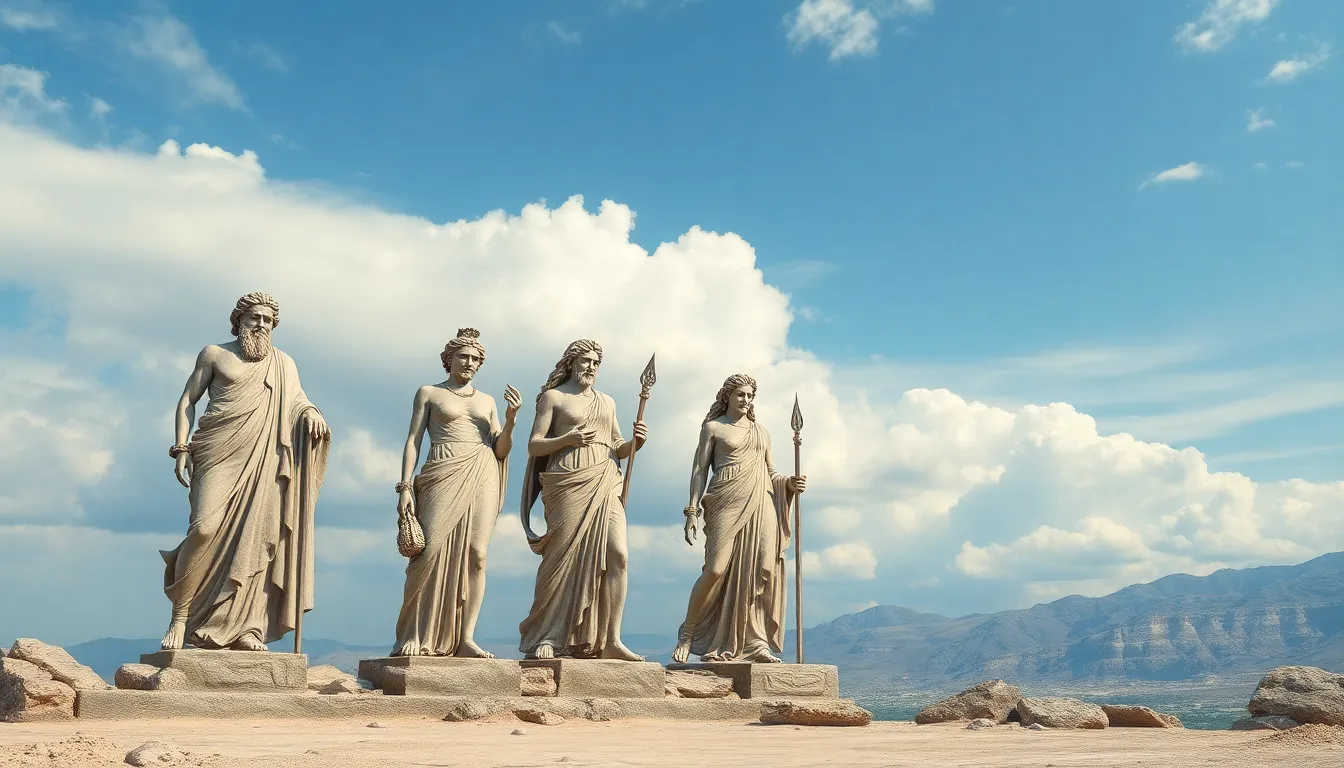
How the Fates Reflect Ancient Greek Values and Beliefs
I. Introduction
The Fates, known as the Moirai in Greek mythology, are three sisters who personify destiny and the inevitable nature of human life. Their names—Clotho, Lachesis, and Atropos—translate to ‘the spinner,’ ‘the allotter,’ and ‘the inevitable,’ respectively. These figures have a profound significance in ancient Greek culture, symbolizing the intertwining of fate, life, and the universe.
This article explores the Fates and how they reflect the values and beliefs of ancient Greece. By examining their roles, the concept of destiny, and the implications for individual and societal ethics, we can gain insight into how these mythological figures continue to resonate in modern interpretations of fate and free will.
II. The Role of the Fates in Greek Mythology
The three Fates each have distinct roles in the weaving of human lives:
- Clotho: She spins the thread of life, representing the beginning of existence.
- Lachesis: She measures the length of the thread, determining the duration of life.
- Atropos: She cuts the thread, symbolizing death and the end of life.
This triadic function illustrates the unbreakable cycle of life, where every individual is born, lives, and ultimately dies according to the predetermined threads spun by the Fates. The symbolism of fate in relation to human existence emphasizes that while individuals may strive for goals, their ultimate outcomes are often beyond their control, reflecting a core belief in the limitations of human agency.
III. The Concept of Destiny in Ancient Greece
In ancient Greece, the belief in predetermined fate coexisted with the notion of free will, creating a complex relationship between the two concepts. The Fates embody this duality, illustrating the idea that while certain aspects of life are fixed, individuals still possess the agency to make choices within those confines.
Many mythological characters faced their destinies as dictated by the Fates. For example:
- Oedipus: His tragic fate was foretold, and despite his attempts to avoid it, he ultimately fulfilled the prophecy.
- Achilles: He was given a choice between a long, uneventful life or a short, glorious one; he chose the latter, highlighting the tension between personal choice and fate.
These narratives exemplify how the Fates were perceived as enforcers of destiny, shaping the lives of mortals in profound ways.
IV. The Fates and the Greek Understanding of Justice
The Fates also play a crucial role in the Greek understanding of justice, linking fate with moral order. They are seen as enforcers of cosmic justice, ensuring that individuals receive their due based on their actions and choices throughout life.
In various myths, the Fates are involved in the punishment or reward of characters based on their moral standing:
- King Minos: His judgment in the afterlife reflects the belief that one’s fate in life determines their fate in death.
- Prometheus: His eternal punishment for defying the gods serves as a reminder of the consequences of overstepping moral boundaries.
These stories illustrate how the Fates are integral to understanding justice in the cosmos, ensuring that ethical conduct aligns with one’s fate.
V. The Fates and the Value of Individual Effort
While the Fates represent the inevitability of destiny, there is also a significant tension between fate and personal agency. Greek literature often portrays characters who strive against their fates, showcasing human effort and resilience.
Notable examples include:
- Heracles: His legendary labors demonstrate the power of individual effort to confront and challenge fate.
- Penelope: In “The Odyssey,” her determination to remain loyal despite the odds showcases the human spirit’s struggle against predetermined outcomes.
Through these narratives, the lessons learned emphasize that while fate may be predetermined, one’s efforts and choices still hold significant value and can alter one’s path, albeit in complex and often unexpected ways.
VI. The Influence of the Fates on Community and Society
The Fates also influence the broader context of community and society in ancient Greece. They serve as a collective representation of the human experience, emphasizing shared beliefs about destiny and the human condition.
Social norms and expectations were often shaped by the understanding of fate, including:
- Rituals and offerings to the Fates, which reflected communal beliefs about seeking favor and understanding one’s destiny.
- Stories and myths that were passed down, reinforcing the idea that fate is a shared journey, not just an individual one.
Thus, the Fates not only shaped individual lives but also played a pivotal role in the cultural fabric of Greek society, influencing how communities approached life’s uncertainties.
VII. Modern Interpretations of the Fates and Their Relevance
Today, the concepts embodied by the Fates continue to resonate in contemporary discussions about fate and free will. Modern literature, film, and art often revisit these themes, reflecting on the timeless struggle between destiny and personal agency.
Examples of the Fates’ influence in modern media include:
- Films like “The Matrix,” which explore themes of choice versus preordained paths.
- Literature such as “Oedipus Rex,” which remains a critical study of fate in human existence.
These modern interpretations highlight how ancient Greek values regarding fate, justice, and individual effort continue to inform our understanding of human nature today.
VIII. Conclusion
In conclusion, the Fates serve as a powerful symbol of the values and beliefs of ancient Greece, reflecting the complex interplay between destiny, free will, and moral order. Their stories remind us of the enduring nature of these themes as we navigate our own lives.
As we consider the significance of the Fates, we are invited to reflect on our beliefs about fate and destiny, and how they shape our understanding of ourselves and our place in the world. The legacy of the Fates continues to offer profound insights into the human experience, encouraging us to ponder the balance between fate and the choices we make.