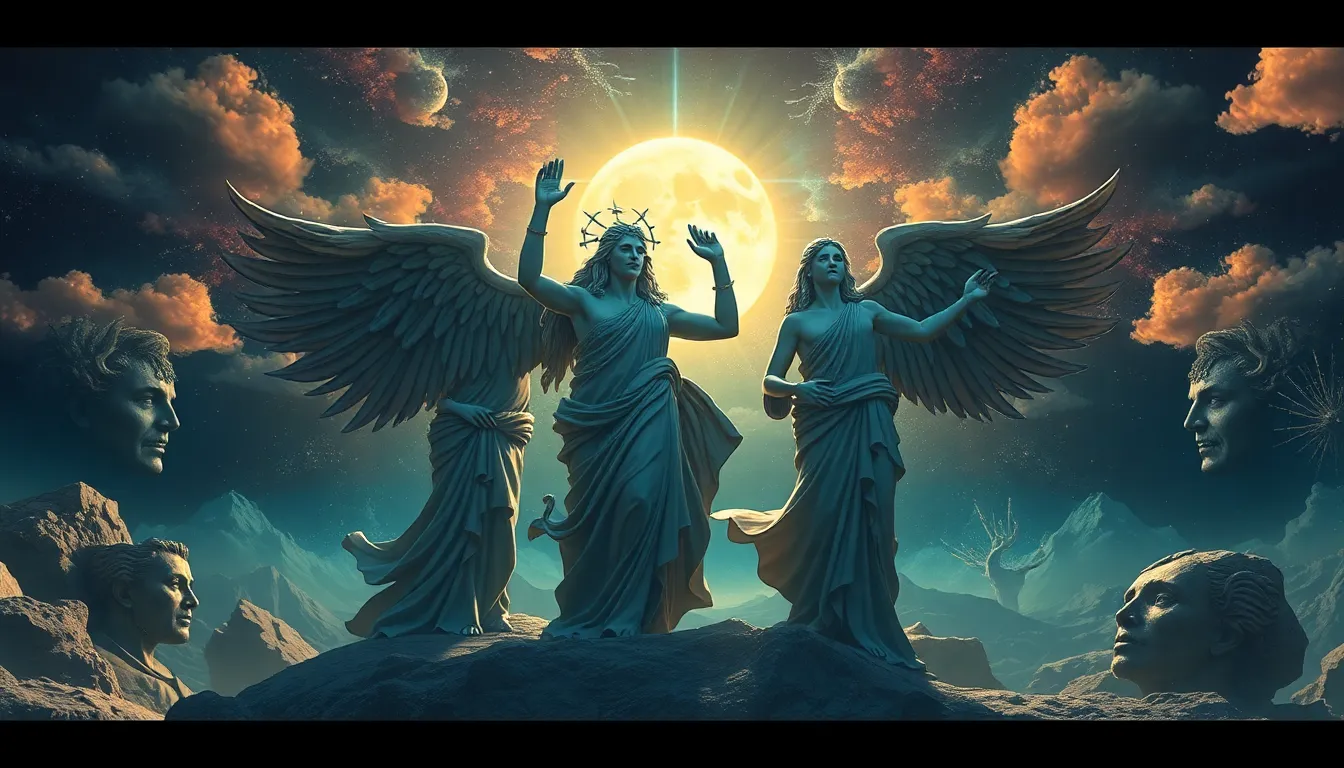
The Fates: Guardians of the Universe’s Order and Chaos
I. Introduction
The Fates, known as the Moirai in Greek mythology, embody the intricate balance between order and chaos in the universe. These three sisters—Clotho, Lachesis, and Atropos—are not merely mythical figures; they symbolize the inevitability of fate and the profound impact it has on both mortals and gods alike. Their existence raises essential questions about the nature of free will, destiny, and the cosmic order that governs all beings.
Understanding the significance of The Fates is crucial for appreciating the delicate interplay between fate and free will, a theme that resonates deeply in human experience. This article explores the origins, roles, and cultural interpretations of The Fates, shedding light on their enduring relevance in both ancient and modern contexts.
II. The Mythological Origins of The Fates
In Greek mythology, The Fates are integral to the fabric of existence. The Moirai are often depicted as three women who control the destinies of both gods and humans.
A. Historical context in Greek mythology
The concept of The Fates has its roots in ancient Greek beliefs about destiny and the natural order. They were often invoked in stories to explain the outcomes of mortal lives, illustrating the belief that fate is inescapable.
B. The trifold nature of The Fates: Clotho, Lachesis, Atropos
- Clotho: The Spinner – She spins the thread of life, determining when a person is born.
- Lachesis: The Allotter – She measures the length of the thread, representing the time allocated to each individual.
- Atropos: The Inflexible – She cuts the thread, signifying death and the end of a person’s life.
C. Symbolism of each Fate and their roles
Each of The Fates embodies a different aspect of existence:
- Clotho symbolizes creation and beginnings.
- Lachesis represents the journey and the experiences of life.
- Atropos signifies endings and the acceptance of mortality.
III. The Role of The Fates in Maintaining Universal Balance
The Fates serve as guardians of the balance between fate and free will. Their influence extends far beyond mere storytelling, impacting the lives of mortals in profound ways.
A. The interplay between fate and free will
While The Fates control the overarching narrative of existence, individuals still possess the power of choice. This duality raises questions about the nature of freedom and the extent to which people can influence their destinies.
B. How The Fates influence the lives of mortals
The Fates weave the lives of mortals into a grand tapestry, where each thread represents individual choices and experiences. Their actions create a structured yet dynamic universe.
C. The balance of order and chaos through the lives of heroes and mortals
Heroes in Greek mythology often confront their fates, challenging the predetermined paths laid out for them. The interplay of their choices with The Fates’ designs emphasizes the balance between order and chaos.
IV. The Fates and Cosmic Order
The Fates are closely linked to the concept of cosmic order, enforcing the rules that govern the universe.
A. The connection between The Fates and cosmic laws
They represent the natural laws that dictate existence, ensuring that every life has a purpose and a predetermined end.
B. Examples of how The Fates enforce order in the universe
Numerous myths illustrate how The Fates maintain order, such as the stories of heroes whose destinies unfold according to their decisions, yet remain firmly within the bounds set by The Fates.
C. The role of destiny in shaping the cosmos
Destiny, as governed by The Fates, shapes the cosmos, creating a structure that supports both creation and destruction, life and death.
V. The Fates as Agents of Chaos
While often seen as upholders of order, The Fates also introduce chaos into the world, serving a crucial role in the cycle of life.
A. Instances where The Fates introduce chaos
There are moments in mythology where The Fates intervene in unexpected ways, leading to unforeseen consequences that challenge the status quo.
B. The necessity of chaos for growth and transformation
Chaos is essential for development; it allows for new paths to emerge and for individuals to evolve beyond their limitations.
C. The balance of chaos in the grand design of the universe
The Fates ensure that chaos is not merely destructive but serves a greater purpose in the cosmic design, fostering resilience and adaptability.
VI. Cultural Interpretations of The Fates
The Fates have inspired countless interpretations across cultures and time periods, reflecting humanity’s fascination with destiny.
A. Variations of The Fates in different mythologies
Many cultures have similar figures to The Fates, such as the Norns in Norse mythology, who also govern the destinies of gods and men.
B. Modern representations in literature and media
Their influence can be seen in modern literature, films, and television, where themes of fate and destiny continue to captivate audiences.
C. The enduring legacy of The Fates in contemporary culture
The Fates remain a powerful symbol of the interplay between choice and destiny, inspiring discussions about the human condition.
VII. Philosophical Implications of The Fates
The existence of The Fates prompts deep philosophical inquiries regarding the nature of existence.
A. Discussions on determinism vs. free will
The tension between determinism, as represented by The Fates, and the concept of free will is a central theme in philosophy, raising questions about the essence of human agency.
B. The ethical considerations of fate and choice
Ethical dilemmas arise concerning responsibility and accountability when considering The Fates’ role in shaping lives.
C. The philosophical questions raised by The Fates’ influence
The Fates challenge us to reflect on our beliefs about control, purpose, and the nature of reality itself.
VIII. Conclusion
The Fates represent the delicate balance of order and chaos, illustrating the complexities of existence and the human experience. Their dual role as guardians of destiny and agents of chaos enriches our understanding of the universe’s intricacies.
As we reflect on The Fates, we gain insight into the fundamental questions of life, fate, and free will, reminding us of their significance in both ancient mythology and contemporary culture. Ultimately, The Fates encourage us to embrace the uncertainty of life, recognizing that both order and chaos are essential to our journey.