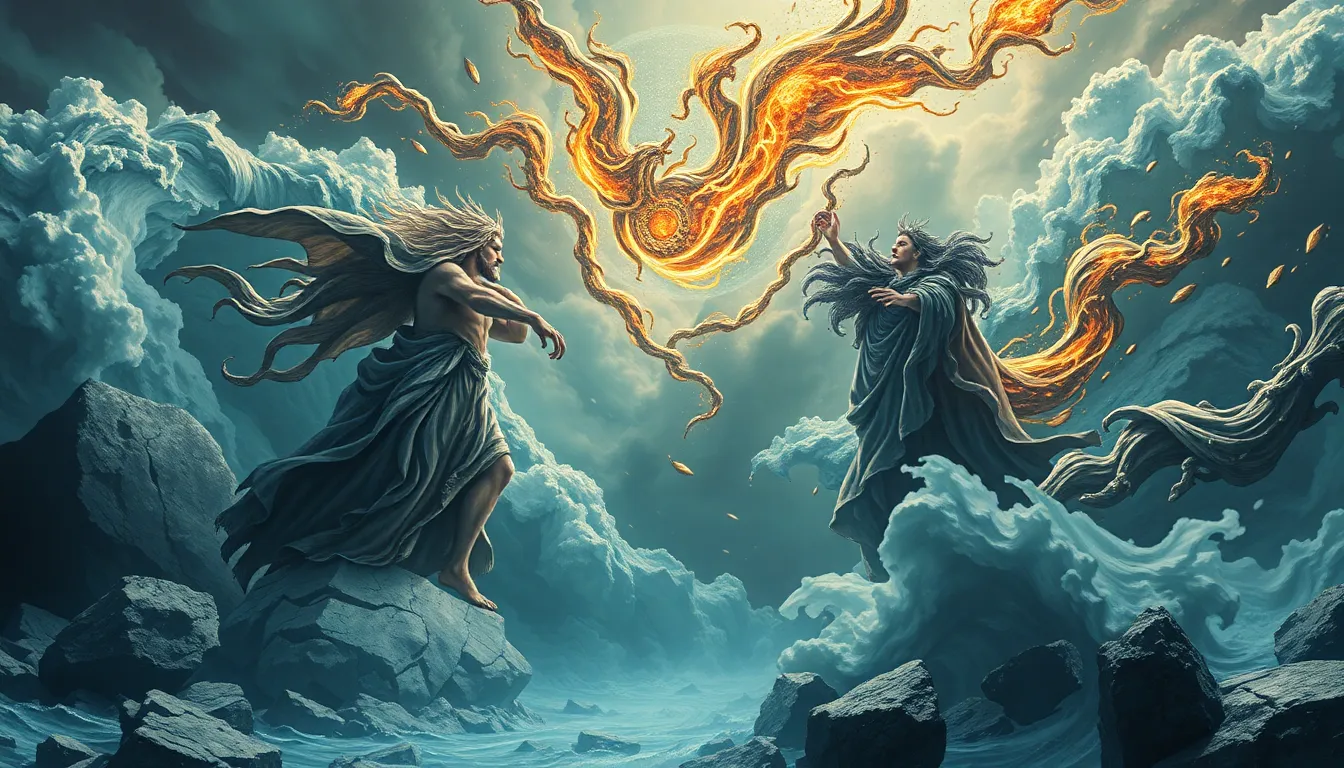
The Relationship Between Chaos and Time in Greek Mythology
I. Introduction
In Greek mythology, the concepts of chaos and time are intricately intertwined, playing crucial roles in the understanding of existence and the cosmos. This article delves into the definitions of chaos and time, exploring their interconnection and significance within the mythological framework.
A. Definition of Chaos in Greek Mythology
Chaos, in Greek mythology, is often viewed as the primordial void or the initial state of existence from which everything emerged. It represents a formless, chaotic condition that precedes the ordered universe.
B. Overview of Time as a Concept in Ancient Greece
Time, in ancient Greece, was perceived in multiple ways. It encompassed both the linear progression of events and the cyclical rhythms of nature. Time was not merely a measurement but a significant aspect that influenced both divine and mortal realms.
C. Purpose of the Article: Exploring the Interconnection between Chaos and Time
This article aims to explore how chaos and time interact within Greek mythology, shedding light on their roles in creation myths, cosmic order, and philosophical thought.
II. The Concept of Chaos in Greek Mythology
A. Origin and Meaning of Chaos
The term ‘chaos’ originates from the Greek word ‘khaos,’ which signifies emptiness or a void. In the Theogony of Hesiod, chaos is described as the first entity to exist, a primordial element from which all creation sprang.
B. Chaos as the Primordial State of Existence
Chaos represents the state of being before the cosmos was formed. It is a space of potentiality, a womb of creation where the first gods and elements emerged, including Gaia (Earth), Tartarus (the Abyss), and Eros (Love).
C. The Role of Chaos in Creation Myths
In various creation myths, chaos serves as the backdrop against which order is established. The transition from chaos to order is a central theme, highlighting the struggle and processes that lead to the formation of the universe.
III. The Nature of Time in Greek Mythology
A. Different Conceptions of Time: Chronos vs. Kairos
Greek mythology presents two distinct concepts of time:
- Chronos: Represents chronological or sequential time, the linear progression of events.
- Kairos: Refers to the opportune moment, qualitative time, emphasizing the significance of particular moments in life.
B. The Personification of Time: Chronos and Aion
Chronos is often depicted as an old man with a long beard, symbolizing the relentless passage of time. In contrast, Aion represents the eternal, cyclical nature of time, often associated with the zodiac and the universe’s infinite cycles.
C. Time’s Influence on the Cosmic Order and Human Life
Time shapes the cosmic order, dictating the rhythms of nature and the lives of mortals. The gods, though immortal, are also influenced by time’s passage, marking events such as birth, death, and transformation.
IV. The Interplay Between Chaos and Time
A. How Chaos Precedes the Structure of Time
Chaos is fundamental to the very existence of time. Before the advent of time, there was chaos—time emerges as a way to organize and structure the chaos into a coherent narrative of existence.
B. Time as a Tool for Managing Chaos
Time serves as a framework within which chaos can be understood and navigated. Through the progression of time, events unfold, allowing for the transformation of chaos into order, reflecting the natural cycles of life and death.
C. The Cyclical Nature of Time and its Relation to Chaos
Greek mythology often reflects a cyclical view of time, where chaos and order continuously interact. The seasons, life cycles, and mythological events illustrate how chaos and time perpetually influence one another.
V. Myths Illustrating the Relationship
A. The Creation Myth of Hesiod: Chaos and the Birth of the Universe
In Hesiod’s Theogony, chaos is the first entity, from which Gaia, Tartarus, and Eros emerge. This myth illustrates the transition from chaos to the ordered world, highlighting the primal forces at play in creation.
B. The Titanomachy: Chaos and the Reordering of Time
The Titanomachy, the battle between the Titans and the Olympians, symbolizes the struggle for order over chaos. The defeat of the Titans represents the establishment of a new cosmic order, reorganizing time and existence.
C. The Role of Chaos in the Stories of Prometheus and Other Myths
Prometheus embodies the tension between chaos and order. His defiance of the gods and the subsequent punishment reflect the chaos that arises from challenging established norms and the linear progression of time.
VI. Philosophical Implications of Chaos and Time
A. The Impact of Chaos on the Concept of Fate
Chaos introduces uncertainty into the concept of fate. While fate suggests a predetermined course of events, chaos allows for the possibility of change and the emergence of new paths.
B. Temporal Perspectives in Greek Philosophy: Heraclitus and Parmenides
Heraclitus posited that change is the fundamental essence of the universe, reflecting chaos, while Parmenides argued for the permanence of being. Their contrasting views on time and existence contribute to the philosophical discourse on chaos.
C. The Legacy of Chaos and Time in Western Thought
The interplay of chaos and time has influenced diverse fields, from literature to science, prompting reflections on existence, order, and the nature of reality throughout Western thought.
VII. Chaos and Time in Modern Interpretations
A. Influence of Greek Mythology on Contemporary Literature and Art
Modern literature and art often draw inspiration from Greek mythology, exploring themes of chaos and time through various narratives, characters, and motifs.
B. Chaos Theory and Time in Modern Science
Chaos theory in contemporary science examines complex systems and their unpredictable behaviors, reflecting the ancient understanding of chaos as a precursor to order. The relationship between time and chaos continues to be a subject of scientific inquiry.
C. Reflections on Chaos and Time in Popular Culture
Popular culture frequently revisits the themes of chaos and time, as seen in films, television shows, and video games, illustrating the enduring relevance of these concepts in storytelling.
VIII. Conclusion
A. Summary of Key Insights
This exploration of chaos and time in Greek mythology reveals their fundamental roles in understanding creation, cosmic order, and human existence.
B. The Lasting Significance of Chaos and Time in Understanding Existence
The relationship between chaos and time offers profound insights into existence, reflecting the complexities of life, the universe, and the human condition.
C. Invitation for Further Exploration of Mythological Themes
As we continue to explore Greek mythology, the themes of chaos and time invite deeper contemplation and connection to ancient wisdom that resonates with contemporary understanding.