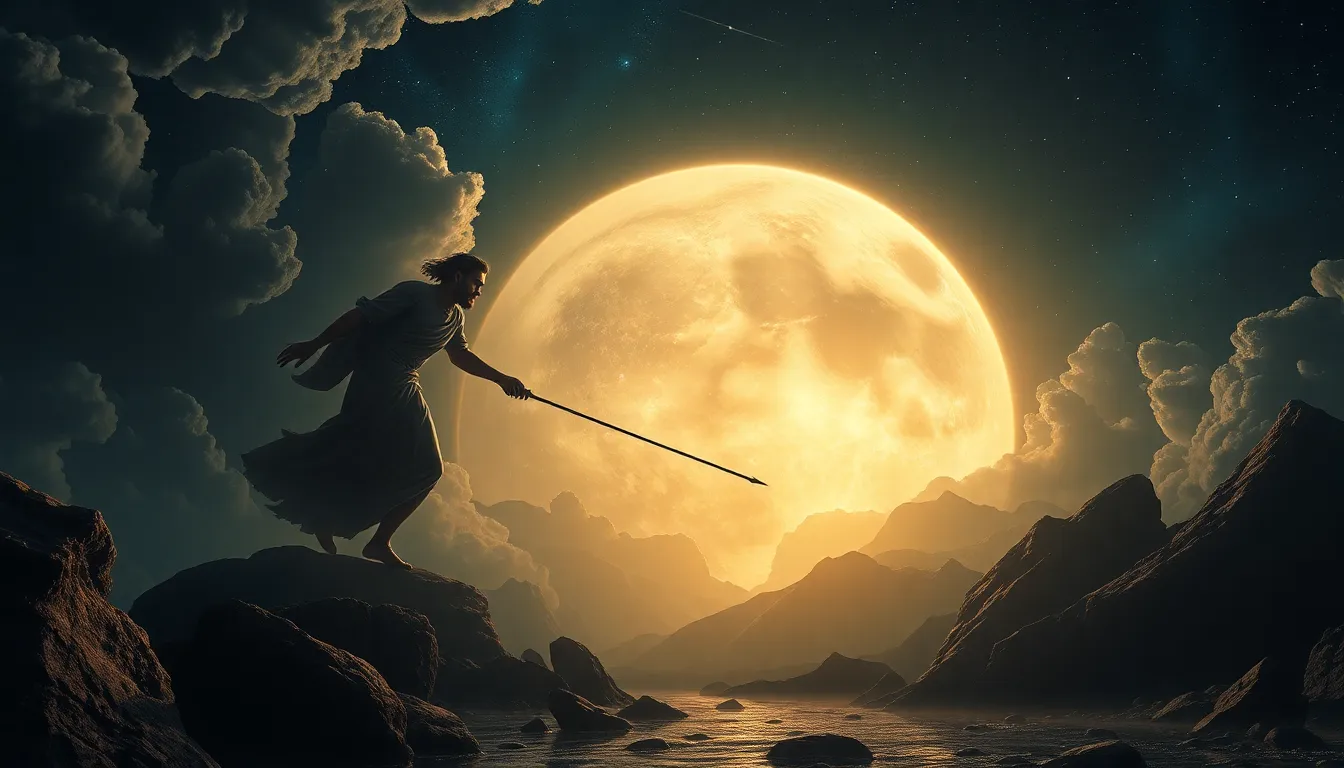
The Tragic Story of Uranus: A Titan’s Fall from Grace
I. Introduction
The figure of Uranus in Greek mythology stands as a profound symbol of cosmic power and the tragic arcs that define existence. In the realm of astronomy, Uranus is known as the seventh planet from the Sun, distinguished by its unique blue-green hue and tilted axis. However, it is in the rich tapestry of Greek mythology that we find a narrative steeped in themes of tragedy, betrayal, and downfall.
This article delves into the tragic story of Uranus, exploring his origins, reign, conflicts, and ultimate fall from grace, shedding light on how these mythological elements resonate through time.
II. The Birth of Uranus: A Cosmic Origin
Uranus is one of the primordial deities in Greek mythology, born from Chaos, the void from which all things originated. His very essence represents the sky, a domain that envelops the Earth and the heavens.
As the primordial god of the sky, Uranus holds significant importance in the mythological narrative:
- He embodies the eternal expanse above the Earth.
- His union with Gaia, the Earth, leads to the creation of the first generation of Titans and other entities.
III. The Rise of Uranus: A Titan’s Reign
Uranus’s reign marks a significant period in the creation of the cosmos. He is credited with fathering many of the Titans, giants, and other creatures that inhabit Greek mythology.
His relationship with Gaia is foundational:
- Together, they birthed the Titans, Cyclopes, and Hecatoncheires, forming the early pantheon of Greek gods.
- This union symbolizes the connection between the earth and sky, a crucial theme in many mythological narratives.
IV. The Seeds of Betrayal: Conflict with Gaia
Despite his initial grandeur, Uranus’s relationship with Gaia soured over time. Gaia became increasingly discontent with Uranus, particularly due to his treatment of their children.
Her grievances included:
- Uranus’s refusal to allow their children to emerge from the depths of Gaia.
- His oppressive dominance over the Earth, which led to a stifling environment for the Titans.
These grievances sowed the seeds of rebellion, leading to significant implications for future generations of gods and titans.
V. The Fall from Grace: The Rebellion of the Titans
The tension between Uranus and Gaia culminated in a dramatic rebellion led by their son Cronus. Encouraged by Gaia, Cronus devised a plan to overthrow his father.
The overthrow of Uranus is marked by the famous castration myth:
- Using a sickle fashioned by Gaia, Cronus castrated Uranus, symbolizing the severing of the sky from the earth.
- This act not only led to Uranus’s downfall but also signified the shift of power from the primordial beings to the Titans.
VI. The Aftermath: Consequences of Uranus’s Defeat
After his defeat, Uranus was cast into the depths of Tartarus, transforming into the very sky he once ruled. This transformation had profound implications:
- Uranus’s essence became intertwined with the heavens, symbolizing his eternal presence.
- The defeat of Uranus allowed the Titans to rise, leading to a new generation of gods, including Zeus, who would eventually challenge the Titans themselves.
VII. Uranus in Modern Astronomy: A Dual Legacy
The legacy of Uranus extends beyond mythology into the realm of modern astronomy. The discovery of the planet Uranus in 1781 by Sir William Herschel marked a significant milestone in celestial exploration.
Its cultural and scientific significance includes:
- Being the first planet discovered with a telescope, expanding our understanding of the solar system.
- Its unique axial tilt, which presents a different perspective on planetary dynamics.
VIII. Conclusion
The story of Uranus is a compelling tale of tragedy, power, and transformation. From his cosmic origins to his eventual downfall, Uranus embodies the cyclical nature of existence in mythology. His narrative serves as a reminder of the transient nature of power and the inevitable rise and fall of even the mightiest beings.
In reflecting on the tragic elements of Uranus’s story, we uncover timeless themes that resonate in today’s world. The enduring legacy of myth continues to shape our understanding of the universe and ourselves, inviting us to explore the deeper meanings behind these ancient tales.