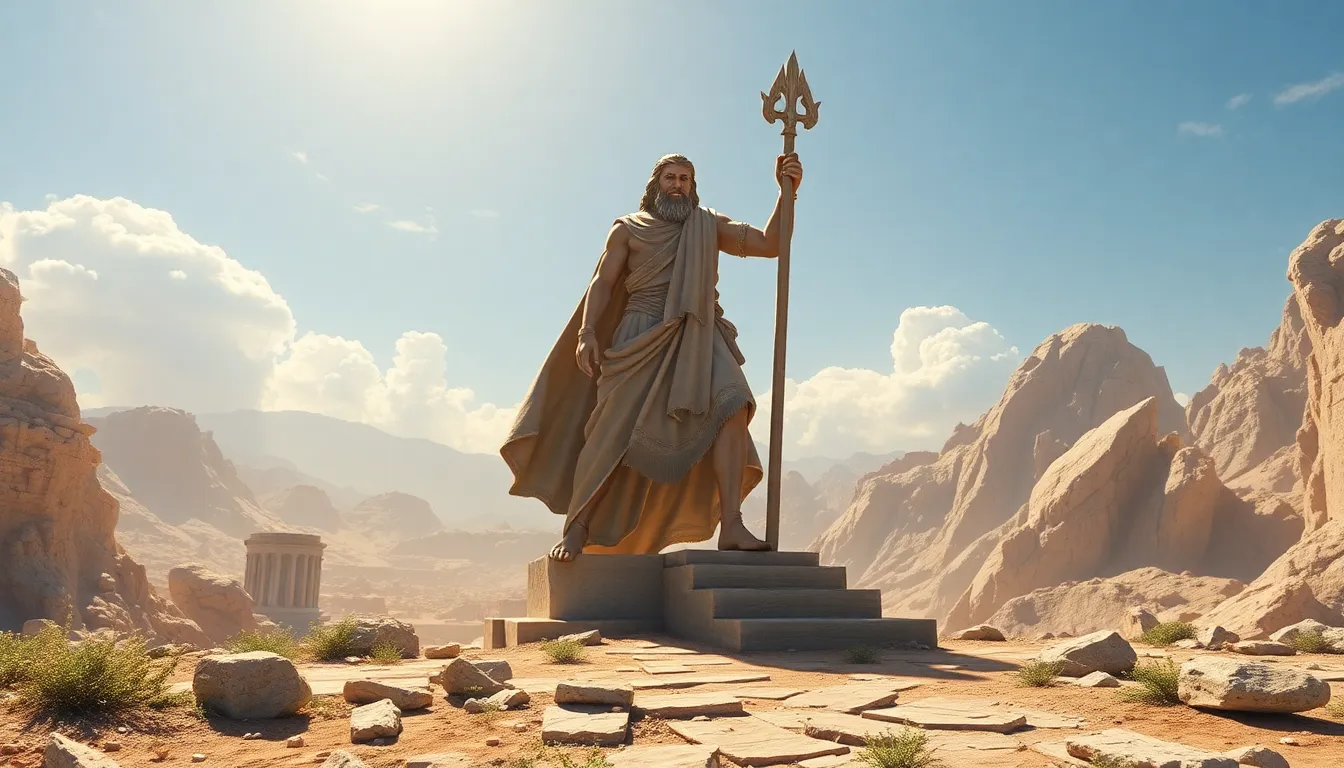
The Trials of Atlas: A Titan’s Journey Through Greek Myths
I. Introduction to Atlas: The Titan of Endurance
In the vast tapestry of Greek mythology, Atlas stands out as a symbol of endurance and strength. Known as a Titan, Atlas represents not only the physical burden of holding up the heavens but also the trials and tribulations that come with such immense responsibility. His story is woven into the larger narrative of the Titans, beings who played a crucial role in the ancient world’s understanding of power, struggle, and consequence.
The Titans, the ancestors of the Olympian gods, signify a primordial force in mythology that embodies nature and the cosmos. Their tales reflect humanity’s fears, aspirations, and the eternal conflict between chaos and order. Atlas’s journey is a poignant exploration of these themes, particularly the idea of trials—challenges that test one’s strength, resolve, and character.
II. The Origins of Atlas: Birth and Role Among the Titans
Atlas was born to the primordial deities, Uranus (the sky) and Gaia (the earth), which establishes his deep connections to both the heavens and the earth. As one of the Titans, he was part of a powerful lineage that included notable figures like Cronus and Rhea.
During the Titanomachy, the epic battle between the Titans and the Olympian gods, Atlas fought valiantly for his family. However, the Titans ultimately faced defeat. As a consequence of their loss, Zeus, the leader of the Olympians, condemned Atlas to an eternal punishment: he was to bear the weight of the heavens on his shoulders, a punishment that epitomizes the theme of endurance in his mythos.
III. The Burden of the World: Atlas as the Bearer of the Heavens
The most famous myth associated with Atlas is that he is condemned to hold up the sky, often misinterpreted as holding the Earth. This imagery has led to the common phrase “to carry the weight of the world,” symbolizing immense burdens that individuals may face.
In mythology, the weight of the heavens can be interpreted in various ways:
- Physical Burden: The literal interpretation of Atlas as a figure who bears a significant load.
- Emotional Strain: The psychological weight of responsibilities and expectations.
- Existential Symbolism: The eternal struggle of existence and the resilience required to face life’s challenges.
Throughout history, Atlas’s burden has been represented in both ancient and modern contexts, serving as a metaphor for human resilience in facing overwhelming odds.
IV. The Twelve Labors of Heracles: Atlas’s Involvement
Atlas’s story intertwines with that of Heracles, one of the most famous heroes in Greek mythology. During his Twelve Labors, Heracles was tasked with obtaining the golden apples from the Hesperides, which were guarded by a dragon and located at the edge of the world.
To retrieve these apples, Heracles sought the help of Atlas, knowing that the Titan could access the garden. In a moment of cooperation, Atlas agreed to fetch the apples for Heracles under one condition: Heracles would hold up the sky in his place. This interaction highlights themes of cooperation, sacrifice, and the delicate balance between strength and vulnerability.
Ultimately, the story reveals a clever twist, as Heracles outsmarts Atlas by requesting the Titan to hold the sky again for just a moment while he adjusts his cloak—an act that showcases Heracles’s ingenuity and the complex dynamics of their relationship.
V. Trials of Strength and Resilience: Atlas’s Journey
Atlas’s trials extend beyond mere physical endurance. His journey is also metaphorical, representing the struggles faced by all beings. Each trial he endures can be seen as a reflection of the universal human experience:
- Facing Consequences: Atlas’s punishment serves as a reminder that actions have repercussions.
- Enduring Hardship: His ability to bear the heavens symbolizes resilience in the face of adversity.
- Finding Strength: Atlas’s story encourages individuals to seek inner strength during challenging times.
Through various myths, Atlas emerges as a figure who embodies the essence of perseverance, illustrating that trials can lead to personal growth and deeper understanding.
VI. Atlas in Art and Literature: Cultural Representations
Throughout history, Atlas has been depicted in numerous forms of art and literature, each reflecting the cultural values of the time. Ancient Greek sculptures often portrayed him as a muscular figure, straining under the weight of the heavens, emphasizing both his strength and burden.
In literature, Atlas has inspired countless writers and poets, becoming a symbol of endurance and struggle. From classical texts to modern novels, his character has evolved:
- Classical Literature: References to Atlas appear in works by Homer and Hesiod, where he is depicted as both a formidable figure and a tragic character.
- Renaissance Art: Artists like Giorgio Vasari captured Atlas in paintings, often highlighting his strength and the poetic nature of his burden.
- Modern Interpretations: Contemporary works reinterpret Atlas as a figure representing the human condition, reflecting society’s challenges.
VII. The Legacy of Atlas: Endurance Through Ages
In contemporary society, Atlas remains a powerful symbol of resilience. His story resonates with individuals facing their trials, serving as a reminder that endurance can lead to personal growth. The legacy of Atlas is evident in:
- Symbol of Strength: Many use Atlas as an emblem of perseverance, inspiring movements focused on resilience and mental fortitude.
- Modern Storytelling: Artists, writers, and filmmakers continue to draw on Atlas’s myth, integrating themes of struggle and triumph into their narratives.
- Philosophical Reflections: Atlas’s journey often serves as a metaphor for existential challenges, prompting discussions about human purpose and endurance.
VIII. Conclusion: The Enduring Myth of Atlas
In conclusion, the trials of Atlas encapsulate a rich narrative of endurance and strength. His journey through Greek mythology not only illustrates the consequences of actions and the burdens we carry but also serves as an inspiring testament to the resilience of the human spirit.
As we reflect on Atlas’s trials, we are invited to consider our own struggles and the strength we exhibit in facing them. The myth of Atlas endures, reminding us that while we may carry heavy loads, we also possess the capacity to rise above our challenges and emerge stronger.