Delphi: The Ancient World’s Most Powerful Oracle
I. Introduction
In ancient times, an oracle was understood as a medium through which divine messages were conveyed to humans. Oracles held a significant place in the spiritual and political landscapes of ancient civilizations, providing guidance, prophecy, and insight into the future. Among these, the Oracle of Delphi stood out as the most powerful and revered oracle in the ancient world.
Situated in a mountainous region of Greece, Delphi was not only a site of religious significance but also a cultural and political hub. It was dedicated to Apollo, the god of prophecy, music, and the arts, and became a central point for worship, consultation, and pilgrimage. This article aims to explore the rich history, the practices associated with the oracle, and its profound influence on ancient Greek society.
II. Historical Background of Delphi
A. Geographic location and its importance
Delphi is located on the slopes of Mount Parnassus, in Phocis, Greece. Its strategic position, overlooking the Gulf of Corinth, made it easily accessible to travelers and pilgrims from all over the ancient world. The site was considered sacred, with its natural beauty and the presence of the Castalian Spring contributing to its significance. The spring was believed to have healing properties and was integral to the rituals performed at the oracle.
B. Founding myths and the establishment of the oracle
According to mythology, Delphi was founded after the slaying of the Python, a monstrous serpent that guarded the site. Apollo, seeking to establish his dominion, defeated the Python and claimed the sanctuary. The name “Delphi” itself is derived from the word “delphus,” meaning womb, symbolizing the earth’s nurturing aspect. The establishment of the oracle was attributed to Apollo, who spoke through the Pythia, the priestess of Delphi.
C. Key historical figures and events linked to Delphi
Throughout history, several prominent figures sought the guidance of the Oracle of Delphi, including:
- Athenian leader Themistocles, who consulted the oracle before the Battle of Salamis.
- Socrates, who famously claimed that the oracle declared him the wisest man in Athens.
- Alexander the Great, who visited Delphi to seek divine approval before his conquests.
These interactions illustrate the oracle’s pivotal role in shaping both individual destinies and broader historical events.
III. The Pythia: The Priestess of Delphi
A. Role and responsibilities of the Pythia
The Pythia was the high priestess of the Temple of Apollo and served as the oracle’s voice. Her primary responsibility was to deliver prophecies and divine messages to those who sought guidance. The Pythia’s words, often cryptic and ambiguous, were believed to be inspired by Apollo himself.
B. Selection process and training of the Pythia
The selection of the Pythia was a serious matter, typically involving a carefully chosen woman, often from the local community. She would undergo a rigorous process of training and purification. The Pythia was usually an older woman, perceived as having the wisdom and experience to interpret divine will.
C. The rituals and ceremonies associated with her oracles
The rituals at Delphi were elaborate and sacred. On the day of the oracle, the Pythia would enter the inner sanctum of the temple, where she would sit on a tripod over a fissure in the earth, believed to emit vapors that inspired her prophetic visions. The following steps typically characterized the ceremony:
- Purification in the Castalian Spring.
- Offerings made to Apollo.
- Consumption of sacred laurel leaves.
- Recitation of prayers and hymns.
After entering a trance-like state, the Pythia would utter words interpreted by the priests into coherent prophecies.
IV. The Process of Divination at Delphi
A. Description of the oracle’s process and techniques
The divination process at Delphi was a complex interplay of ritual, environment, and the Pythia’s spiritual connection. The oracle’s responses were not straightforward; they often required careful interpretation. The Pythia’s utterances were delivered in a frenzied state, evoking a sense of mysticism that surrounded the oracle’s activities.
B. Use of sacred substances and elements in divination
The Pythia’s trance was thought to be induced by inhaling vapors from the chasm beneath the temple. These vapors, possibly ethylene or other psychoactive substances, played a crucial role in her ability to deliver prophecies. In addition, laurel leaves, sacred to Apollo, were chewed as a part of the preparation process, symbolizing the connection to the divine.
C. Interpretation of the Pythia’s cryptic responses
The interpretations of the Pythia’s responses were often vague and open to multiple meanings. This ambiguity served as a double-edged sword, as it allowed for various interpretations that could be molded to fit different situations. The priests of Delphi, skilled in the art of interpretation, played a vital role in translating her words into actionable advice for the seekers.
V. Influence of Delphi on Ancient Greek Society
A. Political significance and its role in decision-making
The Oracle of Delphi wielded immense political power, with leaders and statesmen consulting it before making crucial decisions. The oracle’s guidance was often sought on matters of war, alliances, and colonization. The famous maxim “Know thyself,” inscribed at the temple, encouraged self-reflection and wisdom in governance.
B. Cultural and religious impact on ancient Greece
Delphi was not only a political center but also a cultural and religious one. It hosted the Pythian Games, a precursor to the Olympic Games, celebrating athletic prowess and artistic talent. The site became a melting pot of Greek culture, where people from various city-states gathered to pay homage to Apollo and to participate in competitions.
C. Case studies of significant oracles and their outcomes
Some notable oracles that had profound impacts include:
- The oracle’s advice to Croesus, king of Lydia, which led him to war with Persia, resulting in his downfall.
- The oracle’s guidance to the Athenians, predicting victory over the Persians at Salamis, which turned the tide of the Greco-Persian Wars.
- Socrates’ claim of wisdom based on the oracle’s proclamation, which influenced his philosophical journey.
VI. The Sanctuary of Apollo
A. Architectural features of the Delphi sanctuary
The Sanctuary of Apollo at Delphi was an architectural marvel, characterized by its grand structures and intricate design. Key features included:
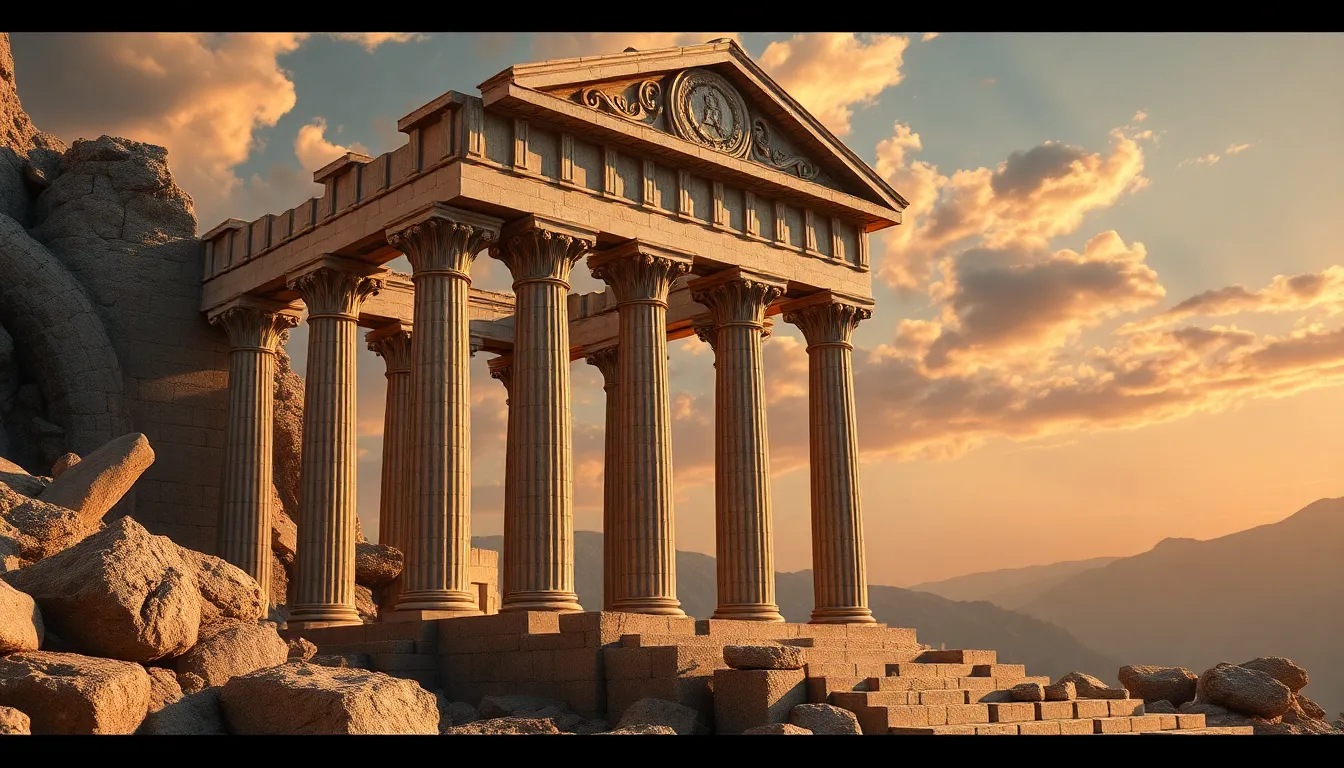
- The Temple of Apollo, known for its impressive columns and ornate sculptures.
- The Tholos, a circular building that served various religious functions.
- The theater that could seat thousands, showcasing the cultural significance of the site.
B. Art and artifacts discovered at the site
Archaeological discoveries at Delphi have unearthed a wealth of artifacts, including:
- Sculptures depicting mythical scenes and deities.
- Inscribed offerings and dedications from various city-states.
- Votive statues and gifts from pilgrims seeking the oracle’s favor.
These artifacts provide insight into the religious practices and artistic expressions of ancient Greece.
C. The significance of the Temple of Apollo
The Temple of Apollo was the heart of the sanctuary, where the oracle resided. It housed the cult statue of Apollo and served as the backdrop for the Pythia’s prophetic activities. The temple’s architectural beauty symbolized the divine connection between Apollo and the people of Greece, reinforcing the importance of Delphi as a spiritual center.
VII. Decline and Legacy of the Oracle of Delphi
A. Factors contributing to the decline of the oracle’s influence
The Oracle of Delphi began to decline during the Roman Empire due to several factors: