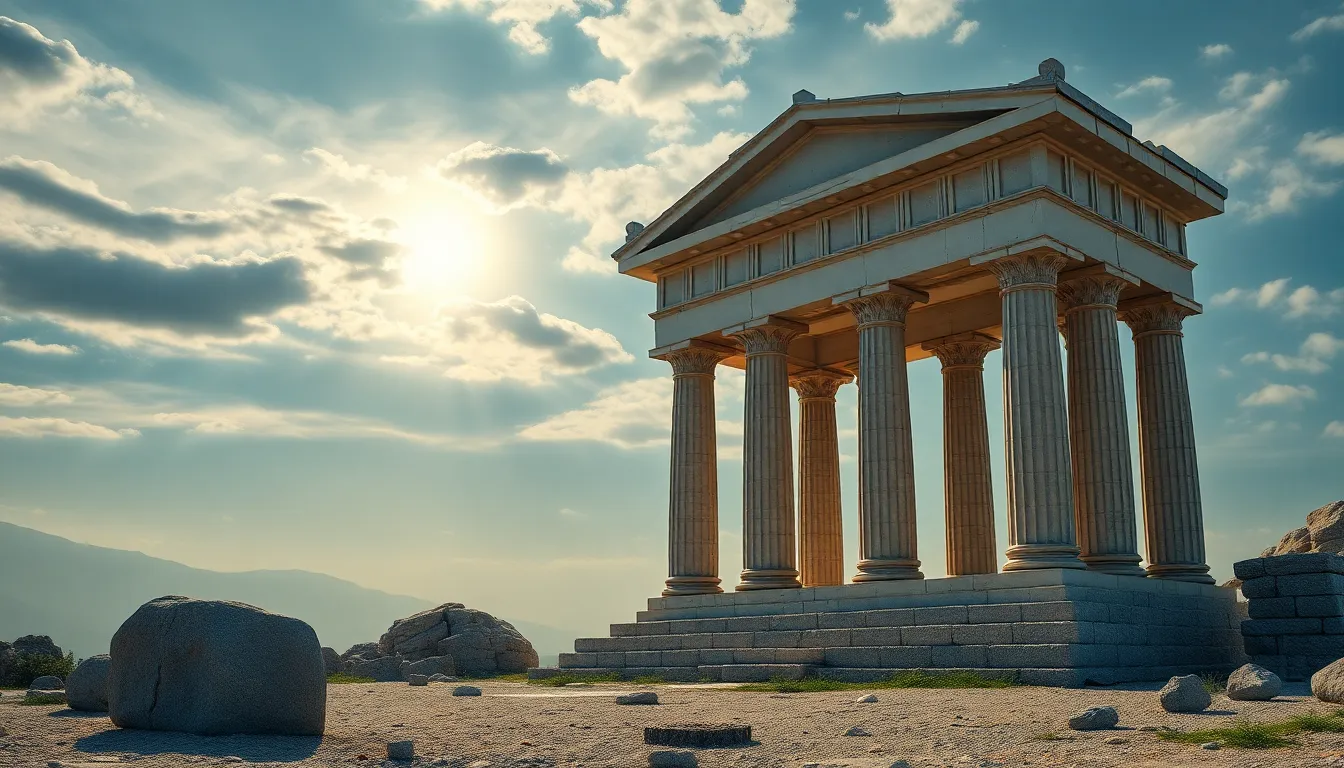
The Mythical Lens: How Photographers Capture Greek Legends
I. Introduction
Greek mythology, a rich tapestry of stories, characters, and themes, has captivated audiences for millennia. These myths not only shape our understanding of ancient Greek culture but also resonate through modern storytelling, art, and literature. The vivid tales of gods, heroes, and mythical creatures have inspired countless interpretations, with photography emerging as a powerful medium for capturing and interpreting these legends.
In the realm of visual arts, photography plays a unique role in preserving and interpreting myths, allowing artists to translate age-old narratives into contemporary visual language. The purpose of this article is to explore the intersection of photography and Greek mythology, examining how photographers draw inspiration from ancient tales, and how their work helps to keep these legends alive in the modern world.
II. The Rich Tapestry of Greek Myths
A. Brief history of Greek mythology
Greek mythology is a collection of narratives centered around the pantheon of gods, goddesses, heroes, and mythical creatures. These stories were passed down through generations, often through oral traditions, and later recorded in texts like Homer’s “Iliad” and “Odyssey,” and Hesiod’s “Theogony.” The myths were intertwined with the religious beliefs and practices of ancient Greece, providing explanations for natural phenomena, human behavior, and the origins of the world.
B. Major themes and characters in Greek legends
Greek myths are rich with themes of heroism, love, betrayal, and the struggle between fate and free will. Some of the most prominent characters include:
- Zeus: The king of the gods, ruler of Mount Olympus, and god of the sky.
- Hera: Zeus’s wife and goddess of marriage and family.
- Athena: The goddess of wisdom and warfare, often depicted as a fierce protector of heroes.
- Hades: The god of the underworld, overseeing the realm of the dead.
- Heracles: A demigod and hero known for his strength and twelve labors.
C. The impact of myths on art and storytelling
The influence of Greek mythology extends beyond literature into the visual arts, inspiring countless works of painting, sculpture, and more recently, photography. This cultural heritage not only enriches artistic expression but also serves as a source of moral lessons, social commentary, and cultural identity.
III. Photography as a Modern Myth-Making Tool
A. The evolution of photography in storytelling
Since its invention in the 19th century, photography has evolved from a technical novelty into a profound storytelling medium. Photographers have harnessed the power of the camera to document reality, express emotions, and recreate narratives. As photography became more accessible, artists began to explore mythological themes, using their lens to reinterpret ancient stories for modern audiences.
B. How photographers interpret and recreate myths
Photographers often draw upon the symbolism and themes found in Greek mythology to create visually stunning narratives. By selecting locations, models, and costumes that evoke the essence of these myths, they reinterpret these timeless stories through a contemporary lens. The use of dramatic lighting, composition, and color can further enhance the mythical qualities of their images.
C. The influence of digital technology on mythological representation
The rise of digital technology has revolutionized photography, allowing for greater creativity and manipulation in mythological representations. Digital editing tools enable photographers to blend reality with imagination, creating ethereal landscapes and fantastical characters that resonate with mythological themes.
IV. Iconic Locations: The Backdrop of Greek Myths
A. Overview of significant mythological sites in Greece
Greece is dotted with locations steeped in mythological significance. Some of the most iconic sites include:
- Mount Olympus: The mythical home of the gods, often shrouded in clouds and mystery.
- Delphi: The site of the Oracle, where prophecies were delivered by the priestess Pythia.
- Crete: The birthplace of Zeus and home to the Minotaur’s labyrinth.
- Mycenae: The legendary city of Agamemnon, known for its grand architecture and rich history.
B. How landscapes and architecture enhance storytelling in photography
The stunning landscapes and ancient architecture of Greece serve as powerful backdrops for mythological photography. Photographers can leverage the natural beauty and historical significance of these locations to enhance their narratives, creating a sense of authenticity and connection to the myths.
C. Case studies of photographers capturing these locations
Many photographers have successfully captured the essence of Greek mythology through their work. For instance, renowned photographer David LaChapelle has created striking images at ancient sites, infusing them with modern elements. Similarly, Elena Shumilova‘s work often brings elements of myth to life in lush, evocative landscapes, demonstrating the power of place in storytelling.
V. The Role of Models and Costumes in Mythological Photography
A. The importance of casting and costume design in myth representation
The casting of models and the design of costumes are crucial in bringing mythological characters to life. A photographer’s ability to convey the essence of a character—be it a god, goddess, or hero—relies heavily on these elements. Appropriately designed costumes can evoke the grandeur of ancient Greece, while skilled models can embody the emotions and traits of mythological figures.
B. Techniques for bringing characters to life through photography
Photographers employ various techniques to enhance the portrayal of mythological characters:
- Posing: Capturing dynamic and expressive poses that reflect the character’s personality.
- Facial Expressions: Encouraging models to convey emotions that resonate with the mythological narrative.
- Interaction with Props: Using props that are symbolically relevant to the myths being portrayed, such as shields, laurel wreaths, or mythical creatures.
C. Examples of successful mythological photo shoots
Notable photographers like Tim Walker have created elaborate mythological scenes that transport viewers into the realms of ancient tales. His ability to merge fashion with storytelling has led to photo shoots that echo the grandeur of Greek myths, showcasing the powerful intersection of visual art and narrative.
VI. Techniques and Styles: Capturing the Essence of Legends
A. Overview of photographic techniques used in mythological photography
Various photographic techniques are employed to convey the grandeur and depth of mythological themes:
- Long Exposure: Used to capture movement and dreamlike effects, enhancing the mythical quality of an image.
- Macro Photography: Focusing on small details to highlight symbolic elements within a scene.
- Wide-Angle Shots: Capturing expansive landscapes to create a sense of scale and majesty.
B. The use of lighting, composition, and color to convey mythic themes
Lighting plays a crucial role in evoking the mood of a photograph. Soft, diffused light can create an ethereal quality, while dramatic shadows can enhance the tension of a scene. Composition techniques such as the rule of thirds can help create visually engaging images that draw the viewer’s eye to key elements of the story. Color palettes can also be strategically chosen to reflect the emotional undertones of the myths being portrayed.
C. The role of post-processing in enhancing mythological imagery
Post-processing techniques allow photographers to refine their images further. Adjustments in contrast, saturation, and sharpness can enhance the mythical quality of the photographs. Additionally, digital manipulation enables artists to create fantastical elements, blending reality with imagination to produce stunning interpretations of Greek legends.
VII. Challenges in Representing Mythology Through Photography
A. Balancing artistic interpretation with historical accuracy
One of the primary challenges in mythological photography is finding a balance between artistic expression and historical authenticity. While creative interpretations can bring fresh perspectives, they may also risk misrepresenting the original myths. Photographers must navigate this delicate balance to respect the cultural significance of the stories they depict.
B