Unearthing the Myths: The Temples of Ancient Greece Revealed
I. Introduction
The temples of Ancient Greece stand as monumental testaments to a civilization that thrived over two millennia ago. These sacred structures were not only places of worship but also reflections of the cultural, political, and social dynamics of their time. From the majestic Parthenon to the intricately designed Temple of Apollo at Delphi, each temple offers a glimpse into the beliefs and values of ancient Greeks.
This article aims to debunk common myths surrounding these iconic structures while revealing the true nature of their significance. By exploring their architectural marvels, purposes, and the stories they tell, we can gain a deeper understanding of Ancient Greece and its enduring legacy.
II. The Architectural Marvels of Ancient Greece
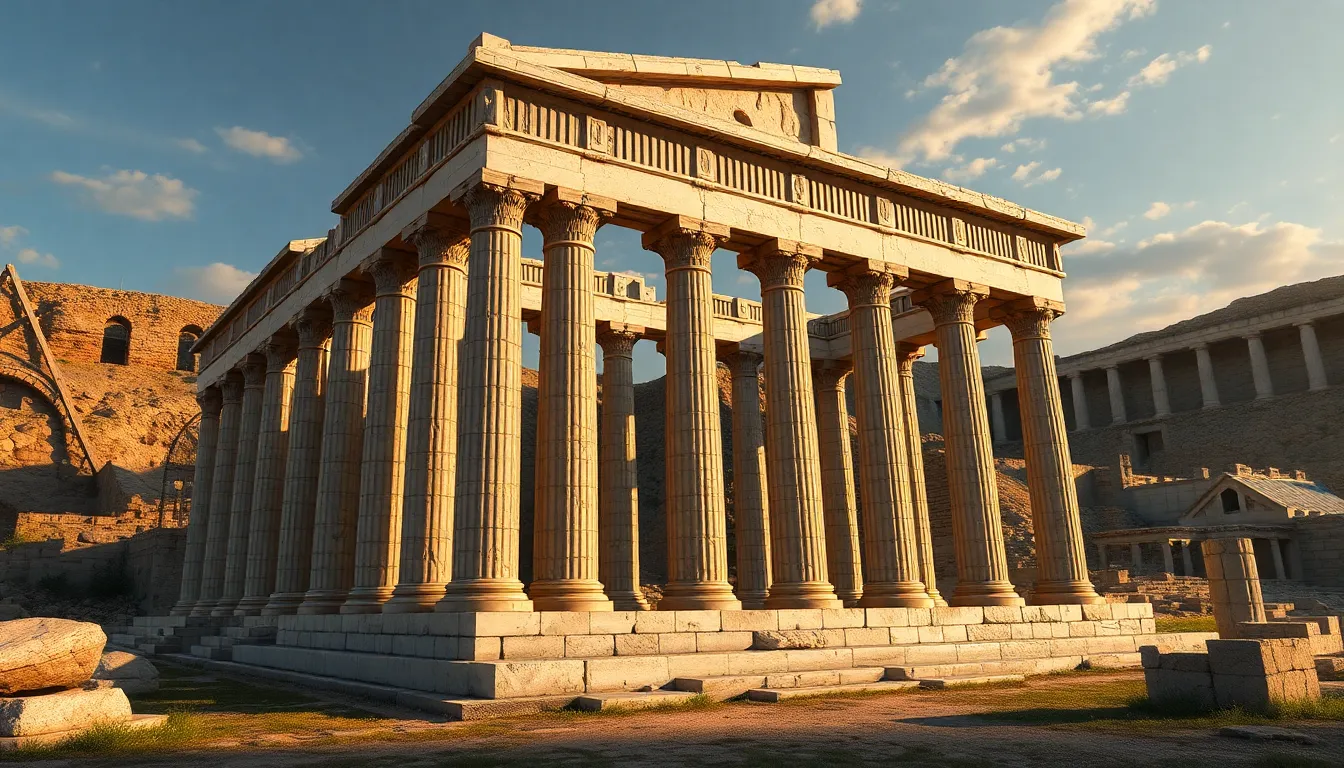
Greek temples are celebrated for their architectural brilliance, characterized by their harmonious proportions and intricate details. The design of these temples reflects not just artistic beauty but also the mathematical precision that the Greeks mastered.
A. Key architectural features of Greek temples
Several defining features characterize Greek temples:
- Column Styles: The use of columns is a hallmark of Greek architecture, with each temple typically featuring a distinct style.
- Pronaos and Opisthodomos: The front and back porches of the temple, often adorned with columns.
- Cella: The inner chamber where the deity’s statue was housed, often the most sacred part of the temple.
- Entablature: The horizontal structure supported by columns, which includes the architrave, frieze, and cornice.
- Pediments: The triangular upper part of the temple’s front and back, often decorated with sculptures.
B. Different orders of Greek architecture: Doric, Ionic, and Corinthian
Greek temples are categorized into three architectural orders, each with unique characteristics:
- Doric Order: The simplest and oldest style, characterized by sturdy columns with fluted shafts and no base.
- Ionic Order: Notable for its elegant, slender columns with volutes (spiral scrolls) at the capital and a base.
- Corinthian Order: The most ornate style, featuring elaborate capitals decorated with acanthus leaves and scrolls.
III. The Purpose and Function of Temples
While primarily known as places of worship, Greek temples served multiple purposes within the fabric of city-states.
A. Religious significance and worship practices
Temples were dedicated to specific deities and played a central role in the religious life of the community. They housed the cult statues of gods and provided a space for rituals, sacrifices, and festivals. Major religious practices included:
- Animal Sacrifices: Offerings to the gods to seek favor or express gratitude.
- Festivals: Celebrations held in honor of deities, often featuring athletic competitions and artistic performances.
- Oracles: Many temples, like that of Apollo at Delphi, served as sites for prophetic consultations.
B. Social and political roles of temples in Greek city-states
Beyond their religious functions, temples acted as community centers. They were often the site of:
- Political Gatherings: Residents would convene at temples for important announcements and decisions.
- Economic Activities: Temples often managed significant wealth and resources, serving as banking institutions.
- Artistic Expression: Temples were venues for artistic endeavors, with many featuring sculptures and reliefs that told stories of gods and heroes.
IV. Common Myths About Greek Temples
Despite their significance, several myths surrounding Greek temples persist. Here, we will address some of the most common misconceptions.
A. Myth 1: All Greek temples were built for gods
While many temples were indeed dedicated to deities, some served other purposes. For example, certain temples functioned as civic buildings or were dedicated to heroes and ancestors, reflecting the complexity of Greek religious practices.
B. Myth 2: Temples were purely religious structures
As discussed, temples served various social and political functions beyond mere worship. They were integral to the communal life of Greek city-states.
C. Myth 3: Temples were always grand and opulent
Not all temples were grand structures like the Parthenon. Many smaller, simpler temples catered to local deities and communities, reflecting a range of architectural styles and resources.
V. Notable Temples and Their Stories
Several temples stand out in history due to their architectural significance and historical narratives.
A. The Parthenon: A symbol of Athenian democracy
The Parthenon, dedicated to the goddess Athena, is perhaps the most iconic of Greek temples. Located on the Acropolis of Athens, it epitomizes the glory of Ancient Greece and serves as a symbol of Athenian democracy and cultural achievements.
B. The Temple of Apollo at Delphi: The Oracle and its influence
The Temple of Apollo at Delphi was home to the famous Oracle, where Pythia, the priestess, would deliver prophecies. This temple played a crucial role in the political and spiritual life of the Greeks, influencing decisions in wars and governance.
C. The Temple of Hephaestus: A model of preservation
Located in the Ancient Agora of Athens, the Temple of Hephaestus is one of the best-preserved temples from antiquity. Its survival offers invaluable insights into the construction and architectural styles of the time.
VI. Archaeological Discoveries and Insights
Archaeological efforts have continually reshaped our understanding of Greek temples and their roles in society.
A. Recent findings that challenge previous beliefs
Recent excavations have uncovered evidence suggesting that many temples had multi-functional uses, combining religious, social, and commercial activities that were previously underestimated.
B. Technological advancements in archaeology and their impact
Modern technology, such as ground-penetrating radar and 3D modeling, has allowed archaeologists to explore sites without excavation, revealing hidden structures and providing new insights into the layout and usage of temples.
VII. The Legacy of Ancient Greek Temples Today
The influence of Ancient Greek temples extends far beyond their physical remnants.
A. Influence on modern architecture and culture
Greek architectural principles continue to inspire modern architecture, with many government buildings and monuments around the world emulating the Doric, Ionic, and Corinthian styles. The concepts of symmetry, proportion, and the use of columns are evident in contemporary designs.
B. Preservation efforts and challenges facing ancient sites
Preserving ancient temples poses significant challenges due to environmental factors, urban development, and tourism. Efforts are underway globally to protect these irreplaceable cultural heritage sites, ensuring they can be appreciated by future generations.
VIII. Conclusion
In summary, the temples of Ancient Greece are far more than mere relics of the past; they are complex structures that reveal the multifaceted nature of Greek society. By debunking common myths and exploring their architectural, religious, and social significance, we gain a deeper appreciation for these remarkable achievements.
Understanding the history and myths surrounding Greek temples not only enriches our knowledge of ancient civilizations but also highlights the timeless influence of their legacy on modern culture and architecture.