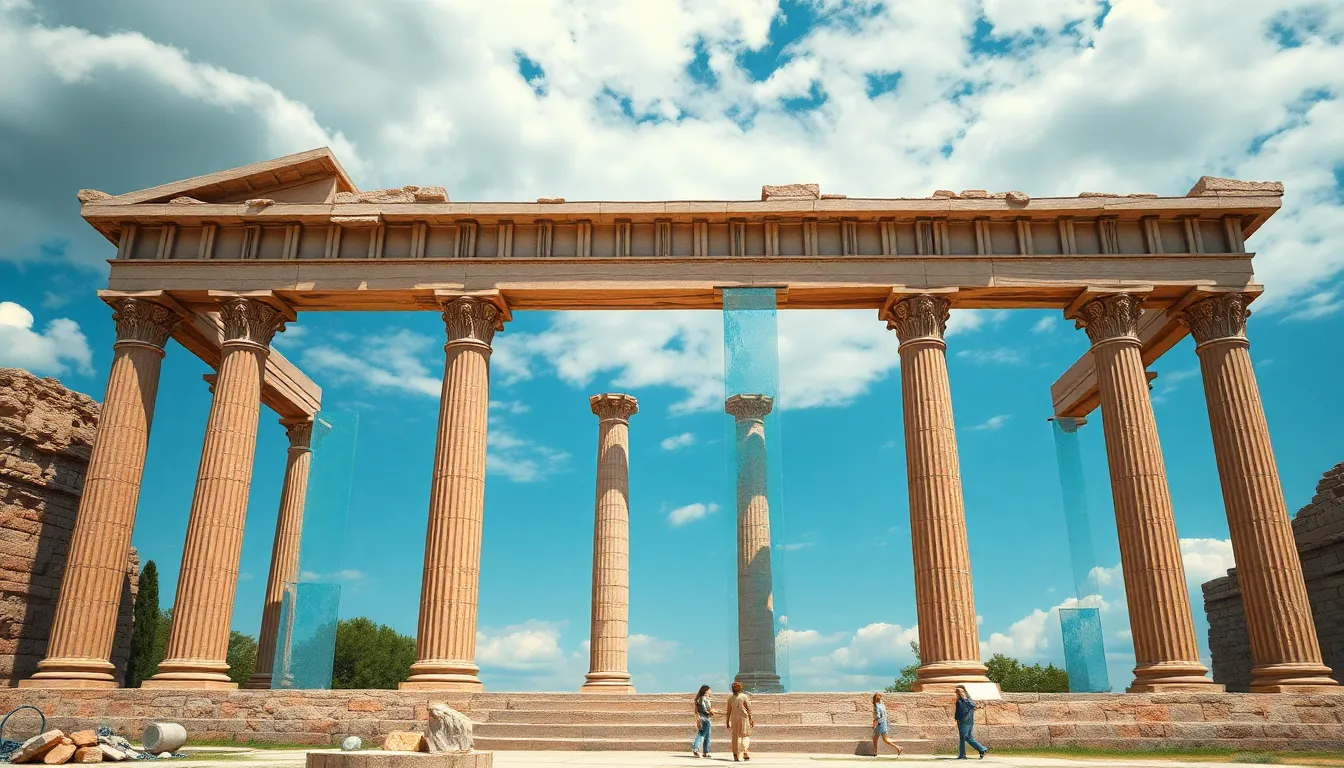
The Temples of Ancient Greece: A Legacy of Belief and Beauty
I. Introduction
Ancient Greece, a civilization that flourished from the 8th century BCE to the end of antiquity, is renowned for its profound contributions to art, philosophy, and politics. Central to its cultural identity were the temples, magnificent structures dedicated to the gods and goddesses of the Greek pantheon. These temples were not merely places of worship but also served as focal points for community life, embodying the values and beliefs of Greek society.
The significance of temples in ancient Greek religious practices cannot be overstated. They were the physical manifestations of Greek mythology and the center of various cults and rituals. This article aims to explore the historical context, architectural features, major temples, and the societal roles of these sacred structures, ultimately showcasing their enduring legacy.
II. Historical Context of Greek Temples
The evolution of temple architecture in Greece can be traced from the Bronze Age through to the Hellenistic period. Early temples were modest, often constructed from mud bricks and wood. However, with the advent of the Archaic period, stone began to dominate temple construction, leading to the development of distinct architectural styles.
Mythology and religion heavily influenced temple construction. Each temple was dedicated to a specific deity, reflecting their attributes and the myths surrounding them. Temples were designed to house cult statues and serve as venues for rituals, thus intertwining the sacred with the daily lives of the Greeks.
Key historical events, such as the Persian Wars and the rise of city-states like Athens, significantly shaped temple building. The increased wealth and power of these states led to the construction of grand temples that not only honored the gods but also showcased civic pride and artistic achievement.
III. Architectural Features of Greek Temples
Greek temples are renowned for their distinct architectural styles, primarily the Doric, Ionic, and Corinthian orders. Each style is characterized by unique features:
- Doric: The most austere of the three, Doric columns are sturdy and fluted, with a simple capital.
- Ionic: More slender and elegant, Ionic columns feature a scroll-like design (volutes) on their capitals.
- Corinthian: The most ornate, Corinthian columns are tall and decorated with acanthus leaves and scrolls.
Structural elements of Greek temples, such as columns, pediments, and friezes, played crucial roles not only in aesthetics but also in the integrity of the buildings. The colonnade, or row of columns, provided support while also creating a majestic facade. The pediment, the triangular upper part of the building, often displayed intricate sculptures depicting mythological scenes.
Symmetry and proportion were essential in Greek temple design, adhering to mathematical principles that created a sense of harmony and beauty. The use of the Golden Ratio, for example, was prevalent, ensuring that temples were visually pleasing to the eye.
IV. Major Temples and Their Significance
Among the numerous temples that dotted the landscape of ancient Greece, several stand out due to their architectural brilliance and cultural significance:
A. The Parthenon
Located on the Acropolis of Athens, the Parthenon is perhaps the most iconic example of ancient Greek architecture. Dedicated to the goddess Athena, the Parthenon symbolizes Athenian democracy and artistic achievement. Its grandeur and intricate sculptures, including the famous frieze and the statue of Athena Parthenos, reflect the advanced skills of Greek artisans.
B. The Temple of Zeus at Olympia
This temple, dedicated to the king of the gods, Zeus, was located in Olympia, the site of the ancient Olympic Games. The temple housed a monumental statue of Zeus, one of the Seven Wonders of the Ancient World. It served not only as a religious center but also as a gathering place for athletes and spectators, celebrating athletic prowess and divine favor.
C. The Temple of Apollo at Delphi
Delphi was considered the center of the world in ancient Greek mythology, and its temple dedicated to Apollo was a site of prophecy and wisdom. The Oracle of Delphi provided guidance and insights to those seeking knowledge, making the temple a crucial institution in Greek society. Its significance extended beyond religion, influencing politics and culture throughout Greece.
V. The Role of Temples in Ancient Greek Society
Temples in ancient Greece served multifaceted roles within society. They were not only places of worship but also served as community centers where people gathered for various activities.
- Centers of Worship: Temples were the focal points for religious activities, where rituals, sacrifices, and festivals were conducted to honor the gods.
- Community Gatherings: Temples often hosted public gatherings, providing a space for social interaction and community bonding.
- Economic Impact: Temples contributed significantly to local economies, attracting pilgrims and tourists who brought commerce and trade to the surrounding areas.
Festivals and rituals associated with temples played a vital role in the socio-religious life of the Greeks. Major festivals, such as the Panathenaea in honor of Athena and the Olympic Games for Zeus, were held at these sacred sites, enhancing their cultural relevance.
VI. Artistic Representations and Inscriptions
The artistic elements of Greek temples were not just decorative; they played a critical role in conveying religious beliefs and community values.
A. Sculptural Decoration
Sculptures adorned the pediments, friezes, and columns of temples, often depicting scenes from mythology, heroic deeds, and divine interactions. These artworks served to communicate the grandeur of the gods and the importance of the temple itself.
B. Inscriptions
Inscriptions found in and around temples often honored deities, commemorated victories, or recorded dedications made by worshippers. They provided a historical record of the religious practices and societal values of the time.
C. Interplay of Art and Architecture
The combination of art and architecture in temples created a holistic experience for worshippers, where the beauty of the structure enhanced the spiritual atmosphere. This interplay highlighted the Greeks’ understanding of the divine and their desire to create a lasting legacy through their artistic endeavors.
VII. The Legacy of Greek Temples in Modern Times
The influence of Greek temples extends far beyond their original context, affecting architecture, culture, and society in modern times.
A. Influence on Renaissance Architecture
The Renaissance period saw a revival of interest in classical architecture, with many architects drawing inspiration from Greek temple designs. This led to the development of neoclassical styles that emphasized symmetry, proportion, and the use of columns.
B. Preservation and Restoration Efforts
Many ancient Greek temples have undergone preservation and restoration efforts to maintain their structural integrity and historical significance. These initiatives allow contemporary society to appreciate and learn from these architectural marvels.
C. Ongoing Cultural Significance
Greek temples continue to hold cultural significance, serving as symbols of democracy, artistic achievement, and spiritual heritage. They inspire modern architecture and continue to attract scholars, tourists, and enthusiasts from around the world.
VIII. Conclusion
The temples of ancient Greece stand as a testament to the civilization’s enduring legacy. They embody the artistic, architectural, and spiritual achievements of a society that profoundly shaped the course of history. From the Parthenon to the Temple of Apollo, each structure tells a story of faith, community, and artistry.
Reflecting on the influence of Greek temples reminds us of the vital role that art and architecture play in expressing human beliefs and values. Their preservation is crucial, ensuring that future generations can learn from and appreciate the rich tapestry of ancient Greek culture.