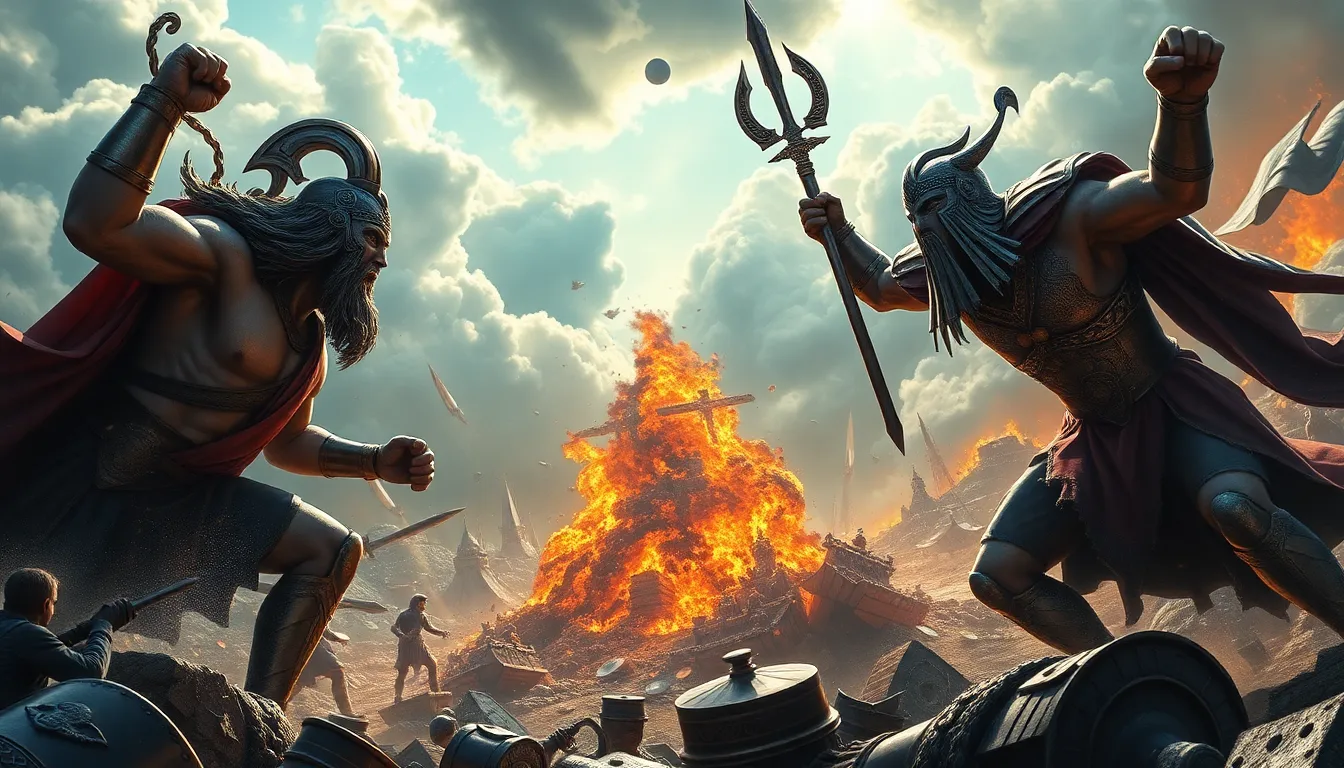
The Clash of Titans: The War That Shook the Heavens
I. Introduction
The Clash of Titans, also known as the Titanomachy, stands as one of the most significant conflicts in Greek mythology, embodying the struggle between the primordial beings, the Titans, and the Olympian gods. This monumental war not only reshaped the divine hierarchy but also set the stage for the future of the cosmos.
In this article, we will delve into the key players and factions involved in this epic conflict, examining their motivations, the historical context that led to the war, and the profound consequences that followed. Our exploration aims to provide a comprehensive understanding of this pivotal moment in mythology.
II. Historical Context
The Titanomachy was not an isolated event but rather the culmination of centuries of tension between the Titans, who represented the old order, and the newer generation of gods led by Zeus. This section will outline the background of the conflict, detailing the previous tensions that foreshadowed the war.
A. Background of the conflict
The Titans, descendants of Gaia (the Earth) and Uranus (the Sky), ruled during the Golden Age, a time characterized by peace and prosperity. However, the rise of the Olympian gods, particularly Zeus and his siblings, marked a significant shift in power dynamics.
B. Previous tensions leading to the war
Several key events led to the brewing conflict:
- The castration of Uranus by Cronus, one of the Titans, resulting in the imprisonment of the Cyclopes and Hecatoncheires.
- The prophecy that one of Cronus’s children would overthrow him, which led to Cronus swallowing his offspring.
- The eventual rescue of Zeus and his siblings by Rhea, which ignited the conflict.
C. Key events that set the stage for the clash
As tensions escalated, the stage was set for war through a series of betrayals and alliances. Zeus’s emergence as a leader of the Olympians and his call to arms against the Titans marked the beginning of the conflict.
III. The Titans: Major Factions and Their Leaders
The war was primarily fought between two major factions: the Titans, who sought to maintain their dominion, and the Olympian gods, who aspired to claim their rightful place.
A. Description of the primary factions involved
The Titans, led by Cronus, were powerful beings who represented various aspects of nature and human condition:
- Cronus: The leader of the Titans and god of time.
- Rhea: Cronus’s wife, goddess of fertility and motherhood.
- Oceanus: The Titan god of the ocean.
- Tethys: Oceanus’s wife and goddess of the nourishing flow of water.
- Hyperion: Titan of light, often associated with the sun.
- Theia: Hyperion’s wife, goddess of sight and the shining sky.
On the opposing side were the Olympian gods, led by Zeus, who represented a new order of divine beings:
- Zeus: The king of the gods and god of the sky.
- Hera: Zeus’s wife and goddess of marriage.
- Poseidon: God of the sea and Zeus’s brother.
- Demeter: Goddess of agriculture and harvest, sister to Zeus.
- Hestia: Goddess of the hearth and home, also a sister to Zeus.
B. Profiles of the central leaders and their motivations
Each leader had distinct motivations that fueled their participation in the war. Cronus sought to maintain his power and prevent the prophecy of his overthrow, while Zeus aimed to liberate his siblings and establish a new order among the gods.
C. Exploration of the ideological divides
The ideological divide between the Titans and the Olympians was profound. The Titans represented the old guard, valuing stability and tradition, while the Olympians embodied change, progress, and the hope for a new beginning.
IV. The Prelude to War
As the conflict loomed, various diplomatic efforts and skirmishes hinted at the impending war.
A. Diplomatic efforts and failed negotiations
Initially, there were attempts at diplomacy, with both sides seeking to negotiate their differences. However, these efforts were undermined by mistrust and the ongoing tensions surrounding the prophecy.
B. Escalating conflicts and key incidents
Incidents such as the release of the Cyclopes and Hecatoncheires by Zeus further escalated tensions. These beings would later play a crucial role in the war, providing the Olympians with powerful weapons.
C. The tipping point that ignited the war
The final straw came when Zeus, having gathered allies among the younger gods, declared war against Cronus and the Titans, marking the official beginning of the Titanomachy.
V. Major Battles and Turning Points
The Titanomachy was marked by several significant battles that showcased the power and strategy of both sides.
A. Overview of key battles and strategies
Key battles included:
- The Battle of the Titans: A massive confrontation where the Titans engaged the Olympians on the plains of Thessaly.
- The Siege of Olympus: The Olympians attempted to breach the stronghold of the Titans.
- The Battle of the Giants: A subsequent conflict involving their monstrous offspring, adding chaos to the war.
B. Analysis of turning points in the conflict
Turning points included Zeus’s acquisition of thunderbolts from the Cyclopes, which he used to great effect against the Titans, altering the course of the war.
C. The impact of technology and tactics on the war’s progression
Strategic use of alliances, as well as the innovative tactics employed by the Olympians, played a crucial role in their eventual victory. The Titans, despite their power, were unable to adapt effectively to the new strategies employed by their opponents.
VI. Consequences of the War
The Titanomachy had far-reaching consequences for both the victors and the vanquished.
A. Immediate effects on the factions involved
Following the war, the Titans were defeated and imprisoned in Tartarus, while the Olympians ascended to their new roles as rulers of the cosmos.
B. Long-term political, social, and economic ramifications
The victory of the Olympians led to the establishment of a new order, with Zeus as the supreme ruler. This change influenced the political landscape of the divine realm and set the stage for future interactions with mortals.
C. The war’s influence on future conflicts and alliances
The Titanomachy also established patterns of alliances and enmities among the gods, influencing subsequent conflicts such as the Gigantomachy and the Trojan War.
VII. Cultural Reflections and Interpretations
The Titanomachy has been a source of inspiration in literature, art, and popular culture throughout history.
A. How the war was portrayed in literature and art
Many ancient texts and artworks depict the grandeur of the Titanomachy, highlighting the epic battles and the heroism of the Olympians. Notable works include:
- Hesiod’s “Theogony,” which details the genealogy of the gods and the events of the war.
- Various vase paintings showing the struggles between the Titans and Olympians.
- Later interpretations
https://www.youtube.com/watch?v=RzbCsL3XfBg