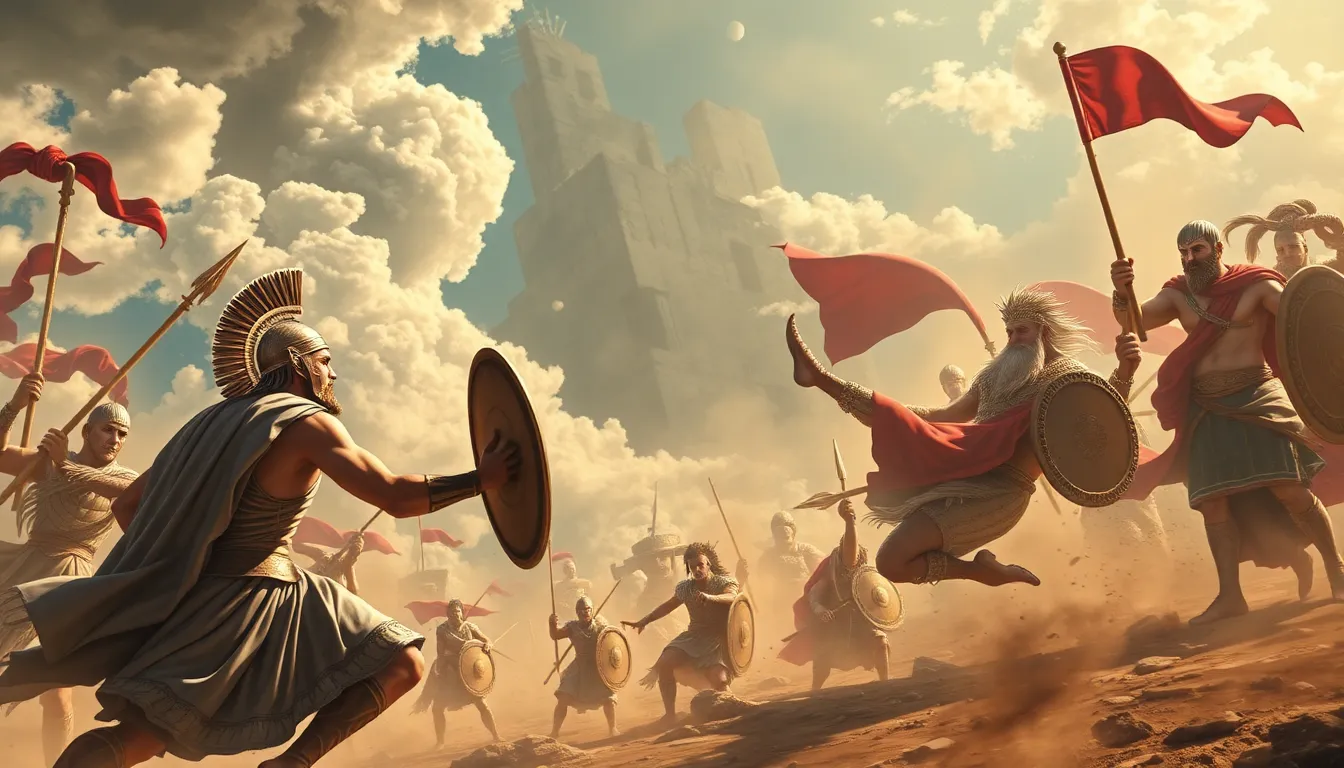
The Clash of the Heroes: Achilles, Odysseus, and Their Foes
I. Introduction
Ancient Greek mythology is rich with tales of formidable heroes and epic battles, many of which were set against the backdrop of the Trojan War. Among the most celebrated of these heroes are Achilles and Odysseus, each embodying distinct qualities that contribute to their legendary status. Achilles, known for his unmatched prowess in battle and his tragic vulnerability, stands in stark contrast to Odysseus, whose intelligence and cunning play a pivotal role in his journey home. This article delves into the conflicts and rivalries between these iconic figures and their adversaries, exploring how their stories intertwine and reflect the values of ancient Greek culture.
II. Achilles: The Wrathful Warrior
A. Background and lineage of Achilles
Achilles was the son of Peleus, the king of the Myrmidons, and Thetis, a sea nymph. His divine heritage granted him extraordinary abilities, making him a central figure in Greek mythology. Prophecies foretold that Achilles would either live a long but unremarkable life or achieve eternal glory at the cost of an early death. He chose the latter, becoming a key player in the Trojan War.
B. Key characteristics: pride, strength, and vulnerability
Achilles is often characterized by his immense strength and unparalleled skill in combat. However, his pride and fierce temper frequently lead him into conflict. His vulnerability lies in his heel, which ultimately becomes his downfall, symbolizing the idea that even the greatest heroes have a weakness. This complex portrayal makes Achilles one of the most relatable and tragic figures in mythology.
C. Achilles’ role in the Trojan War and his famous battles
During the Trojan War, Achilles was the Greeks’ most formidable warrior, responsible for numerous victories. His most notable battles include:
- The killing of Hector, Troy’s greatest champion
- The slaying of numerous Trojan soldiers
- The pivotal role he played in the siege of Troy
His wrath and subsequent withdrawal from battle due to a quarrel with Agamemnon had significant consequences for the Greek forces, showcasing how personal grievances can impact larger conflicts.
III. Odysseus: The Cunning Strategist
A. Background and lineage of Odysseus
Odysseus, the son of Laertes and Anticlea, hailed from Ithaca. Unlike Achilles, Odysseus was not born into a lineage of martial prowess but was known for his cleverness and tactical ingenuity. His journey through the Trojan War and beyond reflects his unique approach to challenges.
B. Key characteristics: intelligence, resourcefulness, and adaptability
Odysseus is celebrated for his intelligence and ability to think on his feet. He is resourceful, often using wit to navigate complex situations. His adaptability allows him to face various adversities, whether in battle or during his long journey home after the war.
C. Odysseus’ contributions to the war and his strategic maneuvers
Throughout the Trojan War, Odysseus demonstrated his strategic brilliance, most notably through the cunning idea of the Trojan Horse, which ultimately led to the fall of Troy. His actions included:
- Convincing Achilles to return to battle
- Formulating plans that outsmarted Trojan defenses
- Acting as an ambassador and negotiator among the Greek leaders
Odysseus’ contributions were not just limited to physical confrontations; his intellect played a crucial role in the Greek victories.
IV. The Central Conflict: Achilles vs. Agamemnon
A. The quarrel over Briseis and its implications
The central conflict between Achilles and Agamemnon arose from the dispute over Briseis, a captive woman awarded to Achilles as a prize of war. When Agamemnon was forced to return his own captive, Chryseis, he took Briseis from Achilles, igniting the hero’s wrath. This act of dishonor led Achilles to withdraw from battle, significantly weakening the Greek forces.
B. Themes of honor, pride, and leadership
This quarrel highlights essential themes in Greek mythology, including the concepts of honor and pride. Achilles’ fierce sense of honor drives him to abandon his comrades, leading to dire consequences for the Greeks. The conflict also underscores Agamemnon’s struggles with leadership and his inability to manage the egos of his warriors.
C. Consequences of their feud on the Greek forces
The feud between Achilles and Agamemnon had catastrophic repercussions for the Greek army. As Achilles withdrew, the Trojans gained the upper hand, leading to significant losses for the Greeks. This conflict ultimately showcases how personal vendettas can have far-reaching impacts on collective efforts.
V. The Rivalry with Hector: Achilles’ Greatest Foe
A. Hector’s background and status as Troy’s champion
Hector, the prince of Troy and its greatest warrior, serves as Achilles’ most formidable opponent. He is characterized by his bravery, sense of duty, and love for his family. Unlike Achilles, who is driven by personal glory, Hector fights for his city and loved ones.
B. The epic duel between Achilles and Hector
The climax of their rivalry occurs in a fateful duel outside the walls of Troy. Fueled by rage over the death of his friend Patroclus, who was killed by Hector, Achilles confronts him in a battle that symbolizes the clash between Greek and Trojan values. Achilles’ fury and Hector’s sense of honor lead to a tragic yet inevitable conclusion.
C. The aftermath of Hector’s death and its impact on Achilles
After slaying Hector, Achilles’ actions reflect his deep-seated grief and rage. He dishonors Hector’s body, dragging it behind his chariot, which speaks to the depths of his sorrow and anger. This act of vengeance ultimately leads to further consequences, including the wrath of the gods and the eventual downfall of Achilles.
VI. Odysseus vs. the Suitors: A Battle of Wits
A. The situation in Ithaca during Odysseus’ absence
During Odysseus’ long journey back from Troy, his home in Ithaca falls into disarray. Over one hundred suitors invade his household, vying for the hand of his wife, Penelope, and squandering his wealth. This situation highlights the theme of loyalty and the challenges of reclaiming one’s place.
B. The challenge of reclaiming his home and family
Upon his eventual return, Odysseus faces the daunting task of reclaiming his home, wife, and son. His journey underscores the importance of perseverance and the quest for identity after loss.
C. Key tactics used by Odysseus to outsmart the suitors
Odysseus employs a series of cunning strategies to defeat the suitors, including:
- Disguising himself as a beggar to assess the situation
- Using his archery skills to win the contest of the bow
- Strategically planning the ambush with his son, Telemachus
These tactics not only demonstrate his intelligence but also reflect the themes of justice and retribution prevalent in Greek mythology.
VII. The Intersection of Their Journeys: Fate and Destiny
A. How the fates of Achilles and Odysseus intertwine
The fates of Achilles and Odysseus are intertwined through their shared experiences in the Trojan War. Both heroes embody different aspects of heroism—Achilles through his martial prowess and Odysseus through his cunning. Their paths reflect the duality of heroism in Greek mythology.
B. The role of the gods in shaping their destinies
The gods play a significant role in the lives of both heroes. For instance, Achilles is heavily influenced by the goddess Thetis, while Odysseus has the favor of Athena, who guides him through his trials. This divine intervention highlights the belief in fate and the gods’ control over human destiny.
C. Themes of heroism and the nature of victory in Greek mythology
The stories of Achilles and Odysseus explore complex themes of heroism. While Achilles seeks glory through battle, Odysseus exempl