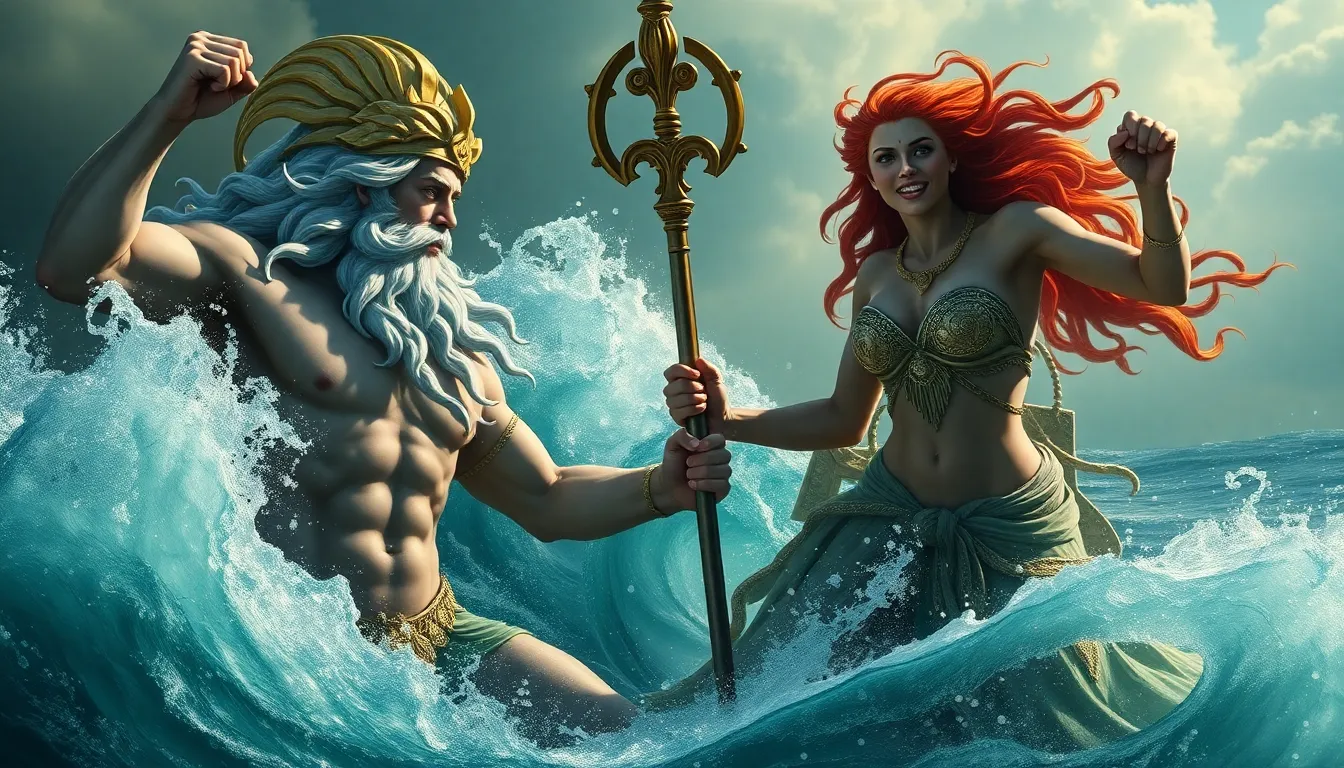
The Battle of the Sea Gods: Poseidon vs. Amphitrite
I. Introduction
Greek mythology is a rich tapestry of stories, characters, and beliefs that have shaped cultural narratives for centuries. At the heart of this mythology lies a pantheon of gods, each with their unique domains and attributes. Among these divine figures, Poseidon and Amphitrite stand out as significant representations of the sea.
Poseidon, the formidable god of the sea, earthquakes, and horses, wields immense power and fear. His consort, Amphitrite, is a lesser-known yet equally important figure, embodying the essence of the ocean’s beauty and mystery. The relationship between Poseidon and Amphitrite is marked by both harmony and rivalry, making it a fascinating subject of exploration.
This article delves into the origins, powers, conflicts, and ultimate resolution of the interactions between Poseidon and Amphitrite, shedding light on their significance in Greek mythology.
II. The Origins of Poseidon and Amphitrite
A. Poseidon’s lineage and role as the god of the sea
Poseidon, one of the twelve Olympian gods, is the brother of Zeus and Hades. He is the son of Cronus and Rhea, and his dominion extends over the oceans, making him a powerful figure in Greek lore. His character is often depicted with a trident, symbolizing his control over the waves and the earth’s tremors.
B. Amphitrite’s background and her identity as a sea goddess
Amphitrite, a daughter of Nereus and Doris, is often referred to as the queen of the sea. She is one of the fifty Nereids, beautiful sea nymphs who symbolize the gentle aspects of the ocean. Unlike Poseidon, who embodies the tumultuous forces of nature, Amphitrite represents the calm and nurturing qualities of the sea.
C. The union of Poseidon and Amphitrite
The story of how Poseidon won Amphitrite’s heart is a classic tale of love and determination. Initially, Amphitrite was reluctant to accept Poseidon’s advances and fled to the ends of the earth. However, Poseidon sent a dolphin to find her, and upon her return, he honored the dolphin by placing it among the stars as a constellation. This gesture won Amphitrite over, and they were married in a grand ceremony, symbolizing the union of power and grace.
III. The Realm of the Sea: Powers and Responsibilities
A. Poseidon’s dominion over the oceans and earthquakes
As the god of the sea, Poseidon holds dominion over all bodies of water. His responsibilities extend beyond the ocean; he is also credited with causing earthquakes and is often referred to as the “Earth-shaker.” Sailors prayed to him for safe passage and favorable winds, demonstrating his vital role in ancient maritime life.
B. Amphitrite’s role as queen and protector of marine life
Amphitrite’s role as queen of the sea involves nurturing and protecting marine life. She is often depicted surrounded by fish and sea creatures, signifying her guardianship over the ocean’s inhabitants. As a nurturing deity, she embodies the ocean’s beauty and bounty, ensuring the balance of life within the deep.
C. Their respective followers and worship in ancient Greece
Both Poseidon and Amphitrite were revered in ancient Greece, with their followers engaging in various rituals and offerings.
- Poseidon: Worshippers often held festivals in his honor, such as the Panhellenic games held at his sanctuary in Corinth.
- Amphitrite: She was honored in the context of maritime festivals, where sailors would pray for her protection before embarking on voyages.
IV. The Conflict Unfolds: Causes of the Battle
A. Jealousy and rivalry among sea deities
Despite their union, the relationship between Poseidon and Amphitrite was not without strife. Jealousy and rivalry among sea deities often fueled conflicts, as many sought to claim power over the ocean’s vast territories.
B. Disputes over territory and influence in the ocean
Poseidon’s assertive nature often led him to challenge other sea gods and creatures for control. Amphitrite, while supportive of her husband, also felt the pressures of rivalry as other deities vied for influence in their underwater realm.
C. External challenges: Triton and other sea creatures
Moreover, Triton, their son, often found himself caught in the conflict, serving as a messenger and mediator between the two. The dynamics of their relationship with Triton and other sea creatures added layers to the complexities of their interactions.
V. The Battle: Strategies and Tactics
A. Poseidon’s mighty trident and its powers
In the unfolding conflict, Poseidon wielded his legendary trident, a symbol of his authority and power. The trident granted him abilities such as:
- Controlling the waves and storms
- Causing earthquakes
- Summoning sea monsters
B. Amphitrite’s call upon sea creatures and nymphs
In contrast, Amphitrite relied on her connection to the ocean’s creatures. She could summon schools of fish, dolphins, and other sea nymphs to her aid, creating a formidable defense against Poseidon’s aggressive tactics.
C. The landscape of the battlefield: Underwater realms
The battlefield was not merely a physical space but also an ethereal realm of underwater landscapes, ranging from tranquil coral gardens to tumultuous whirlpools. Each deity utilized the terrain to their advantage, with Poseidon creating waves and storms, while Amphitrite sought to enchant and charm the creatures of the deep.
VI. Consequences of the Battle
A. Impact on the ocean and marine ecosystems
The battle between Poseidon and Amphitrite had profound consequences on the ocean. The turmoil created by their rivalry affected marine ecosystems, leading to shifts in population dynamics and creating temporary chaos in the waters.
B. Effects on their followers and worship practices
For the people of ancient Greece, the conflict between the sea gods manifested in their lives. Sailors faced dangerous waters, and fishermen struggled with dwindling catches. Consequently, worship practices evolved, with many seeking appeasement from both gods to restore balance.
C. Changes in the balance of power among sea deities
The battle also altered the power dynamics among sea deities, leading to new alliances and enmities. Other gods, such as Oceanus and the Nereids, began to assert their influence as they recognized the instability caused by Poseidon and Amphitrite’s conflict.
VII. The Resolution: Reconciliation or Continued Rivalry?
A. Possible outcomes of the battle
The outcome of the battle between Poseidon and Amphitrite was uncertain. Various myths suggest different endings, ranging from reconciliation to ongoing rivalry. Each outcome reflects a different aspect of their complex relationship.
B. Signs of unity and cooperation between Poseidon and Amphitrite
Despite their conflicts, there are tales of unity where Poseidon and Amphitrite work together to maintain harmony in the seas. Their cooperation is often symbolized through the nurturing of marine life and the protection of sailors, showcasing the duality of their powers.
C. Lasting legacy of their conflict in myths and stories
The legacy of Poseidon and Amphitrite’s battle continues to resonate in modern interpretations of mythology. Their stories serve as a reminder of the delicate balance between power and love, chaos and peace, and the inherent conflicts that arise even in the most powerful relationships.
VIII. Conclusion
The battle between Poseidon and Amphitrite is a compelling narrative that encapsulates the themes of power, love, and rivalry in Greek mythology. Their relationship, marked by both harmony and