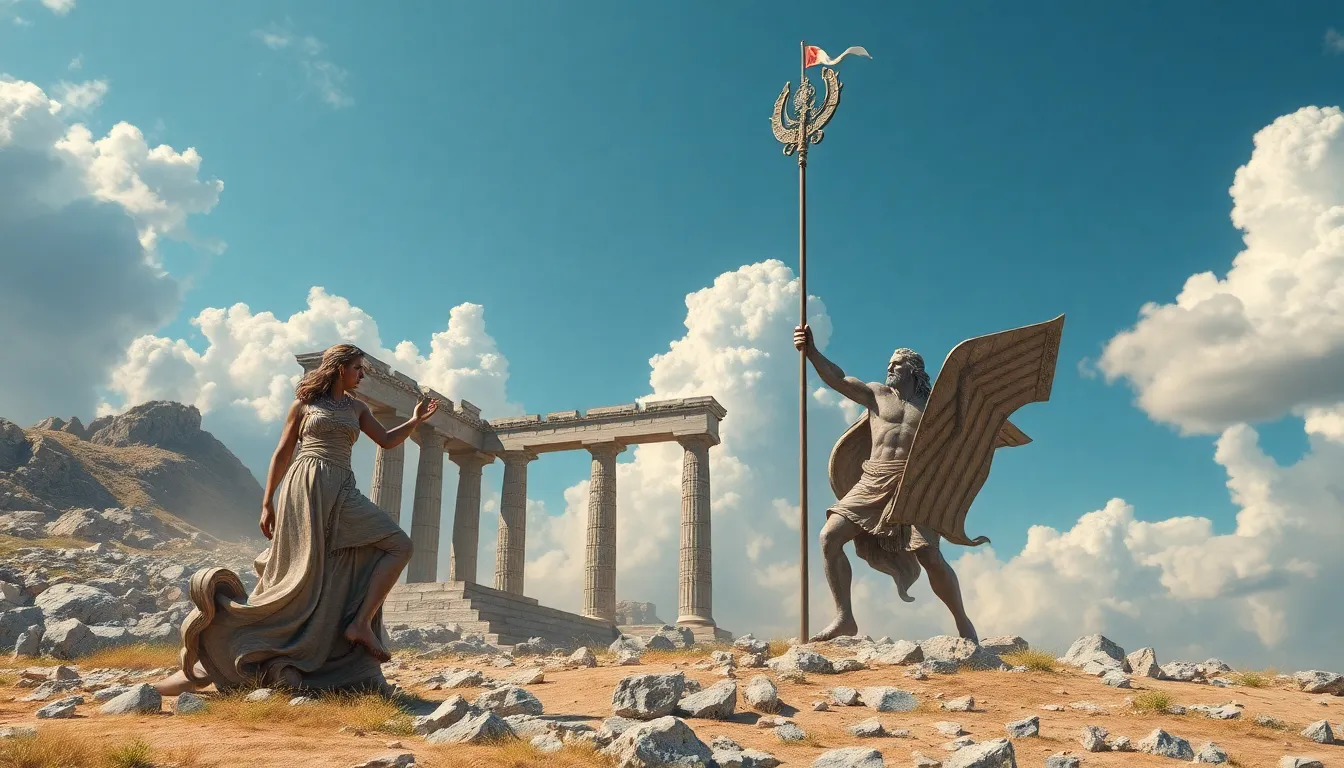
The Rise and Fall of the Titans: Lessons from the Titanomachy
I. Introduction
The Titanomachy, a pivotal conflict in Greek mythology, represents the struggle for power between the Titans, the elder gods, and the Olympians, their offspring led by Zeus. This epic battle not only serves as a captivating narrative of conflict and resolution but also provides profound insights into the nature of power, fate, and rebellion. The Titans, while powerful in their own right, ultimately faced defeat at the hands of their children, illustrating the cyclical nature of power and the consequences of hubris.
This article aims to explore the lessons learned from the rise and fall of the Titans, examining their origins, the factors that led to their downfall, and the enduring legacy of their stories in modern culture.
II. The Origins of the Titans
A. Creation myths: from Chaos to the Titans
The mythology of the Titans begins with Chaos, the primordial void from which all things emerged. From Chaos came Gaia (Earth), Tartarus (the Abyss), and Eros (Love), who together birthed the first generation of Titans. The Titans were colossal beings who embodied various aspects of the world. They were often associated with natural phenomena and human endeavors.
B. Key figures: Cronus, Rhea, and their offspring
The most notable Titans included Cronus, the leader of the Titans, and his sister-wife, Rhea. Cronus, fearing a prophecy that foretold he would be overthrown by one of his children, swallowed each of his offspring at birth. Rhea, distraught by this fate, hid her youngest son, Zeus, and raised him in secret.
C. The Titan’s rule: characteristics of their reign
The reign of the Titans was marked by a time of relative stability and abundance. They were considered the ruling deities before the Olympians, and each Titan governed a specific aspect of the cosmos. Their rule was characterized by:
- Powerful dominion: The Titans were often feared and respected, representing the forces of nature and the cosmos.
- Divine lineage: As descendants of primordial beings, the Titans held a significant place in the hierarchy of Greek mythology.
- Conflict and ambition: The internal strife among the Titans often foreshadowed their eventual downfall.
III. The Catalyst for Change: The Prophecy
A. The prophecy of Cronus and his downfall
As the ruler of the Titans, Cronus was haunted by a prophecy delivered to him by Gaia and Uranus, which foretold that one of his children would overthrow him. In a desperate attempt to avoid this fate, Cronus resorted to extreme measures, consuming his offspring to prevent them from growing strong enough to challenge him.
B. The birth of Zeus and the significance of rebellion
When Rhea gave birth to Zeus, she decided to defy Cronus. She hid Zeus in a cave on the island of Crete and gave Cronus a stone wrapped in swaddling clothes instead. Zeus grew up to become a formidable force, embodying the spirit of rebellion and the hope of the oppressed Titans and their descendants.
C. Themes of fate and free will in the Titanomachy
The Titanomachy raises significant questions about fate and free will. While the prophecy dictated the eventual downfall of Cronus, the actions of Rhea and Zeus suggest that individuals can exert their will against predetermined outcomes. This duality of fate and free will is a recurring theme throughout Greek mythology.
IV. The Titanomachy: The Great War
A. Overview of the conflict between Titans and Olympians
The Titanomachy was a ten-year-long war between the Titans, led by Cronus, and the Olympians, led by Zeus. The conflict was not merely a battle for supremacy but a fundamental clash of ideologies, with the Olympians advocating for a new order that would promote balance and justice over tyranny.
B. Key battles and strategies employed by both sides
The war featured numerous battles and strategies, with both sides employing their strengths:
- Olympian tactics: The Olympians, under Zeus, used guerrilla tactics and surprise attacks, often aided by their allies.
- Titan defenses: The Titans relied on their brute strength and sheer numbers, attempting to crush the Olympians through direct confrontation.
C. The role of allies: Gaia, the Cyclopes, and the Hecatoncheires
Gaia, the mother of the Titans, played a crucial role in supporting the Olympians. She provided Zeus with weapons and allies, including the Cyclopes, who forged the thunderbolts for Zeus, and the Hecatoncheires, monstrous giants with a hundred arms who fought fiercely against the Titans.
V. The Fall of the Titans
A. Factors leading to the Titans’ defeat
The downfall of the Titans can be attributed to several factors:
- Internal discord: The Titans were not united in their cause, with some factions hesitant to fight.
- Strategic alliances: The Olympians’ alliances with powerful beings like Gaia and the Hecatoncheires provided them with the necessary strength to confront the Titans.
- Divine weaponry: The gifts from Gaia, especially Zeus’s thunderbolts, gave the Olympians a significant advantage in battle.
B. The significance of unity among the Olympians
Unity was a defining feature of the Olympian forces. Despite their individual differences, the Olympians banded together under Zeus, showcasing the power of collective effort against a common foe. This unity contrasted sharply with the divisions among the Titans, leading to their eventual defeat.
C. Aftermath: imprisonment in Tartarus
After their defeat, the Titans were imprisoned in Tartarus, a deep abyss located beneath the earth. This punishment symbolized the end of their reign and the establishment of a new order under the Olympians. The Titans’ fall serves as a cautionary tale about the consequences of tyranny and the cyclical nature of power.
VI. Lessons Learned: Themes of Power and Hubris
A. The dangers of absolute power and tyranny
The Titanomachy illustrates the dangers inherent in absolute power. Cronus’s tyranny and fear of losing control led him to commit heinous acts against his own children, ultimately leading to his downfall. This narrative warns against the corrupting influence of power and the moral decay it can cause.
B. Hubris as a recurring theme in mythology
Hubris, or excessive pride, is a central theme in many Greek myths, including the story of the Titans. Cronus’s belief that he could escape his fate through his actions exemplifies the folly of hubris. The consequences of such arrogance serve as a reminder that no being, no matter how powerful, can escape the bounds of fate.
C. The consequences of ignoring prophecy and fate
The Titanomachy also emphasizes the importance of heeding prophecies. Cronus’s attempts to thwart the prophecy only accelerated his downfall, illustrating that one cannot escape predetermined outcomes. This theme resonates with the idea that understanding and accepting one’s fate is essential for harmony.
VII. The Legacy of the Titans in Modern Culture
A. Influence on literature, art, and popular media
The legacy of the Titans extends far beyond ancient Greece, influencing countless works of literature, art, and popular media. Their stories have inspired:
- Literature: Modern authors frequently draw on Titan themes in fantasy and mythological narratives.
- Art: Artists have depicted the Titanomachy in paintings, sculptures, and other forms of visual art, showcasing the dramatic conflict between the Titans and Olympians.
- Film and Television: Numerous adaptations and retellings of the Titan story appear in movies and series, bringing these ancient myths to contemporary audiences.
B. Symbolism of the Titans in contemporary discussions
In modern discussions, the Titans symbolize the struggle against oppressive regimes and the fight for justice and balance. They represent the consequences of unchecked power and the importance of unity in overcoming tyranny. This symbolism resonates in various social and political contexts today.
C. The enduring nature of their story in modern storytelling
The story of the Titans continues to endure in modern storytelling, often serving as a metaphor for personal and societal challenges. Their narrative emphasizes themes of resilience, rebellion, and the quest for freedom, making it relevant to contemporary audiences.