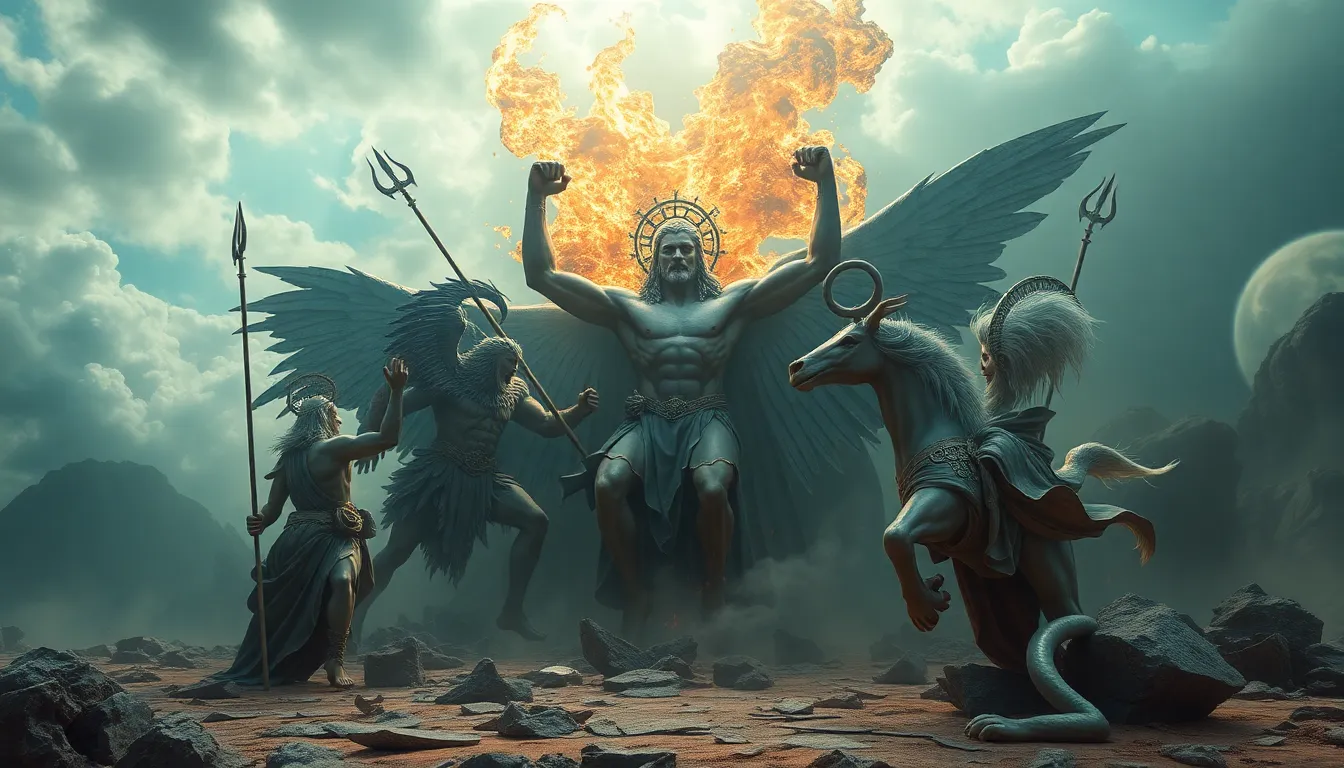
The Titanomachy: The Epic Confrontation of Ancient Greek Deities
I. Introduction to the Titanomachy
The Titanomachy, an epic conflict in Greek mythology, represents the monumental struggle between the old gods, the Titans, and the new generation of deities, the Olympians. This battle not only signifies a shift in divine power but also marks a pivotal moment in the mythological narrative of ancient Greece. The significance of the Titanomachy extends beyond mere folklore; it encapsulates themes of power, rebellion, and the cyclical nature of authority.
In this article, we will explore the complexities of the Titanomachy, examining the key players involved, the sequence of events leading to the war, and the aftermath that reshaped the divine hierarchy. We will delve into the characters, motivations, and implications that resonate through this mythological epic.
II. The Titans: Rulers of the Primordial World
The Titans were the progeny of Uranus (the sky) and Gaia (the earth), representing a generation of deities who ruled over the cosmos before the rise of the Olympians. As ancient primordial beings, they embodied various aspects of the natural world and its forces.
A. Introduction to the Titans and their lineage
The Titans were twelve in number, each presiding over different domains. Their lineage is significant in understanding the foundation of the Greek mythological framework. The major Titans included:
- Cronus
- Rhea
- Oceanus
- Hyperion
- Theia
- Coeus
- Phoebe
- Crius
- Iapetus
- Themis
- Mnemosyne
- Chronos
– The leader of the Titans, associated with time and harvest.
– The mother of the Olympian gods, representing fertility and motherhood.
– The personification of the ocean, a vast and important element in Greek mythology.
– The Titan of light, who represents the sun.
– The Titaness of sight and the shining sky.
– The Titan of intellect and the axis of heaven.
– The Titaness associated with the moon and prophecy.
– The Titan associated with the constellations.
– The Titan of mortality and father of Prometheus.
– The Titaness of divine law and order.
– The Titaness of memory and mother of the Muses.
– The personification of time, often conflated with Cronus.
B. Key Titans and their attributes
Each Titan played a crucial role in the primordial world, contributing to the early formation of the universe. Cronus, for instance, is often depicted as a grim figure who feared his own offspring, leading to dramatic consequences in the mythological narrative.
C. The role of the Titans in the creation of the universe
The Titans were instrumental in the creation of the cosmos, each representing essential elements of existence. They established the foundations of the earth and sky, and their reign symbolized a primordial order before the advent of the Olympians.
III. The Rise of the Olympians
As the descendants of the Titans, the Olympians emerged as a new generation of gods, destined to challenge their predecessors. Their rise signified not just a change in leadership but a transformation of divine authority.
A. Introduction to the Olympian gods and their origins
The Olympians, led by Zeus, were born to Cronus and Rhea. They were destined to overthrow the Titans and establish a new order among the gods. Their characteristics and domains were often in stark contrast to those of the Titans.
B. Key Olympians and their attributes
The primary Olympian gods included:
- Zeus
- Hera
- Poseidon
- Athena
- Apollo
- Artemis
- Ares
- Aphrodite
- Hephaestus
- Dionysus
- Demeter
- Hades
– The king of the gods, associated with thunder and justice.
– The queen of the gods, protector of marriage and family.
– The god of the sea, known for his power over water and horses.
– The goddess of wisdom and warfare, born from Zeus’ head.
– The god of the sun, music, and prophecy.
– The goddess of the hunt and wilderness, twin sister of Apollo.
– The god of war, representing the chaotic aspects of battle.
– The goddess of love and beauty, born from the sea foam.
– The god of fire and craftsmanship.
– The god of wine and festivity.
– The goddess of agriculture and harvest.
– The god of the underworld, ruling over the dead.
C. The prophecy that foretold the overthrow of the Titans
A prophecy foretold that one of Cronus’ children would overthrow him, leading to his paranoia. To prevent this fate, Cronus swallowed each of his offspring at birth, but Rhea managed to save Zeus, who would eventually fulfill the prophecy.
IV. The Prelude to War: Tensions Between Titans and Olympians
As the Olympians grew, tensions escalated, setting the stage for the Titanomachy. Cronus’ fear and paranoia drove him to drastic measures that ultimately led to rebellion.
A. Cronus’ fears and actions against his offspring
In a desperate attempt to maintain his power, Cronus consumed his children. This act of tyranny sowed the seeds of dissent among the gods.
B. Rhea’s rebellion and the saving of Zeus
Rhea, unwilling to lose another child, hid Zeus on the island of Crete, where he was raised in secret. This act of rebellion against Cronus set in motion the events that would lead to war.
C. The gathering of allies among the Olympians
As Zeus grew, he gathered allies among the other Olympians and creatures of the cosmos, including the Cyclopes and the Hecatoncheires, who would play a vital role in the upcoming conflict.
V. The Titanomachy: The Great Battle
The Titanomachy, lasting for a decade, was a fierce and monumental battle that determined the fate of the divine hierarchy. This confrontation was not merely a clash of strength but also a contest of strategy and alliances.
A. Description of the epic confrontation and its significance
The war was characterized by intense battles between the Titans and the Olympians, with both sides employing their unique strengths and abilities. The significance of this conflict extended beyond victory; it represented the struggle for order over chaos.
B. Key battles and strategies employed by both sides
Major battles took place on the plains of Thessaly, with both sides showcasing their divine powers. The Olympians utilized the strength of their allies, particularly the Cyclopes, who forged powerful weapons, including Zeus’ thunderbolt.
C. The role of Gaia and other entities in the conflict
Gaia, angered by the treatment of her offspring, played a crucial role in the battle by siding with the Olympians. Other beings, such as the Titans’ allies, also influenced the outcomes of key confrontations.
VI. Aftermath of the Titanomachy
The defeat of the Titans marked a significant turning point in Greek mythology, leading to the establishment of a new order under the Olympian gods.
A. The defeat of the Titans and their punishment
After their defeat, the Titans were imprisoned in Tartarus, a deep abyss that served as a dungeon of torment. This punishment symbolized the end of their reign and the beginning of the Olympian era.
B. The establishment of the Olympian order and its governance
With the Titans defeated, Zeus and his siblings established their rule from Mount Olympus, creating a new pantheon that governed various aspects of human life and the natural world.
C. Impact on Greek mythology and culture
The Titanomachy had a profound impact on Greek mythology, shaping the stories and beliefs of ancient Greeks. It became a foundational narrative that explained the origins of the gods and