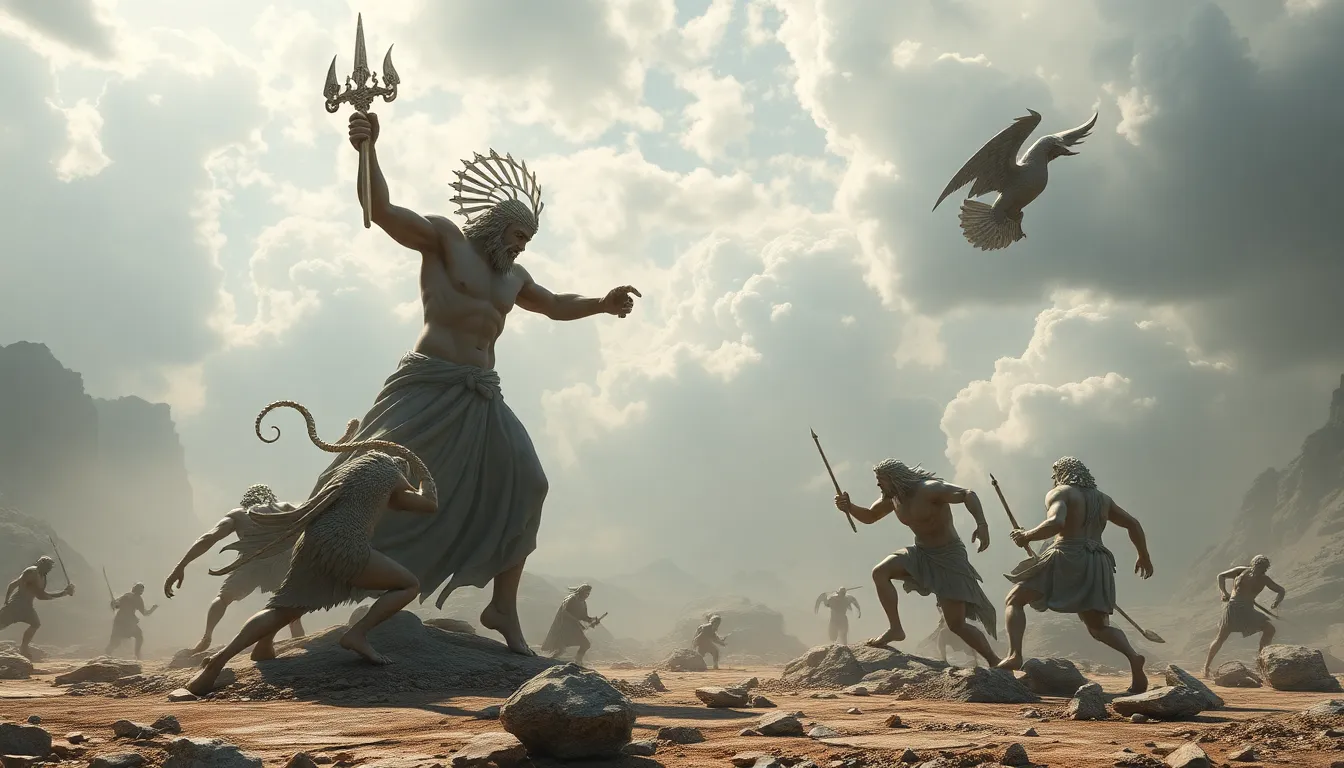
The Titanomachy: A Battle of Wits and Might in Greek Mythology
I. Introduction to the Titanomachy
The Titanomachy, one of the most significant conflicts in Greek mythology, represents the epic battle between the Titans and the Olympian gods. This monumental clash not only determined the fate of the universe but also established the supremacy of the Olympians, led by Zeus. The Titanomachy is a tale of power, ambition, and the struggle for supremacy, deeply embedded in the fabric of Greek mythos.
At its core, the Titanomachy involves two generations of divine beings: the Titans, the former rulers of the cosmos, and the Olympians, the new generation of gods who sought to overthrow them. The conflict encapsulates themes of rebellion, destiny, and the cyclical nature of power.
II. The Origins of the Titans and the Olympians
A. The Creation of the Universe and the Birth of the Titans
According to Greek mythology, the universe was born from Chaos, a primordial void. From Chaos emerged Gaia (Earth) and Uranus (Sky), who together birthed the first generation of divine beings known as the Titans. These Titans were powerful entities, embodying various aspects of nature and existence, including:
- Oceanus – Titan of the ocean
- Cronus – Titan of time and the leader of the Titans
- Rhea – Titaness of fertility and motherhood
- Hyperion – Titan of light
- Themis – Titaness of divine law
B. The Rise of the Olympian Gods Led by Zeus
As the Titans ruled, they gave birth to a second generation of gods, including Hestia, Demeter, Hera, Hades, Poseidon, and Zeus. Among these, Zeus was destined to play a crucial role in the overthrow of the Titans. The Olympians were raised in a world dominated by Cronus, who, fearing a prophecy that one of his children would overthrow him, swallowed them at birth.
However, Rhea, Zeus’s mother, saved him by hiding him in a cave on Crete and giving Cronus a stone wrapped in swaddling clothes instead. Zeus grew up and eventually returned to challenge his father, marking the beginning of the end for the Titans.
III. The Catalyst for Conflict
A. The Prophecy and the Fear of the Titans’ Power
The catalyst for the Titanomachy was rooted in a prophecy that foretold the downfall of Cronus at the hands of one of his children. This prophecy created an atmosphere of paranoia among the Titans, particularly Cronus, who was determined to maintain his grip on power at all costs.
B. Cronus’s Tyranny and the Imprisonment of His Children
In his fear, Cronus imprisoned his children, the Olympians, in Tartarus, a deep abyss used as a dungeon of torment. This act of tyranny not only fueled the desire for rebellion among the Olympians but also highlighted the theme of oppression that permeated the Titanomachy.
IV. The Gathering of Forces
A. Key Figures in the Titanomachy: Zeus, Hades, Poseidon, and More
As the conflict loomed, Zeus gathered his siblings and allies to mount a rebellion against Cronus and the Titans. The key figures involved in the Titanomachy included:
- Zeus – The leader of the Olympians and God of the sky.
- Hades – God of the underworld, who would later rule the realm of the dead.
- Poseidon – God of the sea, who wielded the mighty trident.
- Hera – Goddess of marriage and family, and Zeus’s wife and sister.
- Demeter – Goddess of the harvest and agriculture.
- Hestia – Goddess of the hearth and home.
B. The Alliances Formed Between Olympians and Other Beings
The Olympians were not alone in their quest for justice. They formed alliances with various beings, including:
- The Cyclopes – Powerful one-eyed giants who forged Zeus’s lightning bolts.
- The Hecatoncheires – Three monstrous giants with a hundred hands, who were freed from Tartarus.
- Other deities and spirits who opposed Cronus’s rule.
V. The Battle Unfolds
A. The Strategies Employed by Both Sides
The Titanomachy was not merely a clash of brute strength; it involved cunning strategies and tactical prowess. Zeus and his allies utilized their unique powers and skills to gain the upper hand in battle. For instance:
- Zeus employed his lightning bolts to strike fear and chaos among the Titans.
- Poseidon used his control over the seas to create storms that disrupted the Titans’ formations.
- Hades, though initially less involved in the physical battle, played a strategic role in managing the underworld forces.
B. Key Battles and Turning Points During the Conflict
The Titanomachy lasted for ten years, filled with numerous battles and skirmishes. Some notable events included:
- The Battle of the Titans – A fierce confrontation that saw the Olympians face off against Cronus and his Titan allies.
- The Release of the Cyclopes – Their assistance in forging weapons for the Olympians turned the tide of the battle.
- The Final Confrontation – A climactic battle where Zeus faced Cronus and ultimately defeated him.
VI. The Role of Fate and Prophecy
A. The Influence of Oracles and Prophecies on the War
The role of fate and prophecy is central to the Titanomachy. The oracles foretold the eventual overthrow of Cronus, instilling hope among the Olympians and dread among the Titans. The prophecies shaped the decisions of key figures, leading them to either embrace their destinies or attempt to thwart them.
B. The Theme of Destiny versus Free Will in the Titanomachy
The Titanomachy raises profound questions about destiny and free will. While the prophecy dictated the outcome of the battle, the actions of the gods and their choices significantly influenced the course of events. This tension between predetermined fate and individual agency is a recurring theme in Greek mythology.
VII. The Aftermath of the Titanomachy
A. The Defeat of the Titans and Their Imprisonment in Tartarus
In the end, the Olympians emerged victorious. The Titans were defeated, and as punishment for their tyranny, they were imprisoned in Tartarus, where they would remain for eternity. This defeat marked a significant shift in the balance of power in the cosmos, paving the way for the reign of the Olympians.
B. The Establishment of the Olympian Order and Its Significance
The victory in the Titanomachy established the Olympian order, with Zeus as the king of the gods. This new hierarchy brought about a more structured and organized pantheon, where each god had specific domains and responsibilities. The Olympians represented a more relatable and human-like nature, where their interactions with mortals were more pronounced.
VIII. Legacy of the Titanomachy in Literature and Culture
A. The Titanomachy in Ancient Texts and Artworks
The Titanomachy has been a source of inspiration for countless ancient texts and artistic representations. Notable works include:
- Hesiod’s “Theogony” – A foundational text that recounts the creation of the world and the rise of the Olympians.
- Various ancient pottery and sculptures depicting the battles between Titans and Olympians.
B. Its Influence on Modern Storytelling and Cultural References
The themes and narratives of the Titanomachy continue to resonate in modern storytelling. Its influence can be seen in:
- Literature – Many authors draw upon the archetypes of the Titanomachy in their works.
- Film and Television – The battle between good and evil, as well as themes of rebellion,