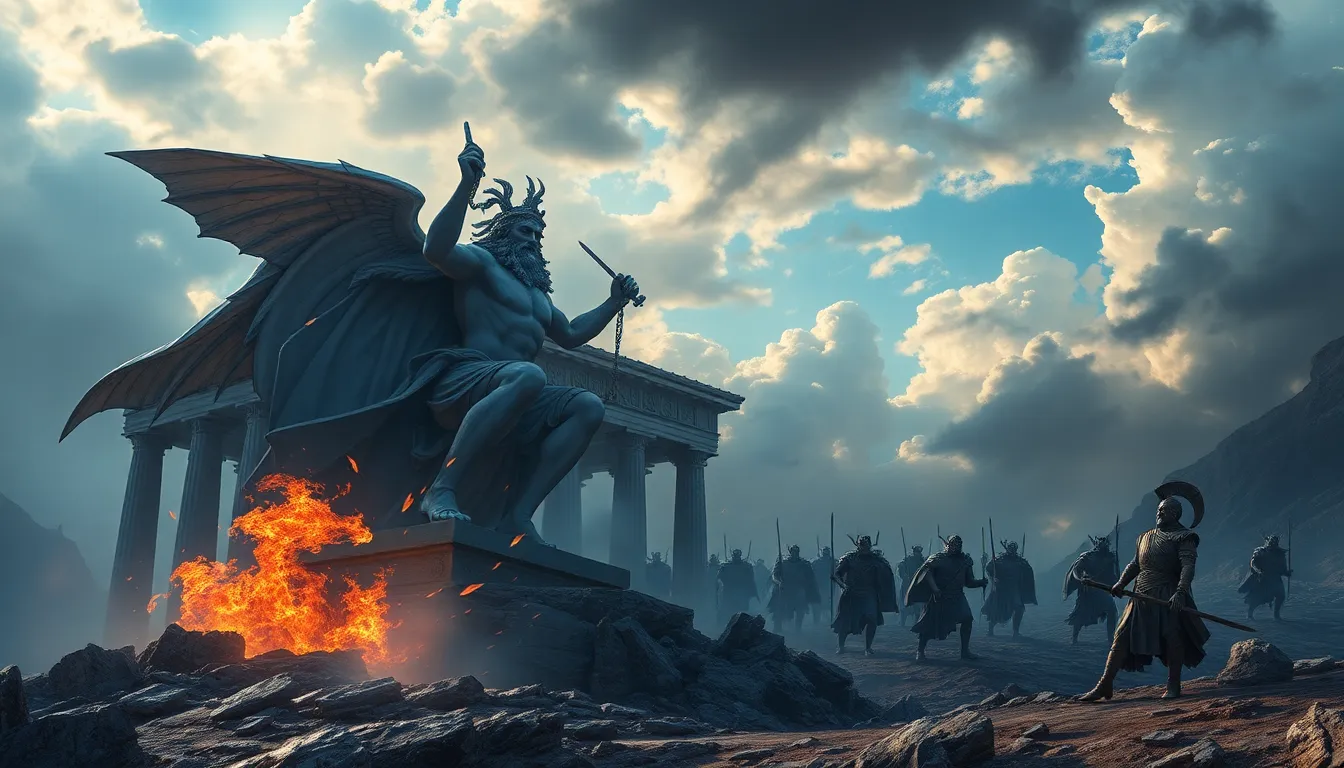
The Titanomachy: The Myths and Legends Behind the War
I. Introduction to the Titanomachy
The Titanomachy, a pivotal conflict in Greek mythology, represents the legendary war between the Titans, the elder gods, and the Olympians, the new gods led by Zeus. This epic struggle not only determines the fate of the cosmos but also encapsulates significant themes such as power, rebellion, and the cyclical nature of authority. It is a story of conflict between generations, where the old guard must yield to the new, echoing throughout various narratives in mythology and beyond.
At its core, the Titanomachy is a tale of ambition, betrayal, and the quest for supremacy. It showcases the dynamics of familial relationships, the consequences of defiance against authority, and the ultimate triumph of the new over the old. These themes resonate deeply within the human experience, contributing to the Titanomachy’s lasting legacy in cultural memory.
II. The Titans: Origins and Characteristics
The Titans are a group of deities that preceded the Olympian gods in Greek mythology. They are the offspring of Gaia (the Earth) and Uranus (the Sky), and they embody various aspects of the natural world and human experience. The Titans are often depicted as colossal beings with immense power, representing the primal forces of nature.
A. Description of the Titans and their lineage
The original Titans consist of twelve primary figures, known as the Twelve Titans, who played significant roles in various myths:
- Cronus: The leader of the Titans who overthrew his father Uranus.
- Rhea: Sister and wife of Cronus, mother of the Olympian gods.
- Oceanus: The Titan of the ocean and all bodies of water.
- Tethys: Oceanus’s wife, associated with the nurturing aspects of the sea.
- Hyperion: The Titan of light, often associated with the Sun.
- Theia: Hyperion’s wife, representing sight and the shining light of the heavens.
- Coeus: The Titan of intellect and the axis of heaven.
- Phoebe: The Titaness of prophecy and the moon.
- Iapetus: The Titan associated with mortality and craftsmanship.
- Themis: The Titaness of divine law and order.
- Mnemosyne: The Titaness of memory, mother of the Muses.
- Chronos: Often conflated with time, but distinct from Cronus, representing the relentless passage of time.
B. Key figures among the Titans and their roles in mythology
Among these Titans, Cronus and Rhea stand out, as they are the parents of the first generation of Olympians, including Zeus, Hera, Poseidon, and Hades. Cronus’s fear of being overthrown led him to swallow his children, a critical act that sets the stage for the Titanomachy.
Other Titans, such as Oceanus and Hyperion, have their own mythological narratives, contributing to the rich tapestry of Greek mythology by symbolizing various natural and cosmic elements.
III. The Olympians: Rise of the New Gods
The Olympians, often referred to as the new gods, emerged as the challengers to the Titans’ authority. Led by Zeus, the Olympians represented change, innovation, and the reordering of the cosmic balance.
A. Introduction to the Olympian gods and their attributes
The Olympians are characterized by their human-like traits and emotions, making them relatable and accessible to mortals. Each Olympian god possesses distinct attributes and domains:
- Zeus: The king of the gods, associated with the sky, thunder, and justice.
- Hera: The queen of the gods and goddess of marriage and family.
- Poseidon: God of the sea, earthquakes, and horses.
- Athena: Goddess of wisdom, war, and crafts.
- Apollo: God of the sun, music, and prophecy.
- Artemis: Goddess of the hunt, wilderness, and childbirth.
- Ares: God of war.
- Aphrodite: Goddess of love and beauty.
- Hephaestus: God of fire and craftsmanship.
- Demeter: Goddess of agriculture and the harvest.
- Dionysus: God of wine, festivity, and ecstasy.
- Hades: God of the underworld (though sometimes not considered an Olympian).
B. Key figures among the Olympians and their motivations for war
Zeus, as the chief architect of the rebellion against Cronus, is driven by a desire to free his siblings and establish a new order. Each Olympian has their own motivations for participating in the war, often rooted in personal grievances against the Titans or aspirations for power and influence.
IV. The Prelude to War: Causes of the Titanomachy
The tension between the Titans and Olympians was palpable long before the Titanomachy erupted. Several key events and underlying grievances set the stage for conflict.
A. Tensions between Titans and Olympians
The main source of conflict stemmed from Cronus’s oppressive rule, marked by fear and tyranny. His act of swallowing his children out of paranoia created a deep-seated resentment among the Olympians.
B. Key events leading to the outbreak of the war
The turning point came when Rhea, determined to save her youngest son Zeus, secretly gave birth to him in Crete and concealed him from Cronus. She tricked Cronus into swallowing a stone wrapped in swaddling clothes, allowing Zeus to grow up in safety and prepare for the eventual confrontation.
Zeus’s alliance with other figures, including the Cyclopes and the Hecatoncheires (hundred-handed giants), further solidified the Olympian cause. This alliance would prove crucial in the battles to come.
V. The War of the Titans: Major Battles and Strategies
The Titanomachy was marked by epic battles, strategic maneuvers, and divine interventions. The conflict lasted for ten years, during which both sides employed various strategies to gain the upper hand.
A. Description of significant battles during the Titanomachy
Several key battles defined the Titanomachy:
- The Battle of Mount Olympus: This initial confrontation saw the Olympians launching a surprise attack on the Titans, who had established their stronghold on Mount Olympus.
- The Clash of the Giants: The Cyclopes and Hecatoncheires, allied with the Olympians, played a crucial role in combating the Titans, using their unique abilities to counter the Titans’ strength.
- The Final Showdown: The decisive battle occurred when Zeus unleashed his lightning bolts, a weapon forged by the Cyclopes, to strike down the Titans.
B. Strategies employed by both sides and their impacts
The Titans relied on brute strength and their vast numbers, while the Olympians leveraged their alliances with other creatures and the element of surprise. The involvement of the Cyclopes and Hecatoncheires turned the tide in favor of the Olympians, as their unique powers were instrumental in overcoming the Titans’ might.
VI. The Role of Prophecies and Fate
Prophecies play a crucial role in the narrative of the Titanomachy, influencing the decisions and actions of the gods involved.
A. Examination of prophecies surrounding the Titanomachy
One