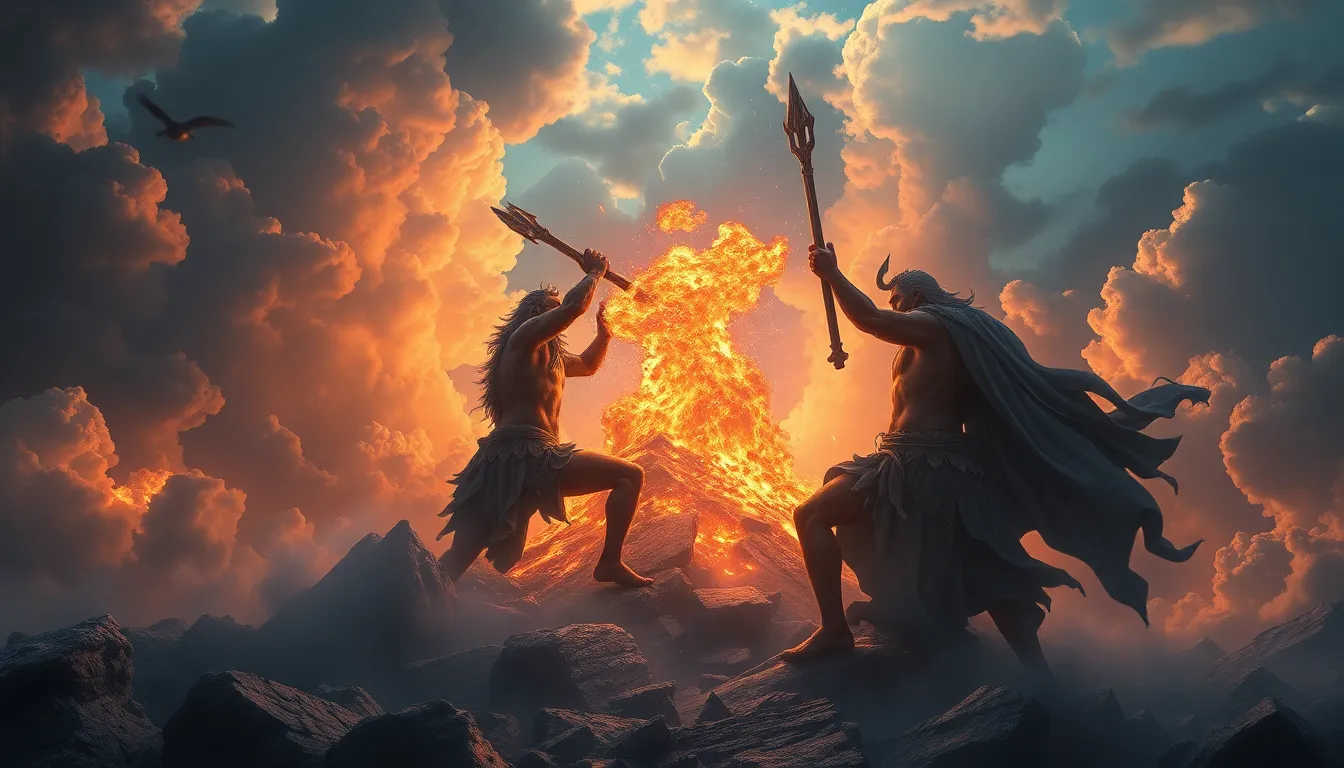
The Titanomachy: A Clash of Titans That Shook the Heavens
I. Introduction
The Titanomachy, often referred to as the War of the Titans, is one of the most significant and dramatic events in Greek mythology. This epic conflict pitted the Olympian gods against their predecessors, the Titans, and marked a pivotal moment in the establishment of divine order in the ancient Greek cosmos.
The importance of the Titanomachy extends beyond its role as a mere mythological tale; it symbolizes the struggle between the old and the new, chaos and order, and the cyclical nature of power in the universe. This article will delve into the origins of the Titans, the rise of the Olympians, the significant battles of the war, and the enduring legacy of this monumental event.
II. The Titans: Origins and Characteristics
A. Who were the Titans?
The Titans were a race of powerful deities who ruled during the legendary Golden Age before the Olympian gods ascended to power. They were the children of Gaia (the Earth) and Ouranos (the Sky), and they embodied various aspects of nature and human experience.
B. Key figures: Cronus, Rhea, and others
- Cronus: The leader of the Titans, known for his ruthless nature and for swallowing his children to prevent them from overthrowing him.
- Rhea: Cronus’ wife and sister, who played a crucial role in the eventual downfall of Cronus.
- Oceanus, Hyperion, Coeus, Crius: Other prominent Titans who each represented aspects of the natural world.
- Theia, Phoebe, Mnemosyne, Themis: Titanesses associated with light, memory, and divine order.
C. The Titans’ rule before the war
Before the Titanomachy, the Titans ruled the cosmos with an iron fist, maintaining a strict order in the universe. Their reign was characterized by a lack of conflict and a balance of power, but it also bred discontent and fear among their offspring, particularly those who would become the Olympian gods.
III. The Rise of the Olympians
A. Introduction of Zeus and his siblings
Zeus, the youngest son of Cronus and Rhea, would eventually become the leader of the Olympians. His siblings—Hestia, Hera, Demeter, Poseidon, and Hades—played significant roles in the conflict against their father and the Titans.
B. The prophecy that sparked rebellion
A prophecy foretold that Cronus would be overthrown by one of his children. Fearing this fate, Cronus took extreme measures to prevent it by swallowing each of his offspring at birth. However, Rhea managed to save Zeus by hiding him in a cave on the island of Crete and giving Cronus a stone wrapped in swaddling clothes instead.
C. The gathering of allies among the Olympians
Once Zeus came of age, he sought to rescue his siblings and gather allies for the impending war. He enlisted the help of several powerful entities:
- Hecatoncheires: Three giant brothers with a hundred hands each, who would become formidable warriors for Zeus.
- Cyclopes: One-eyed giants who forged powerful weapons for the Olympians, including Zeus’ thunderbolt.
IV. The Prelude to War
A. Tensions between Titans and Olympians
The tension between the Titans and the Olympians escalated as Zeus freed his siblings and rallied allies. The Titans, led by Cronus, were determined to maintain their reign, leading to inevitable conflict.
B. Key events leading up to the Titanomachy
The final straw came when Zeus declared war on Cronus after rescuing his siblings. The Olympians were united in their desire to overthrow the Titans and establish a new order.
C. The role of Gaia and Ouranos in the conflict
Gaia, the mother of the Titans, played a crucial role in the conflict. Displeased with Cronus’ tyranny, she supported the Olympians in their quest to overthrow him, while Ouranos, who had been overthrown by the Titans, remained a distant figure in the battle. Gaia’s encouragement and support provided the Olympians with both moral and tactical strength.
V. The Great Battle
A. Description of the battlefield: Mount Olympus vs. Tartarus
The Titanomachy took place in various locations, primarily around Mount Olympus, the home of the Olympian gods, and Tartarus, the deep abyss used as a dungeon of torment and suffering. The Titans, with their immense physical strength, faced the cunning and strategic prowess of the Olympians.
B. Major battles and strategies employed
The battles of the Titanomachy were fierce and monumental. Zeus and his allies employed various strategies:
- Lightning Strikes: Zeus used his thunderbolts to strike fear and chaos among the ranks of the Titans.
- Ambush Tactics: The Olympians utilized stealth and surprise to their advantage, launching attacks when the Titans least expected.
- Alliances with Mythological Creatures: The Olympians formed alliances with various creatures, such as the Centaurs and Satyrs, to bolster their ranks.
C. The involvement of other mythological creatures
Various mythological beings joined the battle on both sides, including the Cyclopes and Hecatoncheires on the side of the Olympians. The Titans also had their own monstrous allies, but they were ultimately outmatched by the unity and strategy of the Olympians.
VI. The Aftermath of the Titanomachy
A. The defeat of the Titans
After a prolonged struggle, the Olympians emerged victorious. The Titans were defeated, and their reign was ended. Zeus and his siblings established themselves as the new ruling deities of the cosmos.
B. The establishment of the Olympian order
The victory led to the establishment of the Olympian order, with Zeus as the king of the gods, ruling from Mount Olympus. This new divine hierarchy brought order and stability to the universe, replacing the chaotic reign of the Titans.
C. Fate of the Titans and their imprisonment
Defeated and captured, the Titans were imprisoned in Tartarus, where they would remain for eternity. Zeus ensured that they would never threaten the Olympians again, solidifying the new order.
VII. Cultural Impact and Legacy
A. Influence on ancient Greek religion and literature
The Titanomachy had a profound influence on ancient Greek religion and literature. It was a central theme in various myths, stories, and plays, serving as a foundation for understanding the relationships between gods and mortals.
B. Representation in art and modern media
Artists throughout history have depicted the Titanomachy in various forms, from ancient pottery to Renaissance paintings. Modern media, including films and novels, continue to draw inspiration from this epic battle, reflecting its enduring significance.
C. The Titanomachy in contemporary interpretations
Today, the Titanomachy is often interpreted as a metaphor for generational conflict, the struggle for power, and the transition from chaos to order. It resonates with themes found in many contemporary narratives, making it relevant even in modern discussions of mythology and storytelling.
VIII. Conclusion
A. Summary of key points
The Titanomachy represents a crucial turning point in Greek mythology, marking the transition from the rule of the Titans to the dominance of the Olympian gods. The conflict was characterized by epic battles, strategic alliances, and significant mythological figures.
B. Reflection on the significance of the Titanomachy
This mythological tale serves as a reminder of the cyclical nature of power and the inevitable rise and fall of rulers. The Titanomachy encapsulates themes of rebellion, strength, and the quest for justice that resonate through time.
C. Final thoughts on its enduring legacy in mythology
As one of the most iconic stories of Greek mythology, the Titanomachy continues to captivate audiences and inspire interpretations across cultures and generations. Its legacy endures, reminding us of the intricate