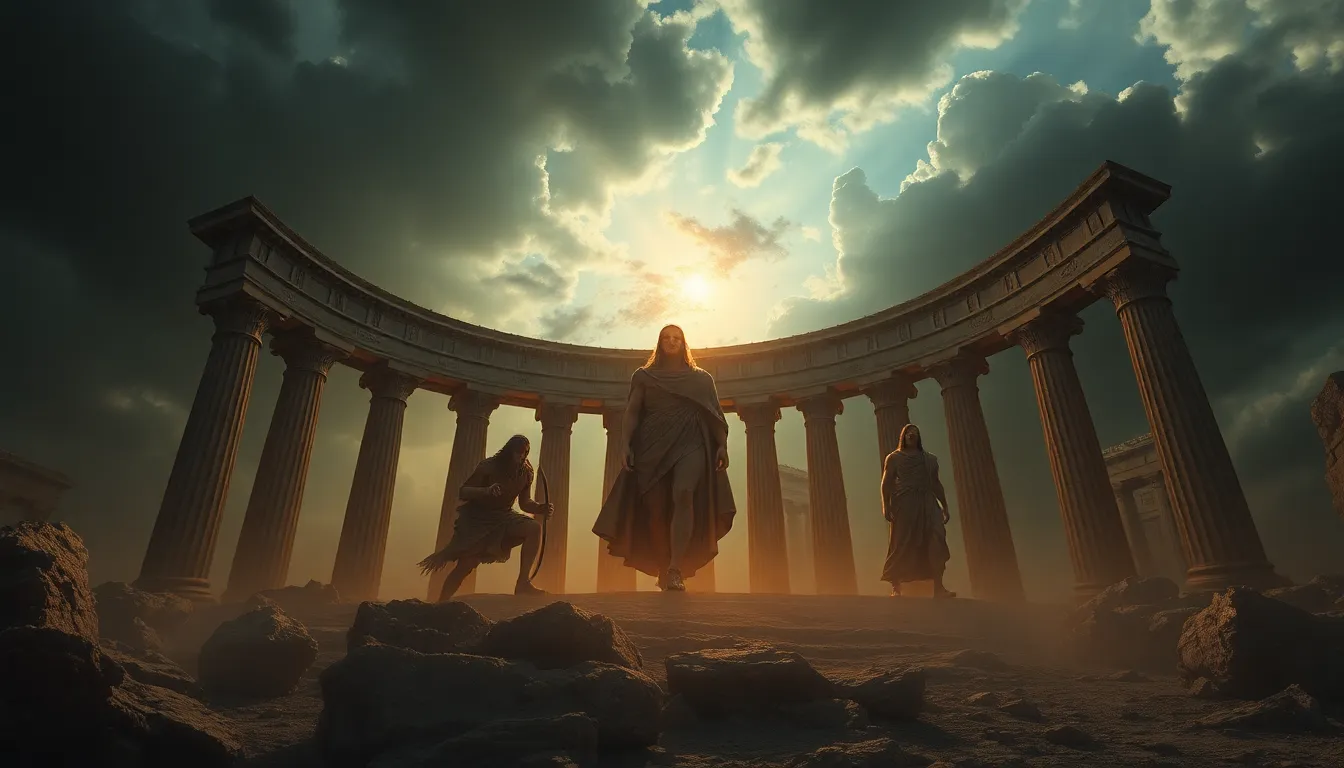
The Titanomachy: The Titans’ Legacy in Greek Mythology
I. Introduction
The Titanomachy, a monumental conflict in Greek mythology, represents the epic struggle between the Titans, the elder gods, and the Olympians, the younger gods led by Zeus. This battle not only signifies a shift in divine power but also marks the transition from one era of mythological narrative to another. The Titans, who ruled during the Golden Age of mythology, were eventually overthrown, leading to the establishment of a new pantheon that shaped many subsequent myths.
II. The Titans: Origin and Characteristics
A. Genealogy of the Titans
The Titans are a race of powerful deities that descended from Uranus (the sky) and Gaia (the earth). Their lineage is crucial in understanding the mythology surrounding them.
- Uranus and Gaia as progenitors: Uranus, the personification of the sky, and Gaia, the embodiment of the earth, gave birth to the first generation of Titans.
- Key figures among the Titans:
- Cronus: The leader of the Titans, known for his role in the Titanomachy and his eventual overthrow of Uranus.
- Rhea: The sister and wife of Cronus, who bore him several children, including Zeus.
- Oceanus: The Titan god of the ocean, representing the great river that encircled the world.
- Hyperion: The Titan of light and observation, often associated with the sun.
- Themis: The personification of divine order and law, representing justice and fairness.
B. Traits and Powers of the Titans
The Titans were characterized by their immense size and strength. Each Titan had dominion over specific aspects of the world, which contributed to their roles in mythology:
- Immortality: Titans were ageless and invulnerable, unlike mortals.
- Control over natural elements: Many Titans had powers over aspects such as the sea, sky, and earth.
- Wisdom and foresight: Several Titans were known for their intelligence and prophetic abilities.
III. The Prelude to War
A. The Role of Prophecy and Fate
Prophecy played a significant role in the events leading up to the Titanomachy. A prophecy foretold that Cronus would be overthrown by one of his own children, which made him paranoid and led to his tyrannical rule.
B. Cronus’ Reign and the Prophecy of His Downfall
Cronus, upon seizing power from his father Uranus, began to swallow his children to prevent the prophecy from coming true. Rhea, distressed by this, hid her youngest child, Zeus, in a cave on Crete, raising him in secret.
C. The Rise of the Olympians and Their Motivations
As Zeus grew, he became determined to rescue his siblings and challenge Cronus. With the help of his allies, including the Cyclopes and the Hecatoncheires, Zeus gathered the strength needed to confront Cronus and the Titans.
IV. The Titanomachy: The Great Battle
A. Key Events Leading to the Conflict
The Titanomachy began with Zeus and his allies confronting Cronus and the Titans. After freeing his siblings, Zeus rallied an army of fellow deities and mythical creatures to wage war against the Titans.
B. Main Battles and Strategies Employed
The war lasted for ten years and involved several key battles:
- Battle of Olympus: The Olympians launched assaults against the Titans, who were fortified on Mount Othrys.
- Use of thunderbolts: Zeus wielded thunderbolts crafted by the Cyclopes, which became a decisive advantage.
- Alliances with other beings: The Hecatoncheires, with their hundred hands, played a crucial role in overwhelming the Titans.
C. Notable Figures on Both Sides (Titans vs. Olympians)
Throughout the Titanomachy, numerous figures emerged as key players:
- Zeus: The king of the Olympians, symbolizing justice and order.
- Cronus: The leader of the Titans, representing tyranny and fear.
- Rhea: Although initially aligned with Cronus, she aided Zeus.
- Oceanus: Generally remained neutral but held significant power over the seas.
- Prometheus: A Titan who sided with the Olympians and is known for his intelligence and foresight.
V. Aftermath of the Titanomachy
A. The Defeat and Punishment of the Titans
The Titanomachy concluded with the defeat of the Titans, who were then punished by Zeus. Most were imprisoned in Tartarus, a deep abyss used as a dungeon of torment.
B. Establishment of the Olympian Order
With the Titans defeated, Zeus and his siblings established the Olympian order, bringing a new era of gods to rule the cosmos. This marked a significant shift in power dynamics within Greek mythology.
C. The Fate of Key Titans (e.g., Atlas, Prometheus)
Some Titans faced unique fates following their defeat:
- Atlas: Condemned to hold up the sky for eternity, symbolizing eternal burden.
- Prometheus: Punished by Zeus for stealing fire for humanity, showcasing the theme of suffering for rebellion.
- Epimetheus: Brother of Prometheus, who suffered due to his foolishness in accepting Pandora as a gift to humanity.
VI. The Titans’ Influence on Later Myths
A. Their Representation in Subsequent Greek Mythology
The legacy of the Titans continued to permeate Greek mythology long after the Titanomachy. They served as symbols of primordial forces and were often invoked in various myths.
B. The Titans as Archetypes and Symbols
The Titans represented various aspects of nature and the cosmos, often seen as archetypes in mythological storytelling:
- Chaos: Represented by the Titans’ chaotic nature before the Olympians’ order.
- Power and Rebellion: Symbolized by figures like Prometheus, who defied the gods.
- Generational Conflict: Embodied in the struggle between the Titans and the Olympians.
C. Myths that Draw from the Titanomachy
Numerous myths reference the Titanomachy or the Titans themselves, contributing to the rich tapestry of Greek mythology. Some notable examples include:
- The story of Prometheus and the creation of humanity.
- The tale of Atlas and his eternal punishment.
- Legends involving the various progeny of the Titans, such as the Gigantomachy, the battle against the Giants.
VII. Cultural and Artistic Representations
A. The Titanomachy in Ancient Art and Literature
The Titanomachy has inspired countless works of art and literature throughout history. Ancient Greek pottery often depicted scenes from the battle, showcasing the dramatic conflict between the Titans and Olympians.
B. Modern Adaptations and Interpretations
In modern times, the Titanomachy has been reinterpreted in various forms of media, including:
- Literature: Novels and poems that draw from Greek mythology.
- Film: Movies that adapt the stories of Greek gods and their battles.
- Video games: Games that incorporate mythological themes and characters from the Titanomachy.
C. Influence on Western Literature and Popular Culture
The themes of the Titanomachy have permeated Western literature, influencing stories that explore power dynamics, rebellion, and the struggle between generations.
VIII. Conclusion
A. The Enduring Legacy of the Titans in Mythology
The Titans continue to