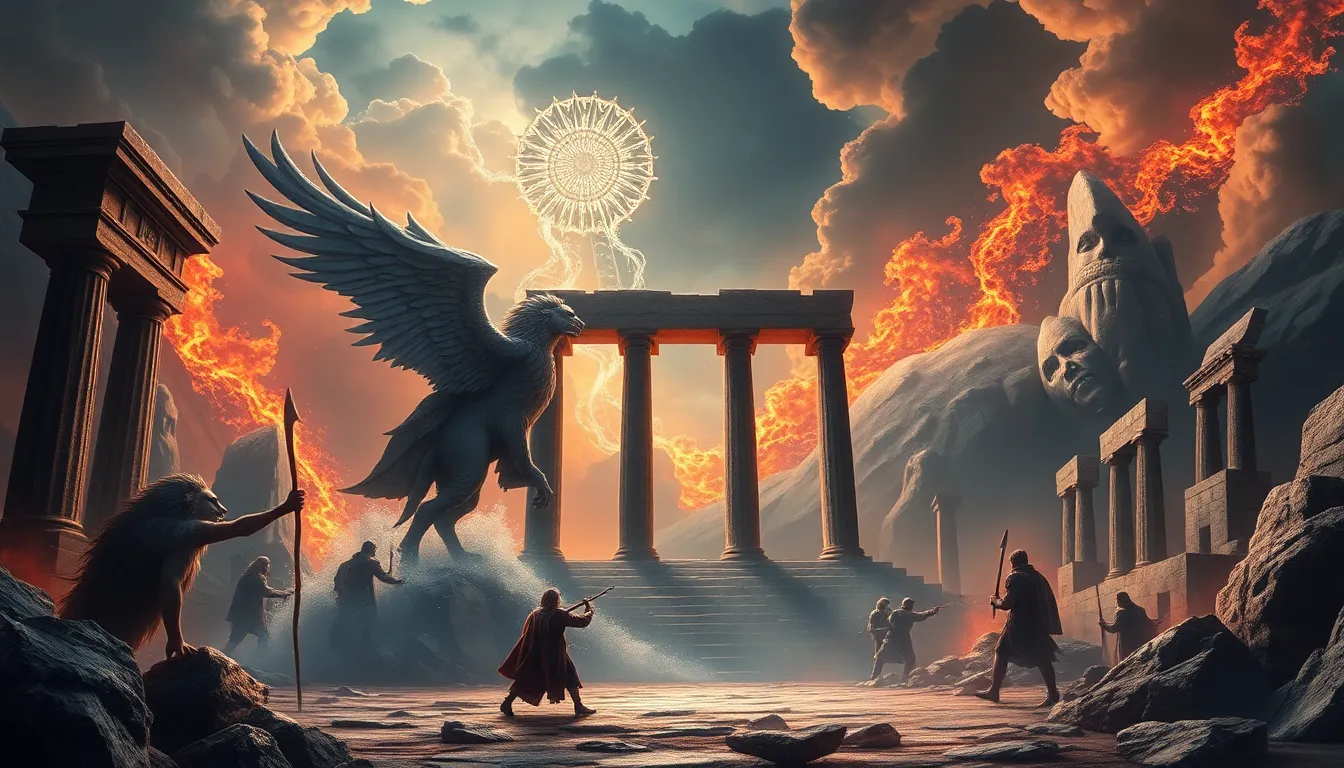
The Titanomachy: A Tale of Power, War, and Fate
I. Introduction to the Titanomachy
The Titanomachy is a significant conflict in Greek mythology that symbolizes the struggle for power between generations of deities. This epic battle, fought between the Titans, the elder gods, and the Olympians, led by Zeus, represents the transition from the old order of divine rule to a new era of governance among the gods.
At its core, the Titanomachy encompasses themes of power, war, and fate, exploring how ambition and destiny intertwine in the lives of gods and mortals alike. This mythological narrative not only reveals the dynamics of divine relationships but also reflects on the cyclical nature of power and the inevitability of change.
II. The Titans: The First Generation of Deities
The Titans were the first generation of gods in Greek mythology, born from the primordial deities Uranus (Sky) and Gaia (Earth). They were powerful beings who ruled during the Golden Age and were characterized by their immense strength, longevity, and diverse domains.
Key figures among the Titans include:
- Cronus: The leader of the Titans, known for his role in overthrowing his father, Uranus, and later, being overthrown by his son, Zeus.
- Rhea: Cronus’s sister and wife, who played a crucial role in the birth of the Olympian gods.
- Oceanus: The Titan god of the ocean, representing the vastness of water and its significance in the world.
- Hyperion: The Titan of light, often associated with the sun and the heavenly bodies.
- Themis: The Titaness of divine law and order, symbolizing justice and fairness.
The Titans ruled the cosmos with authority, but their reign was marked by conflict and tension, particularly due to Cronus’s fear of being overthrown by his offspring.
III. The Rise of the Olympians
The rise of the Olympians began with the birth of Zeus, who was destined to overthrow his father, Cronus. This prophecy instilled fear in Cronus, leading him to swallow each of his children at birth to prevent the prophecy from coming true.
However, Rhea, determined to save her youngest son, Zeus, hid him on the island of Crete and gave Cronus a stone wrapped in swaddling clothes instead. Once grown, Zeus sought revenge and ultimately led a rebellion against Cronus, liberating his siblings—Hestia, Hera, Demeter, Poseidon, and Hades—from their father’s stomach.
The liberation of the Cyclopes and the Hecatoncheires was a significant turning point in the conflict. The Cyclopes provided Zeus with the thunderbolt, Poseidon with his trident, and Hades with a helmet of invisibility, equipping the Olympians with powerful weapons to confront the Titans.
Alliances formed among the Olympian gods were crucial to their success in the Titanomachy. The unity of Zeus and his siblings, along with the support of the freed Cyclopes and other allies, laid the foundation for the impending war.
IV. The War of the Titans: Key Events and Battles
The Titanomachy was a fierce and protracted conflict that lasted for ten years. The battles were characterized by monumental clashes between the forces of the Titans and the Olympians, with the fate of the cosmos hanging in the balance.
Key events in the Titanomachy included:
- The Siege of Olympus: The Titans launched a direct assault on Mount Olympus, where the Olympians had taken refuge.
- Strategic Maneuvers: Zeus employed cunning strategies and the power of his thunderbolts to turn the tide of battle in favor of the Olympians.
- Divine Interventions: Several gods and goddesses chose sides, with some Titans defecting to the Olympians, altering the dynamics of the war.
Key characters played pivotal roles during the conflict:
- Zeus: The leader of the Olympians, whose thunderbolts became a symbol of divine power.
- Poseidon: The god of the sea, who wielded his trident to create storms and earthquakes against the Titans.
- Hades: The god of the underworld, who played a strategic role in the war by manipulating the dead and the realm of the afterlife.
V. The Aftermath of the Titanomachy
The Titanomachy culminated in the defeat of the Titans, who were ultimately overpowered by the determination and unity of the Olympians. The vanquished Titans were imprisoned in Tartarus, a deep abyss used as a dungeon of torment, while the Olympians established their reign over the cosmos.
The establishment of the Olympian order marked a significant shift in the mythological hierarchy, with Zeus becoming the supreme ruler of the gods. This new order brought about a restructuring of divine roles and responsibilities, with each Olympian god governing specific aspects of life and nature.
The aftermath of the Titanomachy also had profound impacts on the natural world and the cosmos. The victory of the Olympians restored balance and order, and the gods were believed to interact more favorably with humans, fostering a new era of civilization.
VI. Themes of Power and Fate in the Titanomachy
One of the central themes of the Titanomachy is the exploration of power dynamics between generations of deities. The conflict illustrates the inevitable rise and fall of powers, as the Titans, once rulers, were supplanted by their offspring.
The theme of fate is also prominent in the narrative, with prophecies and destinies playing crucial roles in motivating the characters’ actions. The inevitability of fate is portrayed through the cyclical nature of power struggles, suggesting that even gods are subject to the whims of destiny.
Additionally, the Titanomachy reflects on ambition, rebellion, and divine justice. The desire for power and control drives both the Titans and the Olympians, leading to conflict that ultimately reinforces the idea that justice will prevail, as the Olympians restore order after their victory.
VII. The Titanomachy in Art and Literature
The Titanomachy has been depicted in various forms of ancient Greek art and literature, showcasing its enduring influence on culture. Notable representations include:
- Literature: The works of Hesiod, particularly “Theogony,” provide a detailed account of the Titanomachy and its characters.
- Art: Ancient pottery and sculptures often depicted scenes from the Titanomachy, illustrating the dramatic battles between the Titans and the Olympians.
- Modern Interpretations: The Titanomachy has inspired numerous contemporary works, including novels, films, and video games, reflecting its lasting legacy.
These artistic representations emphasize the timeless nature of the conflict and its themes, resonating with audiences across generations.
VIII. Conclusion: The Lasting Legacy of the Titanomachy
In summary, the Titanomachy is a foundational myth in Greek mythology that encapsulates the themes of power, war, and fate. The narrative of the conflict between the Titans and the Olympians offers valuable insights into the nature of divine relationships and the cyclical nature of authority.
Today, the Titanomachy remains relevant as it reflects the complexities of ambition, rebellion, and justice, themes that continue to resonate in human history and culture. The interplay of power dynamics and the influence of fate are timeless concepts that encourage reflection on our own struggles and aspirations.
Ultimately, the Titanomachy serves as a reminder of the transformative power of conflict and the enduring legacy of myth in shaping our understanding of the world.