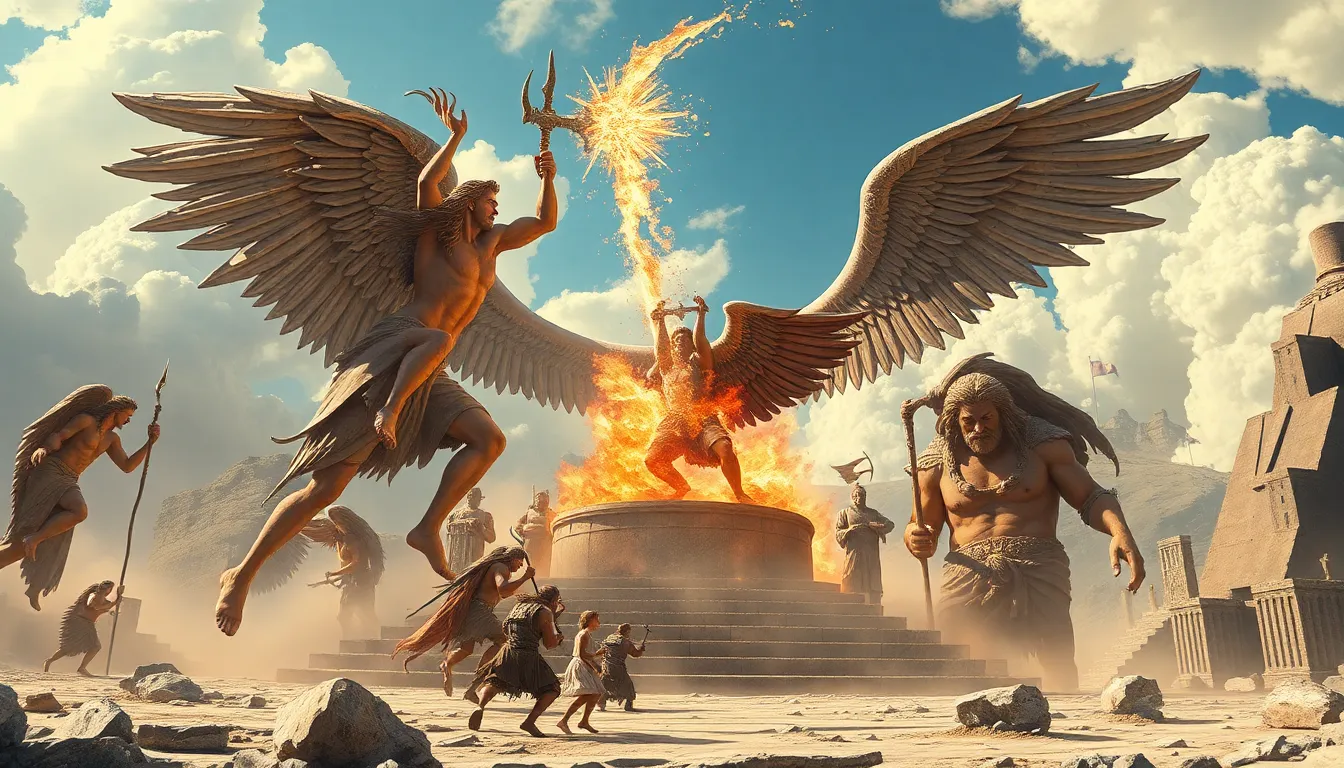
The Titanomachy: The Epic Struggle for the Throne of Heaven
I. Introduction to the Titanomachy
The Titanomachy is one of the most significant events in Greek mythology, marking the epic clash between the Titans and the Olympian gods. This monumental conflict not only determined the rulers of the cosmos but also symbolized the struggle between generations, the old versus the new. It serves as a foundational myth that explores themes of power, rebellion, and the inevitable change that comes with time.
In this narrative, the key figures include the mighty Zeus, leader of the Olympians, and his father Cronus, the reigning Titan. The Titanomachy is not just a battle for supremacy; it reflects deeper themes of familial conflict, the fear of usurpation, and the cyclical nature of power.
II. The Titans: Rulers of the Primordial Universe
The Titans were the original deities in Greek mythology, born from the primordial entities Gaia (Earth) and Uranus (Sky). They were powerful beings who ruled during the Golden Age, a time of peace and prosperity. The lineage of Titans includes notable figures such as:
- Cronus
- Rhea
- Oceanus
- Tethys
- Hyperion
– The leader of the Titans who overthrew his father, Uranus.
– Sister and wife of Cronus, mother of the Olympian gods.
– The Titan of the ocean, representing the great river encircling the Earth.
– The Titaness of the nourishing flow of water.
– The Titan of light, father of Helios (Sun), Selene (Moon), and Eos (Dawn).
The reign of the Titans was characterized by their immense power and the primordial control they held over the universe. However, their rule was also marked by a tumultuous relationship with other primordial deities, including the formidable Gaia and Uranus.
III. The Rise of the Olympian Gods
The birth of Zeus, the youngest son of Cronus and Rhea, was a turning point in the mythological narrative. According to prophecy, Cronus feared that one of his children would overthrow him, just as he had done to his father, Uranus. To prevent this, Cronus swallowed each of his children at birth. However, Rhea managed to save Zeus by hiding him away in a cave on the island of Crete.
As Zeus grew, he gathered his siblings—Hestia, Hera, Demeter, Poseidon, and Hades—who had been swallowed and later freed. Together, they formed a united front against Cronus and the Titans. Key figures who played a significant role in this rebellion included:
- Prometheus – A Titan who sided with Zeus and is known for his intelligence and foresight.
- Epimetheus – Brother of Prometheus, who also supported the Olympians.
- The Hecatoncheires – Giant beings with a hundred arms, who aided Zeus during the war.
IV. The Prelude to War: Causes of the Titanomachy
The motivations behind the Titanomachy stemmed from Cronus’s tyrannical rule and the fear of being overthrown. The Olympians, led by Zeus, were driven by a desire for freedom and justice against their father’s oppressive reign. Key events leading up to the conflict include:
- The swallowing of Zeus’s siblings by Cronus.
- Rhea’s deception of Cronus in hiding Zeus.
- Zeus’s rise to power and gathering of allies.
These events set the stage for an inevitable confrontation, as the Olympians sought to reclaim their rightful place in the cosmos.
V. The Great Battle: Key Events of the Titanomachy
The Titanomachy was a colossal battle that lasted for ten years. It pitted the mighty Titans against the newly formed coalition of Olympian gods and their allies. Key events of the war included:
- Battle Strategies: Zeus utilized thunderbolts forged by the Cyclopes, while Poseidon wielded his trident to create earthquakes.
- Alliances: The Olympians formed alliances with various creatures, including the Hecatoncheires and the Cyclopes, who fought valiantly on their behalf.
- Mythological Creatures: Many creatures of Greek mythology, such as the Centaurs and the Giants, participated in the conflict.
The battle itself was marked by chaos and destruction, with the earth shaking under the weight of the combat. Ultimately, the Olympians emerged victorious, leading to the downfall of the Titans.
VI. The Aftermath: Consequences of the Titanomachy
The conclusion of the Titanomachy had profound implications for the cosmos. The Titans, once rulers, faced dire consequences:
- Imprisonment in Tartarus: The defeated Titans were cast into the abyss of Tartarus, a deep, dark pit beneath the earth, where they were imprisoned for eternity.
- Establishment of the Olympian Order: Zeus and his siblings ascended to power, establishing a new order in the universe, with Zeus as the king of the gods.
- Cultural Legacy: The Titanomachy became a symbol of the struggle between old and new, justice and tyranny, influencing art, literature, and philosophy throughout the ages.
VII. Interpretations and Symbolism of the Titanomachy
The Titanomachy serves as a rich metaphor for change and generational conflict. It embodies the inevitable transition of power and the struggles that accompany such transformations. Key themes include:
- Power: The quest for power and control drives the narrative, showcasing the lengths to which beings will go to secure their dominance.
- Betrayal: The conflict is rife with betrayal, as familial ties are severed in the pursuit of power.
- Justice: The Olympians’ victory is seen as a restoration of cosmic order and justice, replacing tyranny with a new, benevolent rule.
Moreover, the Titanomachy has inspired countless artistic interpretations, from ancient pottery to modern films, highlighting its enduring relevance in human culture.
VIII. Conclusion: The Enduring Legacy of the Titanomachy
The Titanomachy is not just a mythological battle; it is a powerful narrative that resonates with themes of struggle, change, and the cyclical nature of power. Its significance extends beyond ancient Greece, offering insights into contemporary discussions about authority, rebellion, and the human condition.
Understanding the Titanomachy allows us to reflect on our own experiences with power struggles and generational conflicts. As we navigate the complexities of our world, the lessons embedded within this epic tale remain ever relevant, reminding us of the enduring nature of human experience and the inevitability of change.