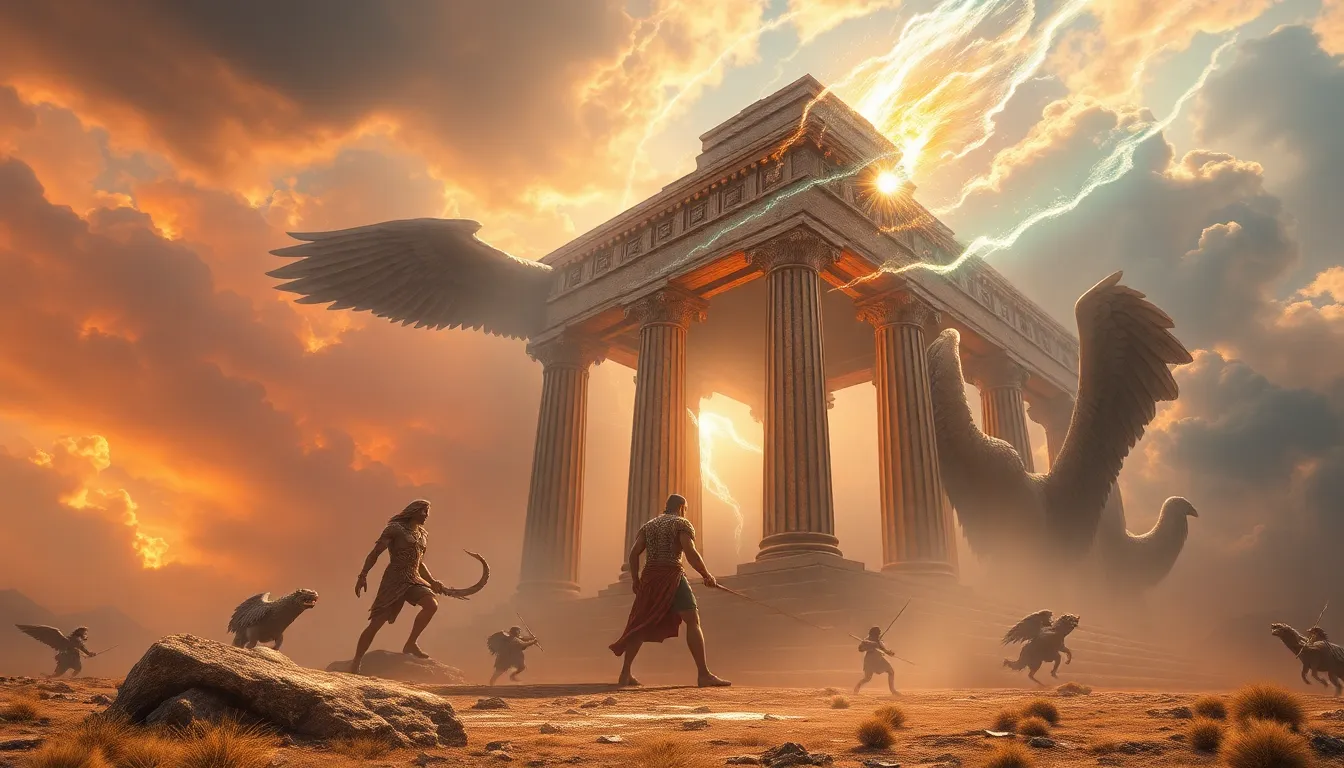
The Titanomachy: The Battle for Control Over the Heavens
I. Introduction
The Titanomachy is one of the most pivotal events in Greek mythology, representing the fierce battle between the Titans and the Olympian gods for supremacy over the cosmos. This myth not only highlights the struggles for power among divine beings but also reflects the cultural values and beliefs of ancient Greece regarding authority, justice, and the natural order.
The importance of the Titanomachy lies in its exploration of themes such as rebellion, destiny, and the cyclical nature of power. In this article, we will delve into the historical context of the Titanomachy, the key figures involved, the epic battle itself, and the lasting impact of this mythological event on Greek culture and literature.
II. Historical Context of the Titanomachy
To fully understand the Titanomachy, it is essential to consider the era of the Titans and the subsequent rise of the Olympians.
A. The Age of the Titans
The Age of the Titans is characterized by the rule of powerful deities who governed the universe before the Olympians. The Titans were the descendants of Gaia (Earth) and Uranus (Sky) and were known for their immense strength and size.
B. Key figures involved: Titans vs. Olympians
- Titans: Cronus, Rhea, Oceanus, Tethys, Hyperion, Theia, Coeus, Phoebe, Iapetus, and Mnemosyne.
- Olympians: Zeus, Hera, Poseidon, Demeter, Hestia, Ares, Athena, Apollo, Artemis, Hephaestus, and Hermes.
C. The significance of divine rule in ancient Greek culture
In ancient Greek culture, the concept of divine rule was paramount. The gods were seen as the ultimate authorities, and their actions directly influenced human affairs. The Titanomachy symbolizes the transition from the chaotic and often tyrannical reign of the Titans to the more orderly and democratic rule of the Olympians, reflecting the Greek ideals of justice and balance.
III. The Titans: Who Were They?
The Titans were a powerful group of deities who played a crucial role in the early myths of creation and governance in Greek mythology.
A. Overview of the Titan lineage
The Titans were the offspring of Gaia and Uranus, representing the primal forces of nature. They were central to many creation myths and were often associated with various aspects of the world.
B. Major Titans and their attributes
- Cronus: Leader of the Titans, associated with time and harvest.
- Rhea: Sister and wife of Cronus, goddess of fertility and motherhood.
- Oceanus: Titan of the ocean, representing the encircling river that was believed to surround the Earth.
- Tethys: Goddess of the nourishing flow of fresh water, wife of Oceanus.
- Hyperion: Titan of light, father of the sun, moon, and dawn.
- Theia: Goddess of sight and the shining sky, mother of the sun, moon, and dawn.
- Coeus: Titan of intellect and the axis of heaven.
- Phoebe: Titaness of prophecy and intellect, associated with the moon.
- Iapetus: Titan of mortality and craftsmanship, father of Prometheus and Epimetheus.
- Mnemosyne: Titaness of memory, mother of the Muses.
C. The role of Cronus and Rhea in Titan leadership
Cronus and Rhea were central figures in the Titan hierarchy. Cronus, fearing a prophecy that he would be overthrown by one of his children, swallowed each of his offspring at birth. Rhea, desperate to save her youngest son, Zeus, devised a plan to hide him and raise him away from Cronus’ wrath.
IV. The Rise of the Olympians
The rise of the Olympians marks a significant turning point in Greek mythology, leading to the overthrow of the Titans.
A. Origins of the Olympian gods
The Olympians were born to Cronus and Rhea, but due to Cronus’ tyranny, they were initially hidden. Zeus, the youngest child, eventually led the revolt against his father and the Titans.
B. Key figures: Zeus, Hera, Poseidon, and others
- Zeus: The king of the gods, god of the sky and thunder.
- Hera: Zeus’ wife and sister, goddess of marriage and family.
- Poseidon: God of the sea, earthquakes, and horses.
- Demeter: Goddess of agriculture and fertility.
- Hestia: Goddess of the hearth and domesticity.
- Ares: God of war.
- Athena: Goddess of wisdom and warfare.
- Apollo: God of the sun, music, and prophecy.
- Artemis: Goddess of the hunt and the moon.
- Hephaestus: God of fire and craftsmanship.
- Hermes: Messenger of the gods and god of trade and travel.
C. The prophecy and the overthrow of Cronus
The prophecy foretold that one of Cronus’ children would dethrone him. This led to a series of events where Zeus, after being raised in secret, returned to confront his father. With the help of his siblings, who were freed from Cronus’ stomach, Zeus initiated a rebellion against the Titans, marking the beginning of the Titanomachy.
V. The Battle of Titanomachy
The Titanomachy was an epic conflict that lasted for ten years, characterized by fierce battles and dramatic confrontations among the divine beings.
A. Description of the conflict
The battle took place in Thessaly, a region in central Greece. Both sides summoned their allies, and the clash between the Titans and Olympians was fierce, involving immense power and elemental forces.
B. Key events and turning points during the battle
- The Olympians, led by Zeus, initially struggled against the Titans’ might.
- Zeus unleashed powerful storms and lightning bolts, showcasing his dominance over the sky.
- The intervention of the Cyclopes, who forged powerful weapons for the Olympians, including Zeus’ thunderbolts.
- The Hecatoncheires, the hundred-handed giants, were unleashed to aid the Olympians.
C. The role of allies: Cyclopes and Hecatoncheires
The Cyclopes played a crucial role by providing Zeus with his iconic thunderbolts, while the Hecatoncheires assisted in battle with their overwhelming strength and hundred hands, launching boulders at the Titans and turning the tide in favor of the Olympians.
VI. Aftermath and Consequences
The aftermath of the Titanomachy had profound implications for the structure of divine governance and the natural order.
A. The defeat of the Titans and their punishment
After a prolonged struggle, the Olympians emerged victorious, leading to the defeat of the Titans. As punishment, the Titans were imprisoned in Tartarus, a deep abyss used as a dungeon of torment.
B. Establishment of the Olympian rule
With the Titans defeated, Zeus and his siblings established their rule from Mount Olympus, creating a new order among the gods. Zeus became the chief deity, governing the skies, while other gods took their respective domains.
C. Changes in the natural order and celestial governance
The victory of the Olympians symbolized a new era in Greek mythology, characterized by a more structured and just divine hierarchy. The Olympians were seen as more relatable and human-like, reflecting the values of the Greek people.