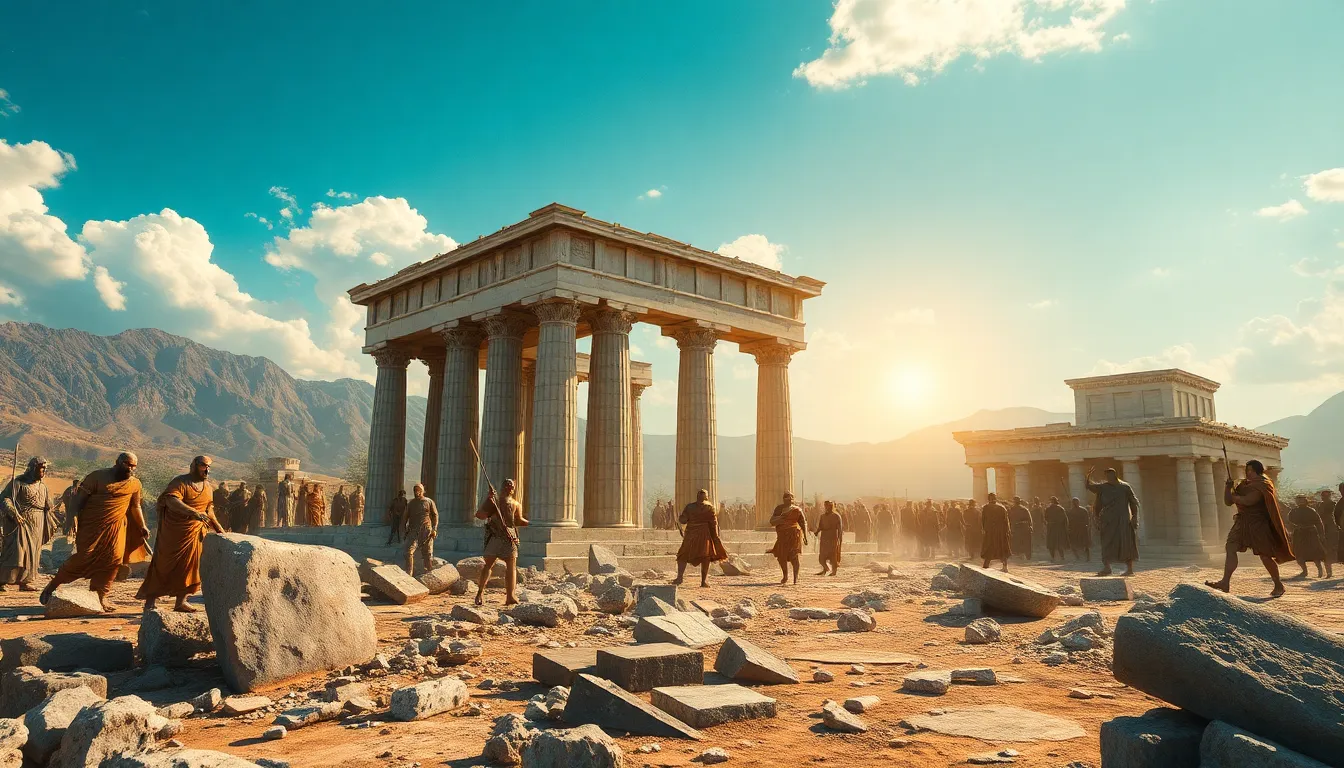
The Titanomachy: The Battle of the Gods in Ancient Greece
I. Introduction
The Titanomachy, a monumental conflict in ancient Greek mythology, stands as one of the most significant battles between divine beings. This epic struggle pitted the Olympian gods against their predecessors, the Titans, in a war that would determine the fate of the cosmos. The Titanomachy symbolizes the themes of power, rebellion, and destiny, illustrating the complexities of divine hierarchy and the relentless pursuit of supremacy.
This article will delve into the intricacies of the Titanomachy, exploring its background, the key players involved, the battles fought, and its lasting impact on mythology and culture. By examining these aspects, we will gain a deeper understanding of why this conflict remains a cornerstone of Greek mythological tradition.
II. Background of the Titans
The Titans were a race of powerful deities that preceded the Olympian gods, representing the primal forces of the universe. They were the children of Uranus (the sky) and Gaia (the earth), embodying various aspects of nature and existence. The Titans had dominion over the cosmos and the elements, ruling during the Golden Age of myth.
Key Titans involved in the Titanomachy include:
- Cronus – The leader of the Titans, known for his cunning and eventual downfall.
- Rhea – Cronus’s sister and wife, who played a crucial role in the birth of the Olympian gods.
- Oceanus – The Titan god of the ocean, often depicted as a gentle and nurturing force.
- Hyperion – The Titan of light, representing the sun, and father to Helios, Selene, and Eos.
- Themis – The Titaness of divine law and order, symbolizing justice.
The reign of the Titans, particularly under Cronus, was marked by a notable prophecy that foretold the rise of a child who would usurp Cronus’s throne. This prophecy sowed the seeds of fear and paranoia within Cronus, leading to his drastic actions against his offspring.
III. The Rise of the Olympians
Zeus, the king of the Olympian gods and the most significant figure in the Titanomachy, was born to Cronus and Rhea. Fearing the prophecy that one of his children would overthrow him, Cronus swallowed each of his offspring at birth. However, Rhea managed to save Zeus by hiding him in a cave on the island of Crete and presenting Cronus with a stone wrapped in swaddling clothes instead.
Upon reaching adulthood, Zeus learned of his siblings’ fate and devised a plan to free them:
- He sought the help of the wise goddess Metis, who provided him with a potion to make Cronus regurgitate his children.
- After freeing his siblings—Hestia, Hera, Demeter, Poseidon, and Hades—Zeus rallied them to overthrow Cronus.
With the formation of a strong alliance among the Olympian gods, Zeus prepared for war against the Titans, marking the beginning of the Titanomachy.
IV. The Prelude to War
As tensions escalated between the Titans and the Olympians, both sides began to gather their forces. The Titans, confident in their strength and experience, initially underestimated the resolve of the younger gods. However, Zeus and his siblings, fueled by the desire for justice and freedom, prepared for the inevitable conflict.
The roles of Gaia and Uranus were pivotal in this prelude:
- Gaia supported the Olympians, feeling that the Titans had become tyrannical under Cronus’s rule.
- Uranus, though less directly involved, represented the primordial authority that the Titans had once embodied.
With the support of Gaia, the Olympians gained crucial advantages. Gaia provided them with powerful allies, including the Cyclopes and the Hecatoncheires—giant beings with a hundred arms and fifty heads—who would play significant roles in the battle that followed.
V. The Titanomachy: Key Battles and Strategies
The Titanomachy was marked by fierce battles that raged for ten years. The twin armies clashed in a cosmic struggle that reshaped the heavens and the earth. The battlefield itself was often described as a chaotic expanse where the very fabric of reality was torn asunder.
Key confrontations included:
- The Battle of the Titans against the Olympians: This initial clash saw the Titans utilizing their brute strength and experience, while the Olympians relied on strategy and teamwork.
- Zeus’s Thunderbolts: Zeus wielded thunderbolts, crafted by the Cyclopes, which became a turning point in the war, striking fear into the hearts of the Titans.
- The Hecatoncheires’ Fury: The Hecatoncheires unleashed their massive strength and numerous arms, raining down destruction upon the Titans.
As the war progressed, the tides began to turn in favor of the Olympians. The combination of Zeus’s leadership, the Cyclopes’ weaponry, and the Hecatoncheires’ overwhelming force proved too much for the Titans, who began to falter.
VI. The Aftermath of the Titanomachy
Following the defeat of the Titans, the consequences were monumental. The Olympians emerged victorious, establishing their rule over the cosmos. The Titans, in stark contrast, faced dire repercussions:
- Imprisonment in Tartarus: The Titans were cast into the depths of Tartarus, a dark and abyssal realm beneath the earth, where they would remain confined for eternity.
- Establishment of Olympian Rule: The victory of the Olympians signified the beginning of a new era in mythology, where the Olympian gods became the principal deities worshipped by the ancient Greeks.
The aftermath of the Titanomachy not only reshaped the divine hierarchy but also set the stage for the many myths and stories that would follow, detailing the adventures and interactions of the Olympian gods.
VII. Cultural Impact and Legacy
The Titanomachy has left a profound impact on Greek mythology and culture. Its themes of rebellion against tyranny, the struggle for power, and the quest for justice resonate throughout ancient narratives. The battle inspired countless works of art and literature, including:
- Hesiod’s “Theogony”: This foundational text outlines the genealogy of the gods and provides a detailed account of the Titanomachy.
- Vase Paintings: Ancient Greek pottery often depicted scenes from the Titanomachy, showcasing the dramatic clashes between the Titans and the Olympians.
- Modern Adaptations: The Titanomachy continues to inspire contemporary literature, films, and other media, reflecting its timeless themes.
Through these representations, the Titanomachy remains a vital part of the cultural heritage, influencing not only ancient civilizations but also modern interpretations of mythological narratives.
VIII. Conclusion
The Titanomachy stands as a pivotal moment in Greek mythology, symbolizing the struggle for power and the overthrow of tyranny. Its significance extends beyond the mere conflict of gods; it reflects deeper themes of rebellion, destiny, and the cyclical nature of power.
In retrospect, the Titanomachy serves as a reminder of the complexities of divine relationships and the consequences of ambition and fear. Its legacy continues to resonate in contemporary culture, showcasing the enduring relevance of these ancient myths. The battle between the Titans and the Olympians not only transformed the mythological landscape but also carved a lasting place in the hearts and minds of those who seek to understand the ancient world.