The Titanomachy: The Epic Conflict That Shaped Mythology
I. Introduction to the Titanomachy
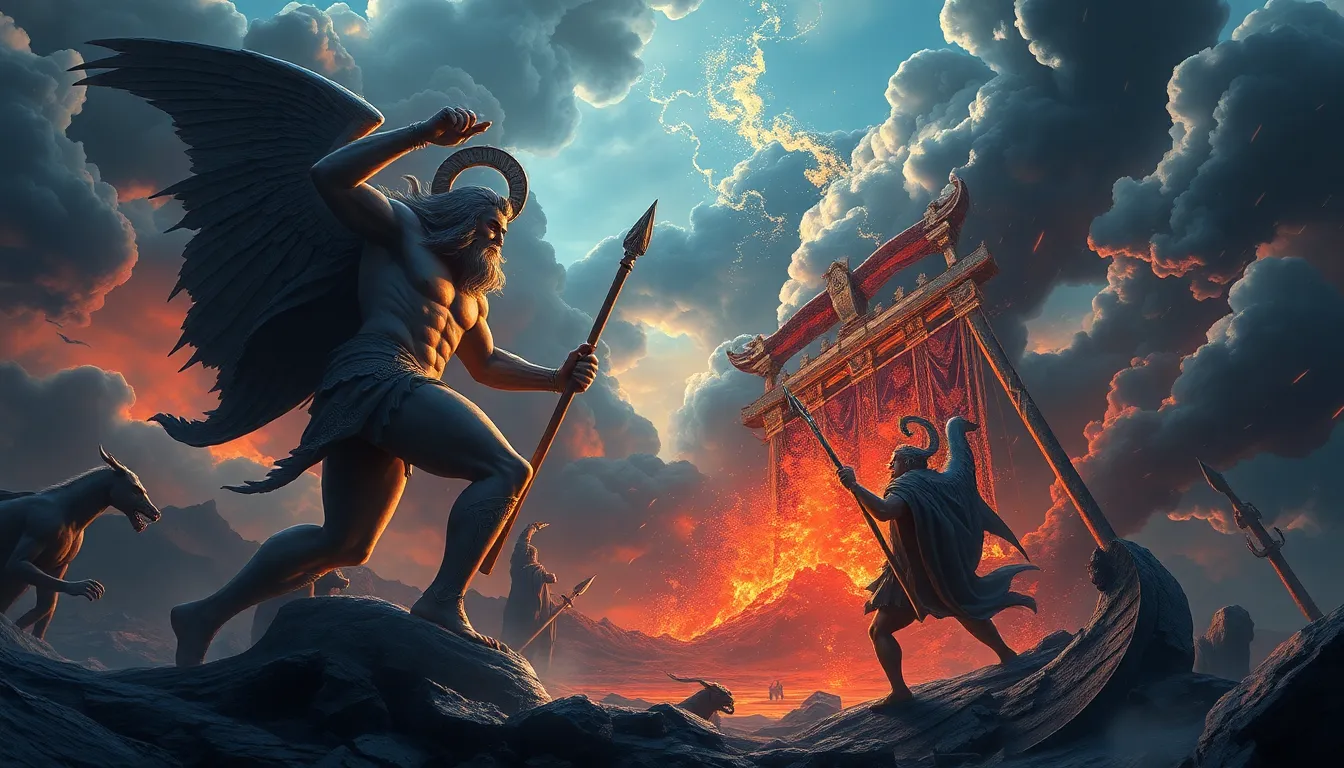
The Titanomachy refers to the legendary battle between the Titans, the elder deities of Greek mythology, and the Olympians, the newer generation of gods led by Zeus. This monumental conflict is not only a pivotal point in Greek mythology but also serves as a foundational myth that illustrates the themes of power, rebellion, and the cyclical nature of time and authority.
In Greek mythology, the Titanomachy is significant as it represents the struggle for control over the cosmos and the transition from the old order of the Titans to the new regime of the Olympians. This article aims to explore the intricacies of the Titanomachy, its background, key figures, the war itself, its aftermath, and its lasting legacy in mythology.
II. Background: The Titans and the Olympians
A. Description of the Titans and their characteristics
The Titans were a race of powerful deities who ruled during the Golden Age of Greek mythology. They were descendants of Gaia (the Earth) and Uranus (the Sky), embodying various natural and abstract concepts. Each Titan had unique attributes and domains:
- Cronus: The leader of the Titans, associated with time and harvest.
- Rhea: Sister and wife of Cronus, representing fertility and motherhood.
- Oceanus: The Titan of the ocean, symbolizing the vastness of water.
- Tethys: The goddess of the nourishing flow of fresh water and the nursing of children.
- Hyperion: The Titan of light, associated with the sun.
B. Introduction of the Olympian gods
The Olympians emerged as the new generation of gods, born to the Titans but representing a new order. Led by Zeus, they included:
- Zeus: The king of the gods, god of the sky and thunder.
- Hera: The goddess of marriage and family, Zeus’s wife and sister.
- Poseidon: The god of the sea, earthquakes, and horses.
- Demeter: The goddess of agriculture and fertility.
- Hestia: The goddess of the hearth and domestic life.
C. The power struggle: Causes of the conflict
The Titanomachy arose from a complex web of familial betrayal, fear of prophecy, and the desire for supremacy. Cronus, fearing that one of his children would overthrow him, swallowed each of them at birth. However, Rhea saved Zeus by hiding him and giving Cronus a stone to swallow instead. This act of defiance set the stage for the impending conflict.
III. Key Figures in the Titanomachy
A. Cronus: The leader of the Titans
Cronus was the ruler of the Titans and symbolized the destructive aspect of time. His fear of being usurped led him to commit heinous acts against his own offspring, showcasing the darker side of power and paranoia.
B. Zeus: The champion of the Olympians
Zeus, the youngest son of Cronus and Rhea, emerged as the leader of the Olympians. He represented the ideals of justice, order, and protection. His rebellion against Cronus was fueled by a desire to liberate his siblings and establish a new order.
C. Other notable Titans and deities involved in the conflict
Several other Titans and deities played crucial roles in the Titanomachy, including:
- Atlas: A Titan who was forced to hold up the sky after the war.
- Prometheus: The Titan who defied Zeus by giving fire to humanity.
- Epimetheus: Brother of Prometheus, known for his foolishness.
IV. The Build-Up to War
A. The prophecy and its implications
The prophecy that one of Cronus’s children would overthrow him instilled fear in the Titan king. This fear ultimately drove him to actions that resulted in the rebellion of his children, particularly Zeus, who sought to fulfill the prophecy.
B. The role of Gaia and Uranus in the conflict
Gaia, the Earth goddess, played a pivotal role in the conflict by encouraging her son Cronus to overthrow Uranus, her husband. Later, she supported Zeus in his quest against Cronus, showcasing the shifting allegiances in this family drama.
C. Alliances and betrayals among the gods and Titans
The Titanomachy was marked by shifting alliances. Some Titans, like Prometheus and Themis, sided with Zeus, while others remained loyal to Cronus. This betrayal added layers of complexity to the conflict.
V. The War Itself: Battles and Strategies
A. Description of the epic battles between Titans and Olympians
The Titanomachy lasted for ten years, marked by fierce battles on the plains of Thessaly. The Olympians, though fewer in number, were united in their cause and fought valiantly against the formidable Titan forces.
B. Key strategies employed by both sides
Both sides employed various strategies during the war:
- Olympians: Utilized their knowledge of the terrain and forged alliances with powerful creatures like the Cyclopes and Hecatoncheires.
- Titans: Relied on their brute strength and vast numbers, employing overwhelming force in direct confrontations.
C. The involvement of mythical creatures and allies
The conflict saw the involvement of various mythical creatures. The Cyclopes provided the Olympians with powerful weapons, including Zeus’s thunderbolts, while the Hecatoncheires, with their hundred arms, fought valiantly for the new gods.
VI. The Aftermath of the Titanomachy
A. Consequences for the Titans and the Olympians
The Titanomachy concluded with the defeat of the Titans, leading to profound consequences for both sides. The Olympians established their reign over the cosmos, while the Titans faced dire repercussions.
B. The fate of the defeated Titans
Many Titans were imprisoned in Tartarus, a deep abyss used as a dungeon of torment. Others, like Atlas, were condemned to eternal punishment. This fate served as a warning against the consequences of rebellion and defiance.
C. Establishment of the Olympian order
With the Titans defeated, the Olympians established a new order, with Zeus as their king. This marked the beginning of a new era in Greek mythology, characterized by the reign of the Olympian gods and the establishment of their domains and relationships.
VII. The Titanomachy’s Legacy in Mythology
A. Influence on subsequent myths and stories
The Titanomachy has had a lasting influence on Greek mythology and literature. Themes of conflict, rebellion, and the struggle for power resonate in later myths, shaping the narratives of gods and heroes.
B. Cultural interpretations of the Titanomachy
The Titanomachy has been interpreted in various ways across cultures. Some view it as a metaphor for generational conflict, while others see it as a reflection of the natural order of the universe, where the old must give way to the new.
C. Symbolism and themes arising from the conflict
The Titanomachy is rich in symbolism, representing:
- The struggle for power and authority.
- The cyclical nature of time and the inevitability of change.
- The idea of familial betrayal and loyalty.
VIII. Conclusion
In summary, the Titanomachy is a fundamental narrative in Greek mythology that highlights the struggle between the old order of the Titans and the new reign of the Olympians. Its significance lies in its exploration of power, rebellion, and the intricate relationships among deities.
The impact of the Titanomachy extends beyond ancient myths, influencing modern interpretations of conflict and authority. It serves as a reminder of the complexities of power dynamics and the inevitable shifts that come