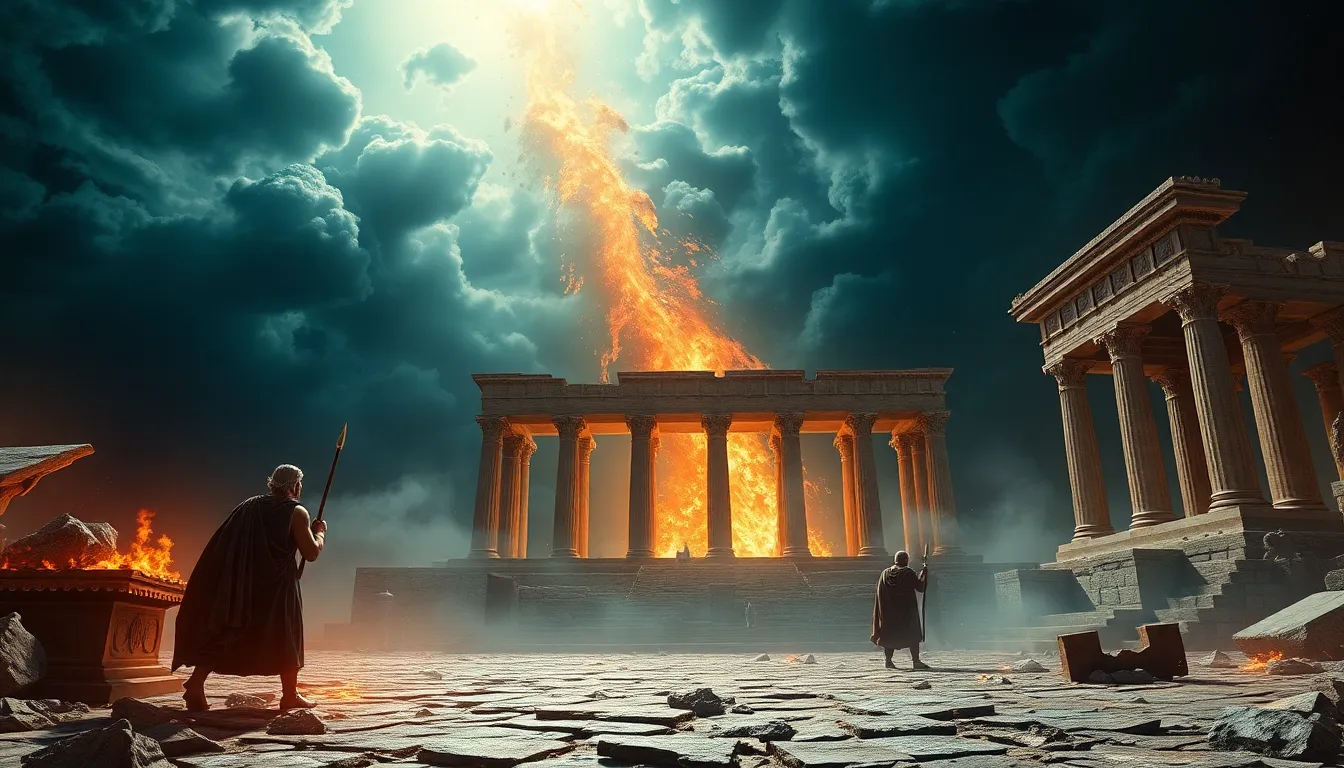
The Titanomachy: The War for Control of the Ancient World
I. Introduction
The Titanomachy, a pivotal event in Greek mythology, refers to the legendary war between the Titans and the Olympians for control of the cosmos. This epic struggle not only shaped the pantheon of Greek gods but also established the fundamental order of the ancient world. The Titanomachy is a tale of power, rebellion, and the struggle for supremacy that has resonated through centuries of storytelling.
This article will explore the historical background of the Titans, the rise of Zeus and the Olympians, the prelude to war, the major battles and strategies employed during the conflict, the aftermath of the Titanomachy, and its cultural impact and legacy.
II. Historical Background of the Titans
The Titans are among the earliest deities in Greek mythology, born from the primordial gods Uranus (the sky) and Gaia (the earth). They represent the forces of nature and the ancient order before the rise of the Olympians.
A. Origins of the Titans in Greek mythology
The Titans are often seen as personifications of various aspects of the universe, embodying the raw, chaotic forces of nature. Their reign is often referred to as the Golden Age, a time of peace and prosperity before the tumultuous changes brought about by the Olympians.
B. Key figures among the Titans
- Cronus: The leader of the Titans, known for overthrowing his father, Uranus.
- Rhea: The sister and wife of Cronus, mother of the Olympian gods.
- Oceanus: The Titan of the ocean, representing the vast waters that encircle the earth.
- Hyperion: The Titan of light, father of the sun, moon, and dawn.
- Themis: The Titaness of divine law and order.
C. The familial relationships and rivalries
The relationships among the Titans were complex, often marked by rivalries and betrayals. Cronus’s fear of being overthrown led him to swallow his children, a brutal act that sowed the seeds of conflict. Rhea, determined to save her youngest child, Zeus, orchestrated his escape, ultimately leading to the downfall of Cronus and the rise of the Olympians.
III. The Rise of Zeus and the Olympians
The rise of Zeus, the youngest son of Cronus and Rhea, marked a significant turning point in the battle for control of the universe.
A. The prophecy and birth of Zeus
According to prophecy, Zeus was destined to overthrow Cronus. To prevent this, Cronus swallowed his children at birth. However, Rhea saved Zeus by hiding him in a cave on the island of Crete and giving Cronus a stone wrapped in swaddling clothes instead.
B. Formation of alliances with other gods
As Zeus grew, he sought to liberate his siblings and form alliances. With the help of the Oceanids and the Cyclopes, he freed his brothers and sisters, including Hestia, Hera, Demeter, Poseidon, and Hades. The Cyclopes also gifted him the thunderbolt, a powerful weapon that would aid in the conflict against the Titans.
C. Key characteristics that led to Zeus’s rise
Zeus was characterized by his cunning, strength, and charisma. His ability to strategize and form alliances with both gods and mortals was crucial in rallying forces against Cronus and the Titans. His leadership qualities and the support of his siblings laid the foundation for a united front against the ancient order.
IV. The Prelude to War
As tensions escalated between the Titans and the Olympians, the stage was set for a monumental conflict.
A. Tensions between Titans and Olympians
The conflict began with the growing resentment among the Olympians, particularly Zeus, who sought revenge for the injustices inflicted upon them by Cronus. The Titans, confident in their strength and past dominance, underestimated the resolve and unity of the younger gods.
B. The role of prophecy and fate in the conflict
Prophecies played a crucial role in shaping the events of the Titanomachy. The knowledge of Zeus’s fate to overthrow Cronus created a sense of urgency and inevitability, fueling the conflict between the two factions.
C. The gathering of forces on both sides
Both sides began to gather their forces. The Titans were joined by their descendants and allies, while the Olympians formed alliances with other powerful beings, including the Hundred-Handed Ones (Hecatoncheires) and the Cyclopes, who would eventually turn the tide in favor of Zeus and his siblings.
V. The Titanomachy: Major Battles and Strategies
The Titanomachy unfolded over ten years, marked by fierce battles and shifting strategies.
A. Overview of key battles
Some of the most significant battles included:
- The Battle of Phlegra: A crucial confrontation where Zeus and his allies faced off against the Titans.
- The Siege of Olympus: The Titans attempted to overthrow Mount Olympus, leading to intense fighting.
- The Final Showdown: A climactic battle where Zeus unleashed his thunderbolts, ultimately leading to the Titans’ defeat.
B. Strategies employed by both Titans and Olympians
The Titans relied on their brute strength and established power, while the Olympians utilized clever tactics and the element of surprise. Zeus’s ability to harness lightning and the support of the Cyclopes proved instrumental in turning the tide of war.
C. The role of Gaia and other entities in the war
Gaia, the mother of the Titans, initially supported her children in the war but later turned against them. Her influence on the battlefield demonstrated the complexities of allegiance in Greek mythology, as she sought to protect her creation from destruction.
VI. The Aftermath of the Titanomachy
The Titanomachy concluded with the decisive victory of the Olympians, leading to significant changes in the ancient world’s power dynamics.
A. Consequences for the Titans
The Titans were defeated and imprisoned in Tartarus, a deep abyss used as a dungeon of torment. This imprisonment marked the end of their reign and the establishment of the Olympian order.
B. Establishment of the Olympian order
With the Titans vanquished, Zeus and his siblings established themselves as the new ruling deities of the cosmos. They created a structured hierarchy and defined domains, with Zeus reigning as the king of the gods, presiding over the sky and thunder.
C. Changes in the ancient world’s power dynamics
The victory of the Olympians shifted the balance of power, leading to a new era characterized by the rule of the twelve Olympian gods, each governing different aspects of the world. This restructuring set the stage for future myths and legends.
VII. Cultural Impact and Legacy
The Titanomachy has had a profound influence on art, literature, and cultural narratives throughout history.
A. Representation of the Titanomachy in art and literature
The Titanomachy has been depicted in various artistic forms, from ancient pottery to Renaissance paintings. Notable representations include:
- The “Titanomachy” frescoes in the Villa of the Mysteries in Pompeii.
- Literary references in works by Hesiod, particularly in “Theogony,” which details the genealogy of the gods.
B. Symbolism and themes derived from the conflict
The Titanomachy symbolizes the struggle for power and the inevitable rise of a new order. Themes of rebellion, the overthrow of tyranny, and the cyclical nature of power are prevalent throughout the narrative.