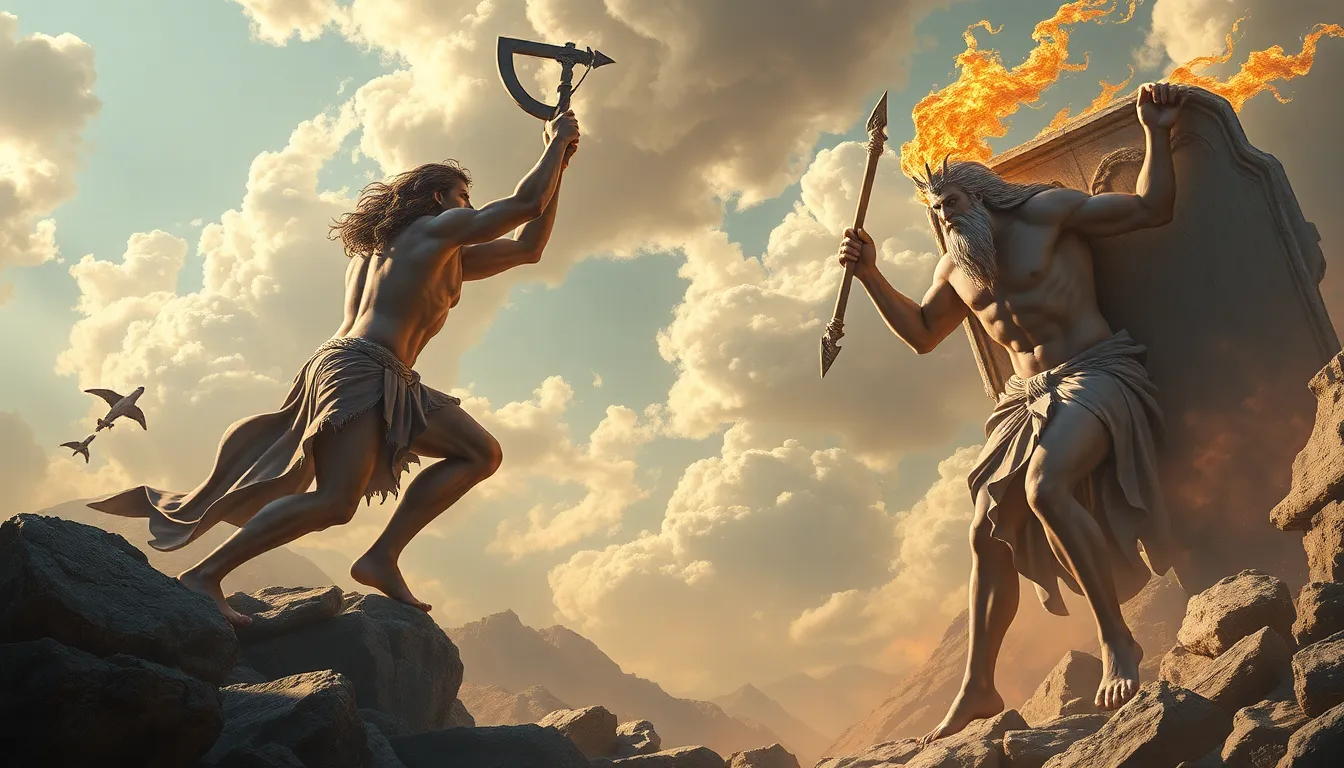
The Titanomachy: The Titans’ Struggle for Power and Survival
I. Introduction to the Titanomachy
The Titanomachy is a significant and pivotal event in Greek mythology that marks the epic struggle between the Titans and the Olympian gods. This monumental war symbolizes the transition of power from the old guard of primordial beings to a new generation of deities, showcasing themes of rebellion, power, and survival.
In the context of Greek mythology, the Titans were the powerful descendants of Gaia (Earth) and Uranus (Sky), and they played a crucial role in the mythological hierarchy before the rise of the Olympians. The Titanomachy encapsulates not only a fierce battle for supremacy but also the broader themes of generational conflict and the cyclical nature of power.
II. The Origins of the Titans
A. Creation of the Titans: Gaia and Uranus
The Titans were born from the primordial entities Gaia and Uranus. According to myth, Gaia emerged from Chaos, the void of nothingness, and gave birth to Uranus, who became her consort. Together, they produced several offspring, including the Titans, Cyclopes, and Hecatoncheires (giants with a hundred hands).
B. The Lineage of the Titans and Their Characteristics
- Cronus: The leader of the Titans who overthrew Uranus.
- Rhea: Sister and wife of Cronus, associated with fertility and motherhood.
- Oceanus: The Titan of the ocean, representing the vastness of the sea.
- Tethys: The personification of the nourishing flow of water.
- Hyperion: The Titan of light, often associated with the sun.
- Theia: The Titaness of sight and the shining light of the blue sky.
- Coeus, Phoebe, Iapetus, and Crius: Other significant Titans, each embodying various aspects of the cosmos.
The Titans were characterized by their immense power and were seen as personifications of natural forces. Their reign was marked by a golden age of prosperity and harmony, but tensions simmered beneath the surface, ultimately leading to conflict.
III. The Rise of the Titans
A. The Golden Age: Titans as Rulers of the Cosmos
During the Golden Age, the Titans ruled the cosmos with wisdom and strength. They were seen as benevolent deities who provided for humanity and maintained the natural order. Under their governance, the earth flourished, and humanity experienced peace and abundance, living in accordance with the rhythms of nature.
B. The Establishment of Power and Governance Among the Titans
The Titans established a hierarchy among themselves, each taking on specific roles and dominions. They governed various aspects of the natural world, embodying the principles of order and stability. However, their reign was not without internal strife, as ambition and rivalry began to fester among the ranks of the Titans.
IV. The Birth of the Olympians
A. Introduction of the Olympian Gods and Their Lineage
The conflict that would lead to the Titanomachy began with the birth of the Olympians, the children of Cronus and Rhea. These gods included:
- Zeus: The god of the sky and thunder, destined to lead the Olympians.
- Hera: The goddess of marriage and family, known for her jealousy.
- Poseidon: The god of the sea, known for his temper and power over water.
- Hades: The god of the underworld, ruling over the realm of the dead.
- Demeter: The goddess of agriculture and harvest.
- Hestia: The goddess of the hearth and home.
B. The Conflict Between the Titans and the Olympians: Catalyst Events Leading to the Titanomachy
The Titanomachy was triggered by Cronus’s fear of being overthrown by his children, as he had overthrown his father, Uranus. To prevent this, he swallowed each of his offspring at birth. However, Rhea, distressed by the loss of her children, saved Zeus by hiding him in a cave on Mount Ida and giving Cronus a stone wrapped in swaddling clothes instead.
As Zeus grew, he plotted to rescue his siblings and overthrow Cronus, leading to the inevitable clash between the Titans and the Olympians.
V. The Titanomachy: The Great War for Supremacy
A. The Key Battles and Strategies Employed by Both Sides
The Titanomachy was a brutal and prolonged conflict lasting for ten years. The two sides employed various strategies in their quest for victory:
- Zeus’s Alliance: Zeus sought alliances with the Cyclopes and Hecatoncheires, who crafted powerful weapons for the Olympians, including the thunderbolt for Zeus.
- Surprise Attacks: The Olympians launched surprise attacks against the Titans, using their agility and cunning.
- Tactics of Entrapment: The Titans attempted to use their sheer strength to overpower the Olympians but found themselves outmatched by the newer gods’ strategies.
B. The Role of Key Figures: Cronus, Zeus, and Others
Key figures in the Titanomachy included:
- Cronus: The leader of the Titans, whose fear of losing power drove him to extreme actions.
- Zeus: The determined leader of the Olympians, whose strength and cunning ultimately led to victory.
- Rhea: The mother of the Olympians, who supported her children in their quest for freedom.
- Prometheus: A Titan who sided with Zeus and the Olympians, known for his intelligence and foresight.
The climax of the Titanomachy culminated in a final battle on Mount Olympus, where the Olympians, empowered by their alliances and newfound weapons, overthrew the Titans and claimed their rightful place as rulers of the cosmos.
VI. The Aftermath of the Titanomachy
A. The Defeat of the Titans and the Rise of the Olympians
After their defeat, the Titans faced dire consequences. The Olympians established a new order, with Zeus as their king. The once-mighty Titans were cast down, signifying a new era of governance led by the Olympians.
B. The Fate of the Titans: Imprisonment in Tartarus
The Titans were imprisoned in Tartarus, a deep abyss used as a dungeon of torment. This dark and gloomy place became their eternal prison, ensuring that they could no longer threaten the stability of the new Olympian order. Only a few Titans, like Prometheus, maintained a presence in the world, often revered or feared by mortals.
VII. Themes and Symbolism in the Titanomachy
A. Exploration of Power, Rebellion, and Survival
The Titanomachy is rich with themes that resonate throughout human history:
- Power: The struggle for power is a central theme, illustrating how authority can shift from one generation to another.
- Rebellion: The Olympians’ rebellion against their father Cronus symbolizes the natural cycle of rebellion that occurs in all societies.
- Survival: The story reflects the survival of the fittest concept, where the stronger, more adaptable beings emerge victorious.
B. The Representation of Generational Conflict and Change
The Titanomachy embodies the generational conflict between the Titans and the Olympians, reflecting broader societal changes. It illustrates how older generations eventually give way to new ideas and leaders, a theme that is still relevant in contemporary discussions about power dynamics.
VIII. Legacy of the Titanomachy in Culture and Literature
A. Influence on Later Myths, Art, and Literature
The Titanomachy has had a