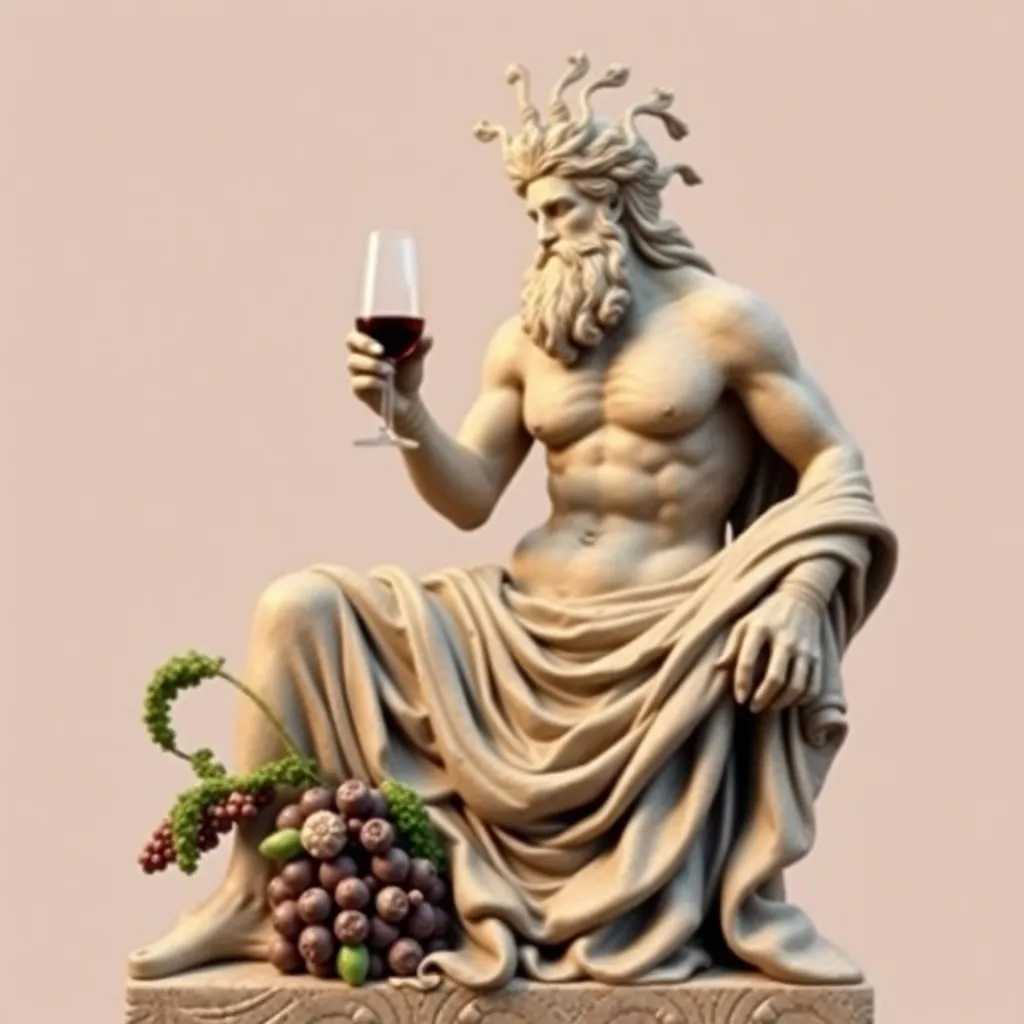
Dionysus and the Role of Wine in Ancient Greek Society
I. Introduction
Dionysus, the Greek god of wine, festivity, and ecstasy, occupies a unique and significant place in ancient Greek mythology and culture. Known for his vibrant personality and the revelry associated with him, Dionysus represents not only the joy of wine but also the complexities of human emotion and experience. Wine, a crucial element of ancient Greek life, served many purposes beyond mere consumption; it played a vital role in social, religious, and cultural contexts. This article aims to explore the multifaceted role of Dionysus and wine, delving into their intertwined significance in ancient Greek society.
II. The Mythology of Dionysus
Dionysus’s lineage is as captivating as his character. He is often described as the son of Zeus and Semele, a mortal woman, which grants him a dual nature—both divine and human. His birth is a tale of intrigue, as Zeus saved the unborn Dionysus by stitching him into his thigh, leading to his emergence as a fully grown god.
Several key myths highlight the nature of Dionysus:
- The Capture by Pirates: Dionysus is captured by a crew of pirates who fail to recognize his divinity. In retaliation, he transforms them into dolphins, symbolizing his power and the consequences of disrespecting the gods.
- The Madness of King Lycurgus: This story depicts Lycurgus’s attempt to deny Dionysus’s worship and how he is driven mad as a result, emphasizing the god’s connection to both ecstasy and chaos.
- The Death of Pentheus: In this myth, Pentheus, a king who refuses to acknowledge Dionysus, faces dire consequences when he spies on the god’s female followers, showcasing the themes of gender and power dynamics.
Through these stories, Dionysus symbolizes the transformative power of nature and the human spirit, embodying both joy and the potential for chaos.
III. Wine as a Cultural Staple
Wine held a place of great importance in ancient Greek culture. It was not just a beverage but a symbol of civilization and social interaction. The cultivation of vineyards and the production of wine were integral to the agricultural practices of the time.
The process of wine production in ancient Greece involved several steps:
- Harvesting: Grapes were harvested in late summer, often during joyous celebrations.
- Crushing: Grapes were crushed, typically by foot, to extract the juice.
- Fermentation: The juice was placed in large vessels to ferment, transforming sugars into alcohol.
- Storage: After fermentation, the wine was stored in amphorae for aging and later consumption.
Various types of wine were produced, each with its own significance:
- Red Wine: Preferred for its robust flavor and often associated with rituals.
- White Wine: Typically lighter and consumed during everyday meals.
- Sweet Wine: Often reserved for special occasions and used in religious ceremonies.
IV. Dionysian Festivals and Rituals
The festivals dedicated to Dionysus were vibrant celebrations that encapsulated the spirit of the god. Two of the most notable were the Dionysia and the Bacchanalia.
- Dionysia: Held in Athens, this festival featured dramatic competitions, theatrical performances, and processions. It celebrated not only the god but also the cultural identity of the city.
- Bacchanalia: These festivals were more widespread and often involved ecstatic rituals, music, and dance, emphasizing the liberating aspects of wine and revelry.
Wine played a crucial role in these festivals, serving as a means of connection between the divine and the mortal. Participants would consume wine to enhance their festive spirit, leading to communal bonding and a reinforced cultural identity within society.
V. The Philosophical and Psychological Aspects of Wine
Wine in ancient Greece was not merely a drink; it was seen as a conduit for liberation and transcendence. Philosophers such as Plato and Aristotle discussed the effects of wine on the human psyche, recognizing its power to alter perceptions and emotions.
The dual nature of wine is significant:
- Joy: Wine is associated with celebration, pleasure, and the joy of life.
- Chaos: Excessive consumption can lead to disorder, madness, and loss of control.
This complexity influenced various forms of art, literature, and drama in ancient Greece. The tragedies and comedies often explored themes of ecstasy and despair, reflecting the cultural understanding of wine’s dual nature.
VI. Dionysus and Social Dynamics
Dionysus played a pivotal role in challenging social norms and hierarchies. He was seen as a liberator, encouraging the breaking of societal constraints. The consumption of wine served as a social equalizer, bringing together individuals from different classes and genders.
Intoxication, while often viewed as a loss of control, also provided an avenue for self-expression and the exploration of identity. The rituals surrounding Dionysus allowed participants to transcend their daily roles and engage in a collective experience of freedom and joy.
VII. The Legacy of Dionysus and Wine in Modern Society
The influence of Dionysus and ancient Greek practices continues to resonate in contemporary wine culture. Modern festivals and celebrations still echo the joyous spirit of the Dionysian festivals, emphasizing the communal experience of wine.
In art and literature, themes of Dionysian ecstasy and chaos persist. Writers and artists draw upon the rich symbolism of Dionysus, exploring the complexities of human emotion and the relationship with nature.
The enduring symbolism of Dionysus is evident in popular culture, where he represents not only the joy of celebration but also the exploration of boundaries, identity, and the human experience.
VIII. Conclusion
In summary, Dionysus’s influence on wine and ancient Greek society is profound and multifaceted. His myths and the cultural practices surrounding wine reveal deep insights into the human condition, joy, and chaos. As we celebrate the legacy of Dionysus and the importance of wine in human culture, we recognize the continued relevance of these themes today, reflecting our ongoing quest for connection, joy, and understanding in our lives.