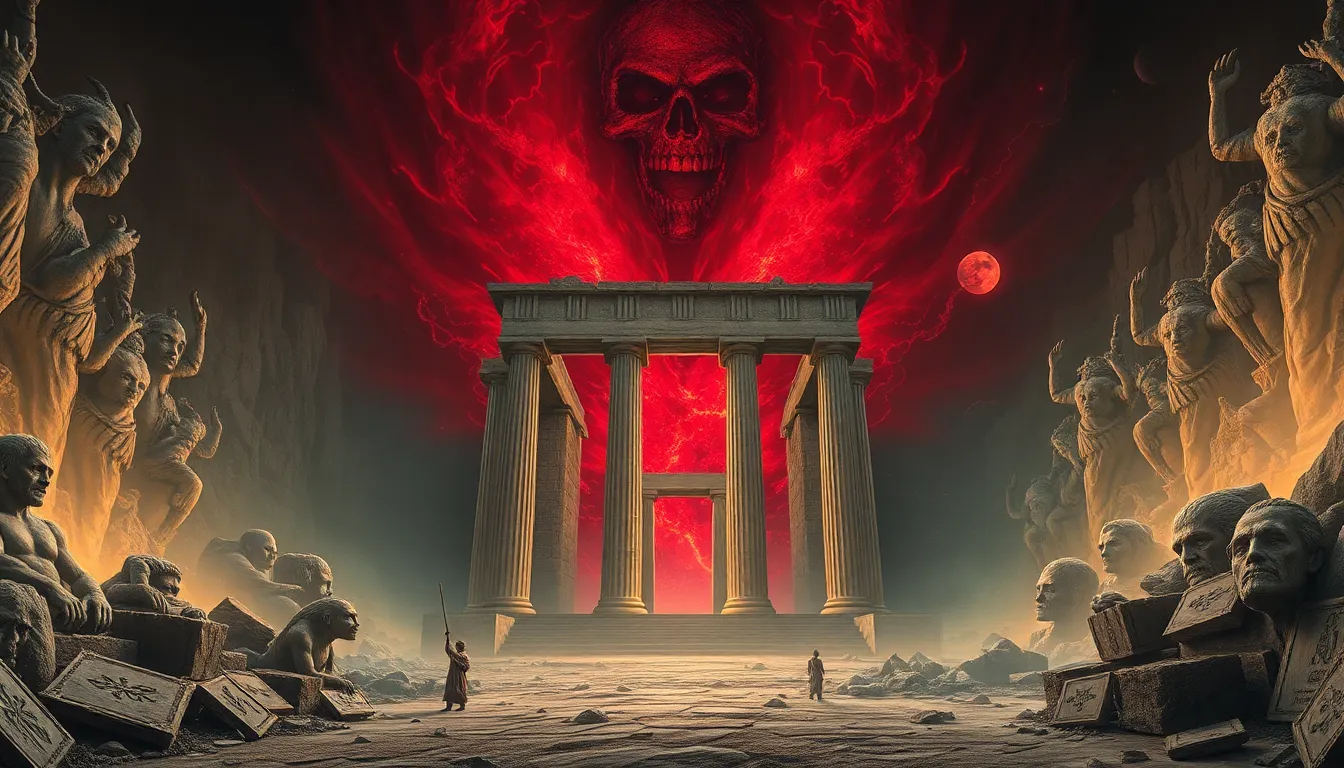
Tartarus: The Ancient Greek Nightmare You’ve Never Heard Of
I. Introduction
Tartarus, in Greek mythology, is often overshadowed by its more well-known counterpart, Hades. Defined as a deep abyss that serves as a dungeon of torment and suffering for the wicked, Tartarus plays a crucial role in the mythology and moral landscape of ancient Greece. This article aims to delve into the lesser-known aspects of Tartarus, exploring its origins, significance, and legacy in Greek culture.
II. The Origins of Tartarus
The mythological roots of Tartarus are steeped in the ancient Greek creation stories. According to these myths, Tartarus is not merely a location, but a primordial entity that existed before the creation of the world. It is often depicted as a dark and gloomy pit far beneath the earth, where the Titans and other malevolent beings were imprisoned.
A. Mythological roots and creation stories
In Greek cosmogony, the universe began with Chaos, followed by Gaia (the Earth), Tartarus, and Eros. Tartarus is described as a place of great depth, a stark contrast to the heavens and the earth. It is both a geographic and metaphysical concept, representing the ultimate punishment for the most heinous of individuals.
B. Tartarus in Hesiod’s “Theogony”
In Hesiod’s “Theogony,” Tartarus is explicitly mentioned as a place where the Titans were cast after their defeat by the Olympian gods. Hesiod describes it as a shadowy abyss, located at the very edge of the earth, as far beneath Hades as the earth is below the heavens. This portrayal emphasizes its role as a place of extreme punishment.
C. Relationship between Tartarus and the earth (Gaia)
Tartarus is often directly linked with Gaia, the Earth. While Gaia represents life and fertility, Tartarus embodies death and desolation. This dichotomy reflects the ancient Greeks’ understanding of balance in the universe—good and evil, life and death, reward and punishment.
III. Tartarus vs. Hades: Understanding the Distinction
Understanding the distinction between Tartarus and Hades is crucial to grasping their roles in Greek mythology.
A. Description of Hades as the realm of the dead
Hades, often referred to as the underworld, is the domain of the deceased. It is where souls go after death, judged by the three judges: Minos, Rhadamanthus, and Aeacus. While Hades has its own levels and regions, such as Elysium for the virtuous, it is primarily a place of rest rather than punishment.
B. Differences in purpose and function between Tartarus and Hades
- Tartarus: A place of punishment for the wicked, housing those who committed egregious acts.
- Hades: A realm for all souls, where they exist in a state of neutrality, awaiting judgment.
C. Notable figures imprisoned in Tartarus
Several significant figures from mythology are said to be imprisoned in Tartarus for their crimes, including:
- Sisyphus: Condemned to roll a boulder uphill only for it to roll back down each time he reaches the top.
- Tantalus: Tormented by hunger and thirst, standing in a pool of water and beneath fruit-laden branches that elude his grasp.
- Ixion: Bound to a fiery wheel for eternity as punishment for his crimes against Zeus.
IV. The Punishments of Tartarus
The nature of punishment in Tartarus is vivid and symbolic, reflecting the moral codes of ancient Greek society. The punishments meted out are not merely for retribution; they carry deeper meanings about justice and the consequences of one’s actions.
A. Overview of the nature of punishment in Tartarus
In Tartarus, punishments are eternal and tailored to the sins committed by the individual during their life. The idea is that the suffering faced in Tartarus serves as a cautionary tale about the dangers of hubris, treachery, and moral failing.
B. Famous myths of punishment: Sisyphus, Tantalus, and Ixion
These myths illustrate the extreme nature of punishments in Tartarus:
- Sisyphus: His endless struggle symbolizes the futility of trying to escape the consequences of one’s actions.
- Tantalus: Represents the insatiable desires of humanity, forever out of reach of satisfaction.
- Ixion: Embodies betrayal and the consequences of disrespecting the gods, resulting in a never-ending cycle of agony.
C. Symbolic meanings behind these punishments
The stories of these figures serve as allegories for human behavior and moral lessons. They reflect the ancient Greek belief in the importance of living a virtuous life and adhering to the moral codes set by the gods.
V. Tartarus in Ancient Greek Literature
Tartarus is depicted in various ancient texts, illustrating its significance in both myth and literature.
A. Depictions of Tartarus in epic poems and plays
Epic poets and playwrights often referenced Tartarus to emphasize themes of justice and retribution. Its dark imagery and cruel punishments serve to enhance the narratives they constructed.
B. Analysis of Tartarus in works by Homer, Virgil, and Plato
In Homer’s “Iliad,” Tartarus is mentioned as a prison for the Titans. Virgil’s “Aeneid” describes a journey to the underworld, including Tartarus, highlighting the fates of the damned. Plato, in “Gorgias,” discusses Tartarus as a place for the souls of the wicked, reinforcing the idea of moral consequence.
C. Influence of these works on modern interpretations of Tartarus
The depictions of Tartarus in these ancient texts have influenced modern literature and philosophy, shaping contemporary views on justice, punishment, and the afterlife.
VI. Tartarus in Philosophy and Moral Thought
The philosophical implications of Tartarus extend beyond its mythological roots, influencing moral thought in ancient Greece.
A. The philosophical implications of Tartarus in ancient thought
Tartarus raises questions about justice, punishment, and the nature of evil. Philosophers like Plato pondered the moral implications of eternal punishment and the nature of the soul.
B. Connections to justice and morality in Greek philosophy
Tartarus is often discussed in the context of moral philosophy, serving as a reminder of the consequences of one’s actions. It embodies the Greek belief that justice must be served, even in the afterlife.
C. Tartarus as a representation of existential dread
The concept of Tartarus also evokes existential dread, as it represents the ultimate fate of the damned. This notion resonates with modern existential philosophy, questioning the meaning and consequences of life and actions.
VII. Cultural Legacy and Modern Interpretations
The legacy of Tartarus continues to influence contemporary culture, appearing in various forms of media.
A. Tartarus in contemporary literature, film, and art
Modern literature and films often draw on the imagery and themes associated with Tartarus, using it as a metaphor for punishment and moral failing. Works ranging from Dante’s “Inferno” to modern fantasy novels echo the concept of eternal punishment.
B. Influence on modern concepts of hell and punishment
Tartarus has significantly influenced the Western concept of hell, serving as a template for ideas of eternal damnation and moral consequence. The vivid imagery of Tartarus has inspired countless interpretations of the afterlife across cultures.
C. Comparisons to other mythological underworlds
When comparing Tartarus with other mythological underworlds, such as the Christian hell or the Norse Hel, similarities and differences emerge in the portrayal of punishment and moral judgment. These comparisons highlight the universal themes of justice and retribution in human culture.
VIII. Conclusion
Tartarus, with its deep mythological roots and moral implications, remains a significant aspect of ancient Greek culture. Its portrayal as a place of eternal punishment for the wicked serves as a reminder of the consequences of one’s actions. The enduring legacy of Tartarus continues to fascinate