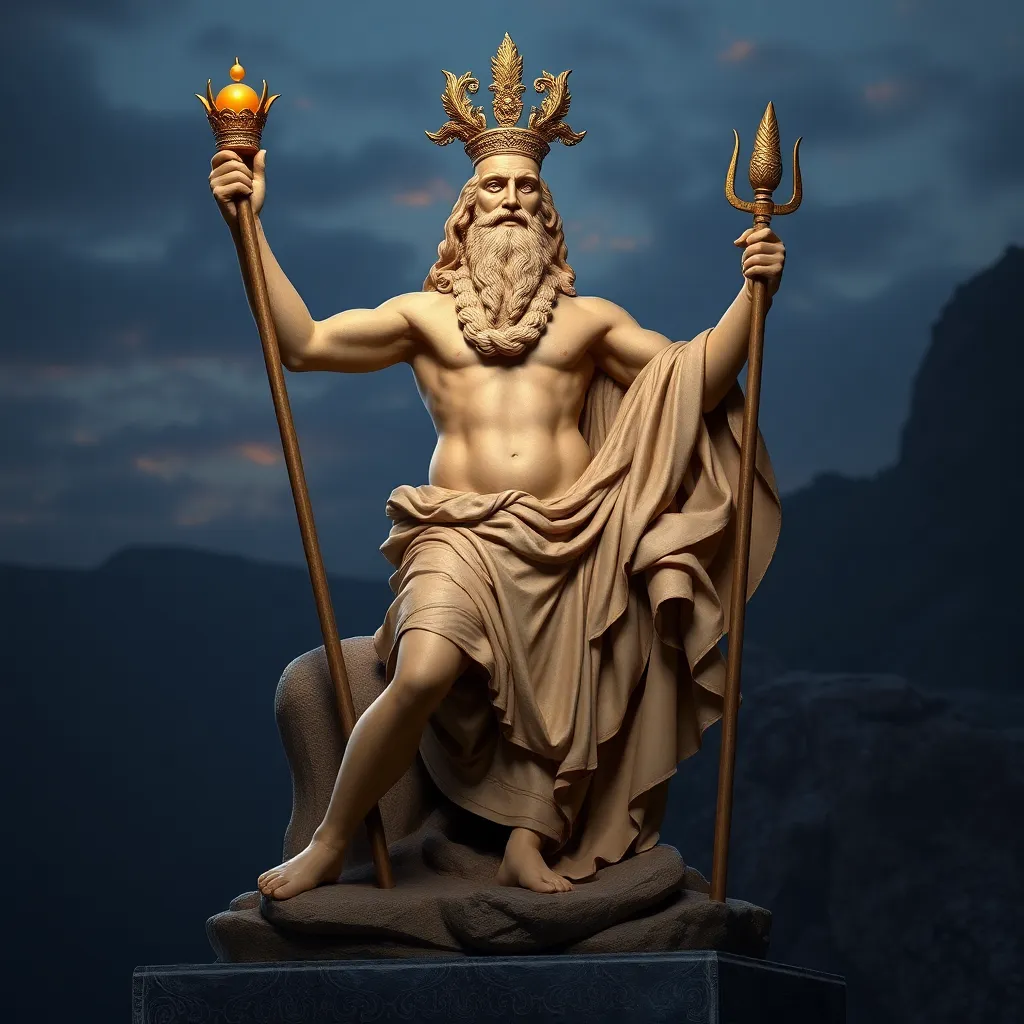
The Role of Dionysus in the Evolution of Greek Religion
1. Introduction
Greek religion is a rich tapestry woven from the beliefs, rituals, and myths of ancient Greece. At its core lies a pantheon of deities, each representing different aspects of life and nature. Among these deities, Dionysus stands out as a significant figure, embodying the dualities of joy and chaos, civilization and wildness. This article aims to explore the evolution of Greek religion through the lens of Dionysus, examining how his worship reflects broader changes in ancient Greek spirituality and society.
2. Historical Context of Greek Religion
The origins of Greek religion can be traced back to the Mycenaean period, where early forms of worship included various rituals directed toward gods and goddesses associated with nature and fertility. Over time, these beliefs evolved, leading to a more structured pantheon.
- Key Deities: Important figures included Zeus, Hera, Poseidon, and Demeter, each playing vital roles in the daily lives and moral frameworks of the people.
- Rituals and Festivals: Central to Greek worship were rituals and festivals, which served to honor the gods and ensure their favor. These events brought communities together and reinforced social bonds.
3. The Emergence of Dionysus
Dionysus, the god of wine, fertility, and ecstasy, has complex mythological origins that blend local traditions with broader Mediterranean influences. His emergence as a key deity marks a significant development in Greek religion.
- Mythological Origins: Dionysus is often depicted as the son of Zeus and Semele, a mortal woman. His birth is surrounded by themes of death and rebirth, symbolizing the cycles of nature.
- Symbolism: As a symbol of wine, fertility, and ecstatic experiences, Dionysus represents both the joy of life and the chaos that can accompany it.
- Comparison with Other Deities: Unlike other Olympian gods, Dionysus embodies a more primal, chaotic energy, challenging the established order of Greek society.
4. Dionysian Worship and Rituals
The worship of Dionysus was marked by vibrant festivals and rituals that emphasized communal participation and ecstatic experience. One of the most significant festivals dedicated to him was the Dionysia.
- Dionysia: Celebrated in Athens, the Dionysia included dramatic competitions and theatrical performances that honored Dionysus, showcasing the intersection of religion and art.
- Theatrical Performances: These performances were not mere entertainment; they were religious rituals that provided a means for catharsis and reflection on human experiences.
- Bacchae and Ecstatic Worship: Followers known as Bacchae engaged in ecstatic worship practices, which included dancing, music, and the consumption of wine, blurring the lines between individual and communal experience.
5. Dionysus and the Concept of Duality
Dionysus encapsulates the theme of duality, representing the tension between chaos and order, civilization and primal instincts. This duality is reflected in various aspects of his worship and influence.
- Chaos vs. Order: Dionysian worship often embraced chaos as a natural and necessary aspect of life, contrasting with the more orderly practices associated with other deities.
- Civilization vs. Primal Instincts: Dionysus invites followers to explore their innate desires and instincts, challenging societal norms and conventions.
- Philosophical Influence: The duality represented by Dionysus has influenced philosophical thought, particularly in the works of later thinkers like Nietzsche, who viewed him as a symbol of the irrational forces of life.
6. Dionysus in Literature and Art
The figure of Dionysus has been a prominent subject in ancient Greek literature and art, symbolizing the complex interplay of ecstasy and reason.
- Literature: In Euripides’ “The Bacchae,” Dionysus is portrayed as a powerful force that challenges the established order, leading to both liberation and destruction.
- Art and Sculpture: Dionysus has been depicted in various forms of art, often shown with grapevines, leopards, and followers, emphasizing his connection to nature and ecstasy.
- Impact on Later Movements: The themes surrounding Dionysus have influenced later artistic and literary movements, including Romanticism and Modernism, which celebrate emotion and the sublime.
7. The Transformation of Greek Religion through Dionysus
Dionysus played a crucial role in the transformation of Greek religion, influencing the transition from traditional polytheism to more individualized spiritual practices.
- Individualized Spirituality: The worship of Dionysus encouraged personal experiences of the divine, paving the way for a shift toward individualized spirituality.
- Mystery Religions: Elements of Dionysian worship were integrated into mystery religions, which emphasized personal salvation and esoteric knowledge.
- Lasting Impact: The themes of duality and ecstasy associated with Dionysus have had a lasting impact on Western religious and philosophical thought, influencing various spiritual traditions.
8. Conclusion
Dionysus emerges as a pivotal figure in the evolution of Greek religion, embodying the complexities of life and spirituality. His worship reflects the tensions between order and chaos, civilization and primal instincts, making him a significant subject of study in understanding ancient cultures. The themes associated with Dionysus continue to resonate in contemporary spirituality and culture, reminding us of the enduring power of myth and the human experience.