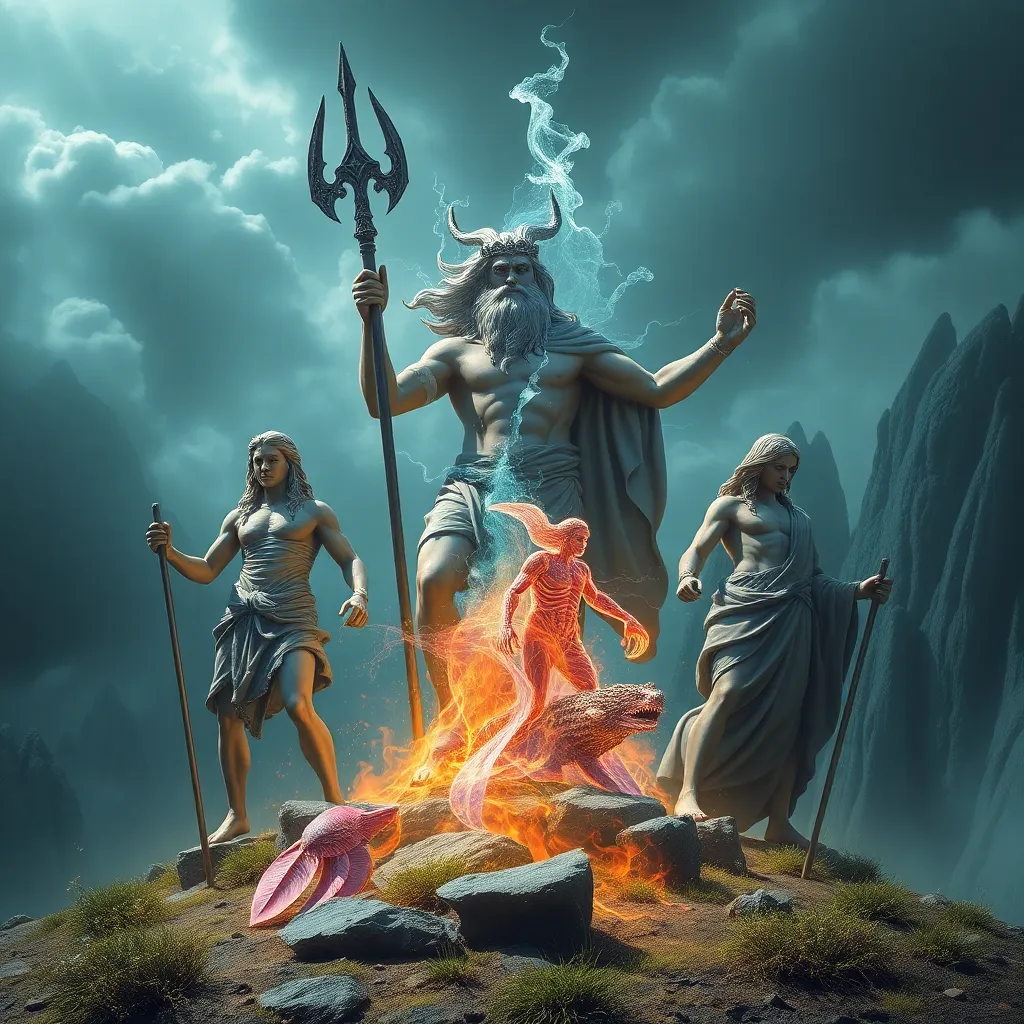
The Connection Between Titans and the Elements of Nature
I. Introduction
The Titans are a fascinating and essential part of Greek mythology, representing the primordial forces of the universe. They are often depicted as gigantic beings with immense power, embodying various aspects of nature and human existence. In this exploration, we will delve into the relationship between the Titans and the four classical elements of nature: earth, water, fire, and air. Understanding this connection illuminates the significance of these mythological figures in ancient Greek culture and their lasting influence on our perception of the natural world.
II. Historical Context of Titans
The Titans emerged from the ancient Greek cosmogony, which describes the origins of the universe. They are the descendants of Uranus (the sky) and Gaia (the earth) and are often considered the first generation of divine beings. Their significance extends beyond mere mythology; they play crucial roles in various creation myths that explain the emergence of the world as we know it.
Some of the most prominent Titans include:
- Gaia: The personification of Earth.
- Cronus: The leader of the Titans, associated with time and harvest.
- Oceanus: The Titan of the sea, representing all bodies of water.
- Tethys: The Titaness of the nourishing flow of fresh water.
- Hyperion: The Titan of light and observation, often associated with the sun.
These Titans and others played pivotal roles in shaping the natural world and its elements.
III. Titans and Earth
The element of earth is closely associated with several Titans, most notably Gaia, the mother of all life. In mythology, Gaia is often depicted as the nurturing and sustaining force of the universe, embodying fertility, growth, and stability.
Cronus, another significant Titan, is linked to agriculture and the harvest. His reign is often viewed as the “Golden Age,” a time of prosperity when the earth yielded abundant crops without the need for labor.
The symbolism of earth in Titan mythology is profound. It represents:
- Stability and permanence
- Fertility and nourishment
- The cyclical nature of life and death
The influence of Titans on agriculture and fertility is evident in the rituals and practices of ancient Greek society, where they were worshipped to ensure bountiful harvests.
IV. Titans and Water
Water is another critical element associated with the Titans, particularly Oceanus and Tethys. Oceanus is depicted as a vast river encircling the earth, symbolizing the limitless nature of the ocean. Tethys, his sister and consort, represents the life-giving properties of fresh water and the nurturing aspects of rivers and streams.
Mythological stories involving water and Titans often highlight their importance in creation myths. For instance, it is said that the rivers and seas were formed from the tears of the Titans, illustrating the deep connection between divine beings and the elemental forces of nature.
The significance of water in ancient civilizations cannot be overstated. It was vital for survival, agriculture, and transportation, and the Titans personified these essential qualities.
V. Titans and Fire
Fire is perhaps one of the most compelling elements associated with the Titans, primarily through the figure of Prometheus. Known for stealing fire from the gods and giving it to humanity, Prometheus symbolizes both the gift of knowledge and the consequences of defiance against divine authority.
The myths surrounding fire and its gifts touch on themes of innovation, creativity, and rebellion. Fire represents:
- Transformation and change
- Destruction and creation
- The dual nature of progress and consequence
The duality of fire as both destructive and creative is evident in Prometheus’s story, where his gift leads to both the advancement of civilization and his own eternal punishment. This complex relationship between Titans and fire reflects the ancient Greeks’ understanding of the elemental forces that shape their world.
VI. Titans and Air
The element of air is represented by the Titan Hyperion, who is often associated with light and the sun. Hyperion embodies the celestial aspect of the natural world, connecting the earth to the heavens. He is considered the father of Helios (the sun), Selene (the moon), and Eos (the dawn), illustrating the interconnectedness of air and light in the natural order.
The role of air in mythology is significant, as it symbolizes:
- Freedom and transcendence
- The unseen forces that influence life
- The breath of life
In Titan lore, the symbolism of the sky and weather reflects humanity’s reliance on air and the elements for survival, showcasing how the Titans were perceived as powerful influences over these natural forces.
VII. The Interplay of Titans and Nature’s Elements
The Titans embody a balance of natural elements, representing the intricate relationships between earth, water, fire, and air. This interplay reflects the ancient Greeks’ understanding of nature as a dynamic and interconnected system, where each element influences and sustains the others.
The cyclical relationship between Titans and nature is evident in the changing seasons, agricultural cycles, and the flow of rivers. The Titans are portrayed as guardians of these processes, ensuring harmony in the natural world.
In modern interpretations, the Titans continue to inspire literature, art, and popular culture, symbolizing the enduring connection between humanity and nature’s elemental forces.
VIII. Conclusion
In summary, the connections explored between Titans and the elements of nature reveal a deep understanding of the world the ancient Greeks inhabited. The Titans, as personifications of earth, water, fire, and air, embody the forces that govern existence and reflect humanity’s relationship with the natural environment.
The enduring legacy of Titans in understanding nature serves as a reminder of the balance and interdependence present in the world around us. As we reflect on these connections, we gain insight into the relevance of these mythological figures in contemporary culture, reminding us of the lasting impact of ancient beliefs on our understanding of the natural world.