The Elysian Fields: Paradise or Punishment in Hades?
I. Introduction
The Elysian Fields, often simply referred to as Elysium, hold a significant place in Greek mythology as a realm of the afterlife reserved for the souls of the most virtuous and heroic individuals. It is depicted as a paradise of eternal bliss, in stark contrast to the torment of Tartarus, where the wicked are punished. However, the complexities surrounding Elysium raise intriguing questions about its nature: is it truly a paradise, or can it also represent a form of punishment? In this article, we will explore the duality of the Elysian Fields, examining its historical context, nature, literary representations, and modern interpretations.
II. Historical Context of the Elysian Fields
The concept of the Elysian Fields has its origins in ancient Greek beliefs concerning the afterlife. Initially, Greek views on the afterlife were ambiguous and varied widely among different regions and time periods. Over time, the idea of a paradisiacal afterlife became more defined, particularly through the influence of philosophers such as Pythagoras and Plato.
A. Origins in ancient Greek beliefs about the afterlife
In early Greek thought, the afterlife was often viewed as a shadowy continuation of life, where souls lingered in a dull existence. However, the Elysian Fields emerged as a distinct and desirable alternative, a place where the souls of heroes could enjoy eternal peace and happiness.
B. Evolution of the concept through different philosophical schools
Philosophical schools like the Orphics and later, Plato, contributed to the evolution of the Elysian Fields, portraying it as a place of reward for those who lived virtuously. Plato, for instance, described it in works like “The Republic,” emphasizing the importance of moral conduct in determining one’s fate in the afterlife.
C. Comparison with other afterlife beliefs in ancient cultures
- Egyptian Afterlife: The Field of Reeds, a paradise for the righteous.
- Mesopotamian Beliefs: The gloomy underworld, a place of darkness and despair.
- Nordic Myths: Valhalla, a hall of the slain where warriors feasted eternally.
III. The Nature of the Elysian Fields
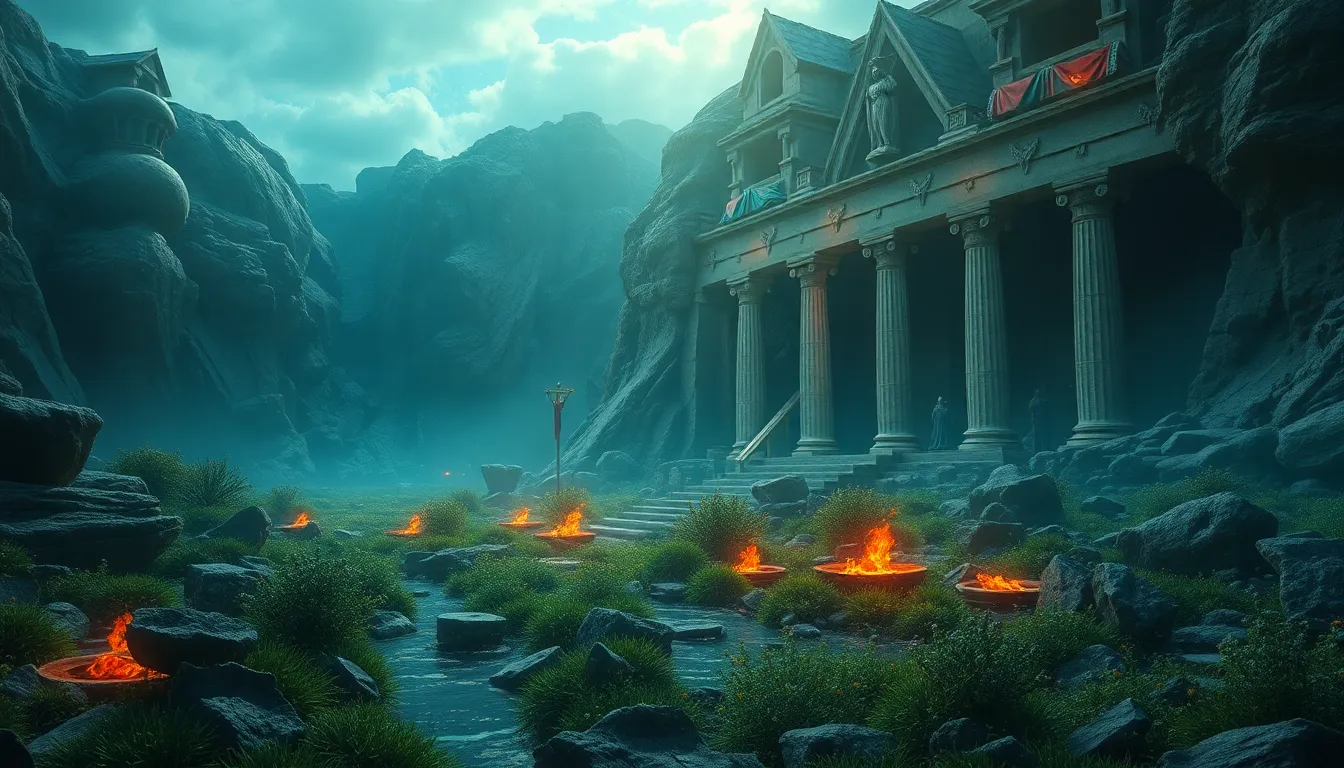
In mythology, the Elysian Fields are often described as a beautiful and tranquil place, filled with lush meadows, flowing rivers, and eternal sunshine. It is a realm that embodies the ultimate peace and happiness, free from the burdens and sorrows of mortal life.
A. Description of the Elysian Fields in mythology
The Fields are often depicted as being located at the ends of the earth, a paradise where the grass is always green, flowers bloom eternally, and the air is filled with the sweet scent of blossoms.
B. Characteristics that define it as a paradise
- Eternal Spring: The climate is perpetually mild and pleasant.
- Joyful Activities: Souls engage in pursuits of music, dance, and feasting.
- Heroic Companionship: The company of other great souls, including heroes and demigods.
C. Notable figures associated with Elysium
Many figures from Greek mythology are said to reside in the Elysian Fields, including:
- Achilles: The greatest Greek hero of the Trojan War.
- Hercules: The legendary hero famed for his twelve labors.
- Persephone: In some interpretations, she is said to spend half the year in Elysium.
IV. Elysium as a Reward for the Virtuous
Entry into the Elysian Fields is reserved for those who have demonstrated exceptional virtue and bravery during their lives. This aspect of Elysium reinforces the moral framework of ancient Greek society.
A. Who qualifies for entry into the Elysian Fields
Generally, the souls allowed into Elysium are:
- Heroes: Those who displayed great courage and strength.
- Philosophers: Individuals who pursued wisdom and virtue.
- Just Rulers: Leaders who governed with fairness and justice.
B. The role of heroic deeds and moral living
The emphasis on moral living and heroic deeds reflects the values of ancient Greek culture, where honor and virtue were paramount. The stories of those who achieved greatness in life are often linked to their reward in the afterlife.
C. Contrast with other afterlife destinations (e.g., Tartarus)
In stark contrast to Elysium, Tartarus represents a realm of punishment for the wicked, where souls endure eternal torment. This dichotomy serves to highlight the moral choices individuals make in life and the consequences that follow.
V. Elysium as a Potential Punishment
While Elysium is often celebrated as a paradise, some interpretations suggest that eternal bliss can lead to ennui and dissatisfaction. This perspective offers a more complex view of what it means to experience happiness and fulfillment.
A. The concept of eternal bliss leading to ennui
The idea that endless happiness can become tedious is explored in various philosophical discussions. Some argue that without challenges or changes, even the most pleasurable experiences can lose their appeal.
B. The idea of stagnation in paradise as a form of punishment
Stagnation can be viewed as a form of psychological punishment, where the absence of growth or transformation leads to a sense of emptiness, questioning the very nature of happiness.
C. Philosophical interpretations of happiness and fulfillment
Philosophers such as Nietzsche and Schopenhauer have explored the nature of happiness, suggesting that the pursuit of meaning and struggle is essential for true fulfillment. In this light, Elysium could be seen as a double-edged sword.
VI. Literary Representations of the Elysian Fields
The Elysian Fields have been depicted in various literary works throughout history, contributing to our understanding of this mythical paradise.
A. Analysis of key texts in which Elysium is featured (e.g., Homer, Virgil)
In Homer’s “Odyssey,” the Elysian Fields are described as a reward for the heroic and virtuous. Virgil’s “Aeneid” also emphasizes the qualities that grant one access to this blissful realm, illustrating how these narratives shape our perceptions of the afterlife.
B. The portrayal of Elysium in art and culture
The Elysian Fields have inspired numerous works of art, from ancient pottery to Renaissance paintings, reflecting humanity’s fascination with the concept of paradise. These artistic interpretations often highlight the beauty and serenity associated with Elysium.
C. Variability in interpretations across different works
Different authors and artists have portrayed Elysium in ways that reflect their cultural contexts and philosophical beliefs, leading to a rich tapestry of interpretations that enrich our understanding of this mythical place.
VII. Modern Perspectives on the Elysian Fields
In contemporary discussions, the Elysian Fields continue to evoke interest, serving as a metaphor for paradise and the complexities of happiness.
A. Contemporary interpretations of paradise and punishment
Modern views often blend the ancient concepts of Elysium with contemporary ideas about the afterlife, morality, and the human experience, reflecting ongoing debates about what constitutes a fulfilling existence.
B. Elysium in popular culture (films, literature, etc.)
The Elysian Fields have found their way into modern media, appearing in films, literature, and video games, often reinterpreted to fit contemporary narratives about life, death, and the afterlife.
C. Relevance of the Elysian Fields in discussions of morality and the afterlife today
As discussions surrounding morality and the afterlife persist in modern society, the Elysian Fields serve as a poignant reminder of the enduring questions about virtue, happiness, and the human condition.
VIII. Conclusion
The Elysian Fields embody the complexities and duality of human existence, representing both a