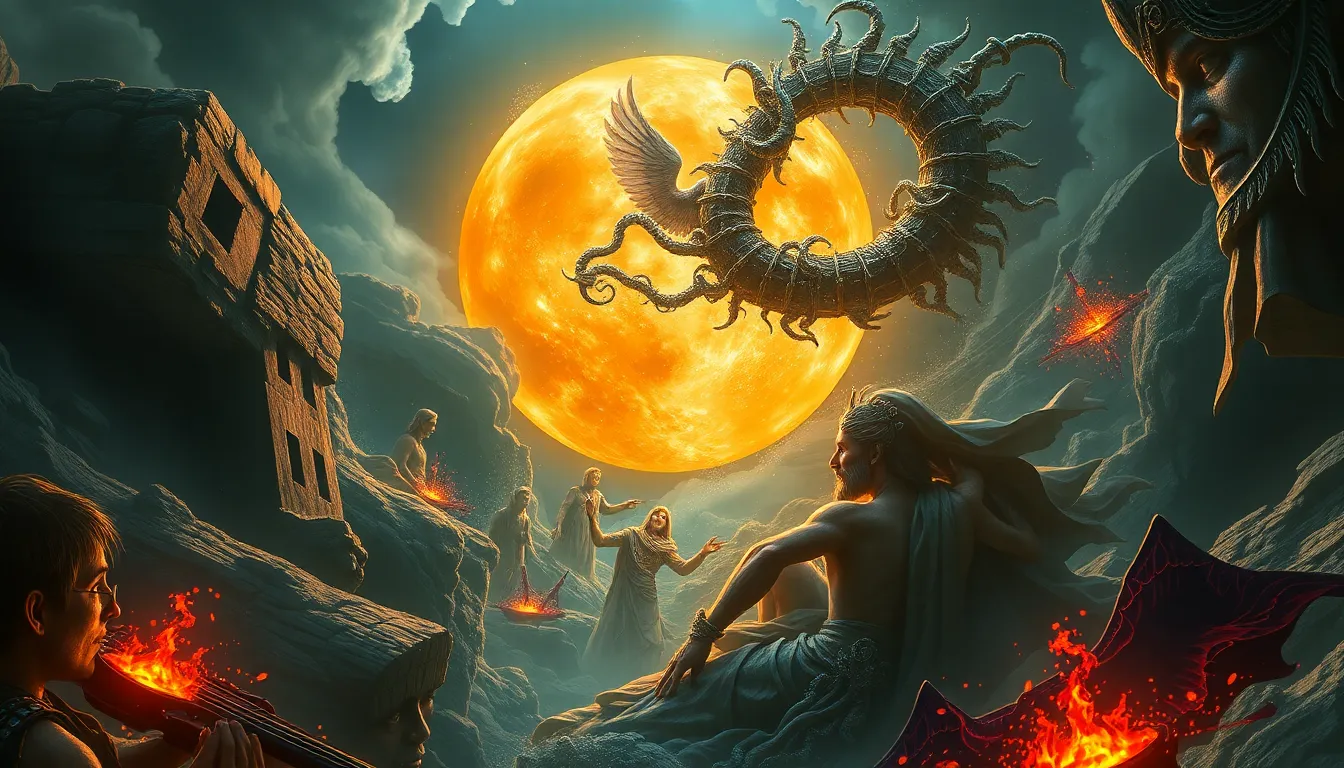
The Role of Music in Hades: Orpheus’ Enchantment
I. Introduction
In the rich tapestry of Greek mythology, Hades represents not just a realm of the dead, but also a complex dimension where themes of love, loss, and redemption intertwine. It is in this shadowy underworld that the story of Orpheus and Eurydice unfolds, a tale that highlights the profound impact of music as a transformative force. Orpheus, the son of Apollo, is not merely a musician; he embodies the spirit of artistic creation and emotional expression. This article explores how music serves as a powerful force in Hades, particularly through Orpheus’ poignant journey to reclaim his beloved Eurydice.
II. The Myth of Orpheus and Eurydice
The love story of Orpheus and Eurydice is one of the most celebrated in ancient mythology, encapsulating the beauty and tragedy of human emotion. Orpheus, renowned for his enchanting music, falls deeply in love with Eurydice, a beautiful nymph. Their union, however, is short-lived. On their wedding day, Eurydice is bitten by a snake and tragically dies, plunging Orpheus into a profound grief.
Devastated by her loss, Orpheus resolves to journey into Hades, the underworld, in a desperate attempt to retrieve Eurydice. His love and determination propel him to face the dangers of the underworld, where he hopes to charm the rulers, Hades and Persephone, with his divine music.
III. Music as a Form of Communication
In ancient Greek culture, music held immense significance, not only as entertainment but also as a sacred means of communication with the divine and the dead. Orpheus’ music transcends mere sound; it becomes a language that resonates with the hearts of gods and spirits alike. Through his lyre, he conveys his sorrow and longing, crafting melodies that echo throughout the dark chambers of Hades.
- Communication with Hades and Persephone: Orpheus approaches Hades with humility, using his music to express the depth of his love for Eurydice and the pain of his loss.
- Emotional Conveyance: His songs reflect not just personal grief but also universal themes of love and longing, resonating with all who hear them.
IV. The Power of Enchantment: Orpheus’ Lyre
Orpheus’ lyre is not merely an instrument; it is a symbol of his artistic genius and emotional depth. Crafted from a tortoise shell and strung with the finest strings, the lyre is imbued with magical qualities that can soothe wild beasts and even move inanimate objects. The enchantment of his music has profound effects on the denizens of Hades.
- Effects of Orpheus’ Music: As he plays, the spirits of the dead are captivated, and even the stoic figures of Hades find themselves moved. The Furies, typically fierce and unforgiving, soften their hearts to his melodies.
- Comparison with Other Mythological Figures: Similar to figures like Pan and Apollo, Orpheus’ music transforms those who hear it, showcasing the transformative power of art and expression.
V. Themes of Loss and Grief
The myth of Orpheus and Eurydice is steeped in themes of loss, and music serves as a poignant reflection of this grief. Orpheus’ songs articulate the profound sorrow that accompanies love lost, echoing the universal human experience of mourning.
- Reflection of Loss: Each note plucked from his lyre resonates with the pain of separation, making his music a vessel for expressing deep emotional truths.
- Emotional Impact: Orpheus’ songs have such an emotional pull that even the gods are compelled to weep, illustrating music’s ability to evoke empathy and understanding.
- Universality of Grief: The themes represented in Orpheus’ music transcend time and culture, as they speak to the shared human experience of love and loss.
VI. The Consequences of Orpheus’ Journey
Orpheus’ journey into Hades is fraught with challenges and ultimately leads to a poignant lesson about trust and faith. Upon reaching the throne of Hades, Orpheus is granted a chance to bring Eurydice back to the world of the living under one strict condition: he must not look back at her until they have both reached the surface.
As they ascend from the underworld, Orpheus, consumed by doubt and longing, looks back at Eurydice, only to see her fade away into the shadows of Hades forever. This moment marks a critical turning point in the myth, emphasizing the themes of trust and the consequences of impulsive decisions.
VII. Legacy of Orpheus in Literature and Culture
Orpheus’ story has left an indelible mark on literature, art, and music throughout history. The myth has inspired countless works across various mediums, reflecting the enduring power of his narrative.
- Influence on Literature and Art: Writers, poets, and artists have drawn upon Orpheus’ journey to explore themes of love, loss, and redemption, resulting in a rich body of work that spans centuries.
- Symbolism of Orpheus: He symbolizes the archetype of the artist as a seeker of truth and beauty, representing the profound connection between creativity and emotional experience.
- Modern Interpretations: Contemporary adaptations of Orpheus’ myth continue to resonate, with themes of love and loss depicted in various forms, including opera, theater, and film.
VIII. Conclusion
In exploring the role of music in Hades, particularly through the enchanting journey of Orpheus, we uncover the profound power that music holds to transcend boundaries and articulate the depths of human emotion. Orpheus stands as a timeless symbol of love and loss, illustrating how music can serve as a bridge between the living and the dead, the joyous and the mournful. Through his story, we are reminded that while love may be transient, the magic of music endures, echoing through the ages as a testament to the human experience.