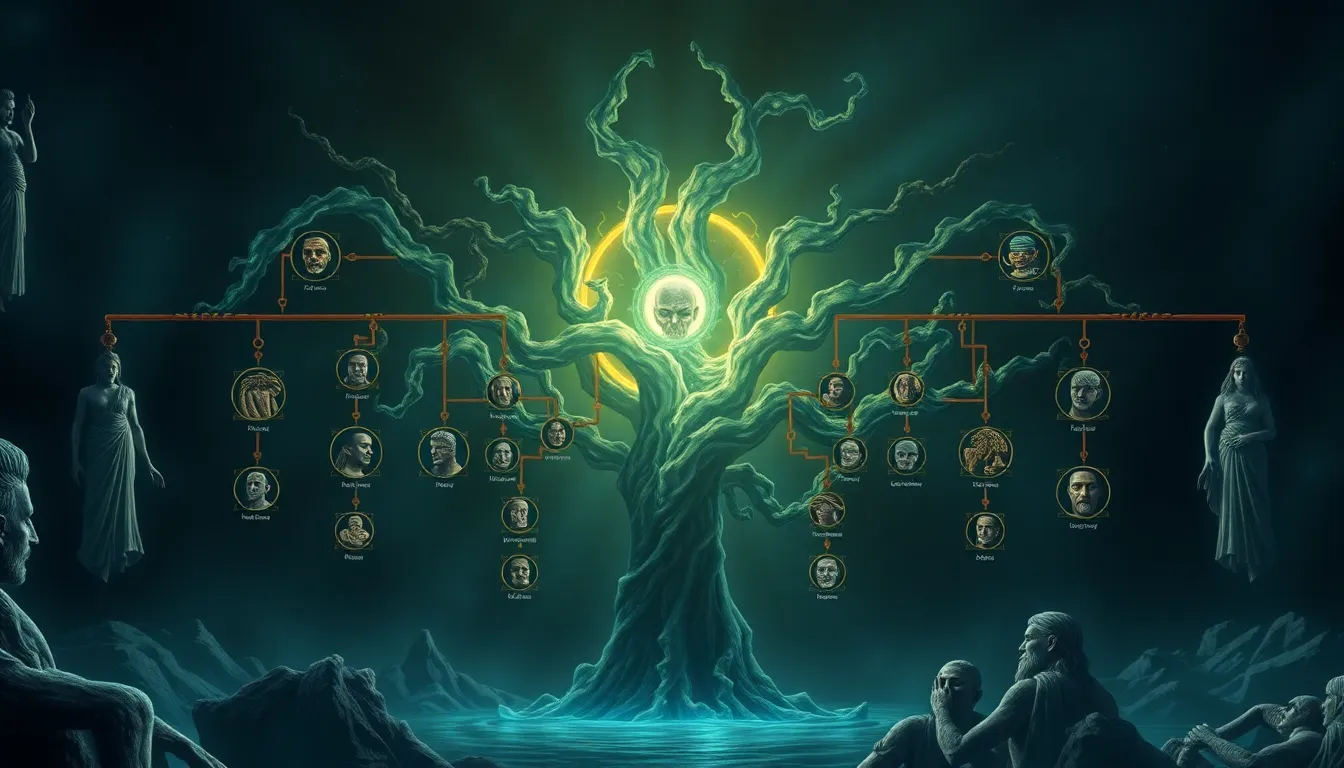
Hades’ Family Tree: The Gods and Mortals of the Underworld
I. Introduction
In the rich tapestry of Greek mythology, Hades stands as a pivotal figure, representing not only the realm of the dead but also the complexities of life and death. Understanding Hades and his family tree is crucial for grasping the wider narrative of Greek myths and the interplay between gods and mortals.
This article aims to explore the intricate family dynamics surrounding Hades, the God of the Underworld, and to delve into the various deities, spirits, and notable mortals associated with his domain. From his siblings, Zeus and Poseidon, to his queen, Persephone, and their offspring, we will map out the significant relationships that define Hades’ legacy.
II. Hades: The God of the Underworld
Hades, the eldest son of Cronus and Rhea, is often misunderstood and misrepresented in popular culture. Unlike the fiery imagery associated with Hell, Hades rules over a complex and multifaceted realm where souls dwell after death, known as the Underworld.
Hades is characterized by several attributes:
- God of the Underworld: He presides over the realm where the souls of the deceased reside.
- Wealth:** Hades is also known as the god of wealth due to the precious minerals found underground.
- Guardian of the Dead: He ensures that the dead remain in the Underworld and do not return to the world of the living.
Importantly, Hades is distinct from the modern concept of Hell. While Hell is often portrayed as a place of eternal torment, Hades’ domain is not inherently evil; instead, it is a necessary part of the cycle of life and death.
Hades maintains complex relationships with other Olympian gods, often being portrayed as the more serious and somber brother to Zeus and Poseidon. His role as the ruler of the Underworld sets him apart, leading to a sense of isolation from the other gods of Olympus.
III. The Olympian Family: Hades’ Siblings
Hades has two prominent siblings, Zeus and Poseidon, who together with him constitute the major deities of Greek mythology. Their relationships are marked by both camaraderie and rivalry.
A. Zeus: The King of the Gods
Zeus, the youngest brother, is often seen as the most powerful of the three. He rules Mount Olympus and is associated with the sky, thunder, and justice. His authority contrasts with Hades’ governance of the Underworld. Despite their differences, Zeus and Hades share a bond forged by their shared experiences of being swallowed by their father, Cronus, and later overthrowing him.
B. Poseidon: God of the Sea
Poseidon, the middle brother, governs the ocean and is known for his temperamental nature. The three brothers divided the universe among themselves after defeating the Titans, with Zeus claiming the sky, Poseidon the sea, and Hades the Underworld. This arrangement often leads to tensions, especially when it comes to the mortal realm, as their domains frequently overlap.
C. The dynamics of sibling relationships among the three brothers
The dynamics between Hades, Zeus, and Poseidon are complex. While they cooperate in many myths, their differing realms and responsibilities sometimes lead to conflict. Hades’ serious demeanor contrasts sharply with the more flamboyant personalities of his brothers, often leading to his portrayal as an outcast among the Olympians.
IV. Persephone: The Queen of the Underworld
Persephone, the daughter of Demeter, the goddess of agriculture, is a central figure in the myths surrounding Hades. Her story is one of love, loss, and the cyclical nature of the seasons.
A. Origins and myth of Persephone
Persephone is often depicted as a beautiful maiden, embodying the vitality of spring. Her dual nature is evident in her role as both the goddess of spring and the queen of the dead.
B. The abduction by Hades and the significance of the seasons
The most famous myth concerning Persephone is her abduction by Hades. Enraptured by her beauty, Hades took her to the Underworld, causing immense grief to her mother, Demeter. In her sorrow, Demeter neglected the earth, leading to barren seasons. Eventually, a compromise was reached, allowing Persephone to spend part of the year with Hades and part with her mother. This cycle is symbolic of the changing seasons:
- Spring/Summer: Persephone resides with Demeter, and the earth flourishes.
- Autumn/Winter: Persephone returns to Hades, and the earth becomes barren.
C. Persephone’s dual role as goddess of spring and queen of the dead
This duality makes Persephone a powerful symbol in Greek mythology, representing both life and death, growth and decay. Her story illustrates the cyclical nature of existence and the interconnectedness of the worlds of the living and the dead.
V. The Children of Hades and Persephone
Hades and Persephone are often said to have had several offspring, although their most prominent child is Zagreus.
A. Overview of their offspring, including Zagreus
Zagreus is often depicted as a chthonic deity associated with rebirth, and his myths intertwine with those of Dionysus. He represents the cycle of life, death, and rebirth, echoing the themes present in the stories of his parents.
B. The myths surrounding Zagreus and his significance in the Underworld
The myths of Zagreus often portray him as a figure of resurrection, akin to the themes observed in the story of Persephone. His association with rebirth and renewal establishes him as a significant figure in the context of the Underworld, symbolizing hope amidst darkness.
C. The implications of their lineage in the context of Greek mythology
The lineage of Hades and Persephone carries profound implications in Greek mythology, illustrating the themes of life, death, and the eternal cycle of nature. Their offspring serve as reminders of the interconnectedness of all realms and the balance between them.
VI. Other Deities and Spirits of the Underworld
The Underworld is populated by a variety of deities and spirits, each contributing to its complex nature.
A. Charon: The Ferryman of the Dead
Charon is the grim ferryman who transports souls across the river Styx to the realm of the dead. His role is crucial, and souls must pay him with an obol, a small coin, to ensure they can cross.
B. Hecate: Goddess of Magic and the Underworld
Hecate, the goddess of magic, witchcraft, and the moon, also has strong ties to the Underworld. She is often depicted as a guide for souls and is associated with the darker aspects of magic and the night.
C. The Furies and their role in Hades’ domain
The Furies, or Erinyes, are deities of vengeance who punish wrongdoers in the Underworld. They serve as a reminder of the moral order that governs both the mortal and divine realms.
VII. Mortal Heroes and Figures Associated with Hades
Several mortal heroes have ventured into the Underworld, often on quests that reveal the complexities of life and death.
A. Notable mortals who ventured into the Underworld
Mortal figures like Orpheus and Heracles have stories that intertwine with Hades’ realm, showcasing human bravery and the consequences of defying the natural order.
B. The tales of Orpheus and Heracles
Orpheus, armed with his enchanting music, sought to rescue his beloved Eurydice from the Underworld. His tale illustrates the power of love and the tragic consequences of disobedience.
Heracles, on the other hand, undertook the formidable task of capturing Cerberus, the three-headed dog guarding the gates of the Underworld, as part of his Twelve Labors. This act symbolizes the hero’s strength and determination in facing death itself.
C. The significance of these stories in understanding Hades’ realm
These stories reflect the intricate relationships between mortals and the divine, illustrating the themes of sacrifice,