What the Parthenon Reveals About Ancient Greek Religion
I. Introduction
The Parthenon stands as one of the most iconic symbols of ancient Greece, representing not only the architectural prowess of its time but also the deep religious convictions of the Athenian people. Constructed in the 5th century BCE, this magnificent temple dedicated to the goddess Athena reflects the cultural, political, and spiritual values of the ancient Greeks.
Understanding the relationship between the Parthenon and ancient Greek religion is crucial for appreciating how religion influenced daily life, governance, and artistic expression in Athens. This article aims to explore the historical context, architectural features, rituals, and the continued significance of the Parthenon in relation to ancient Greek religious practices.
II. Historical Context of the Parthenon
A. Construction and Architectural Features
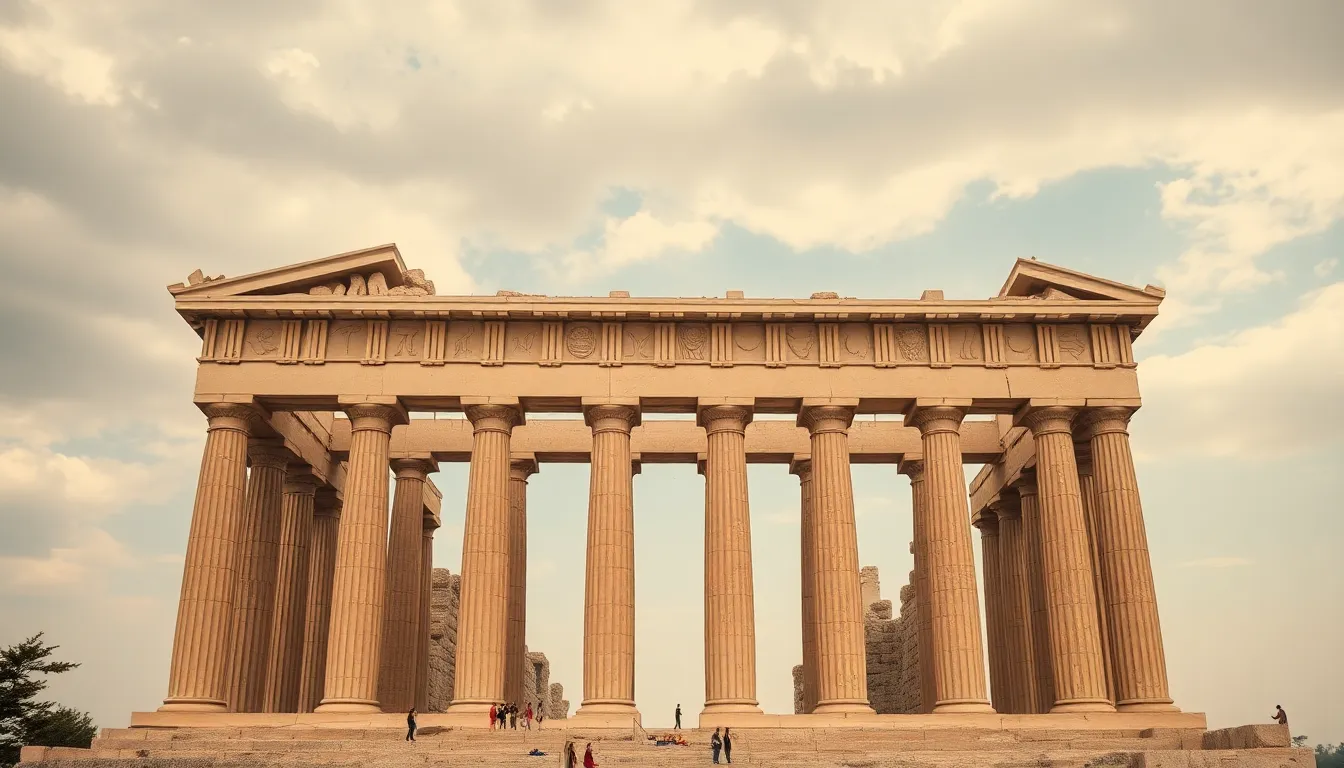
The Parthenon was commissioned by the Athenian leader Pericles and constructed between 447 and 432 BCE on the Acropolis of Athens. Designed by architects Ictinus and Callicrates, it is a prime example of Doric architecture, characterized by its sturdy columns and simple, yet elegant, proportions.
Key architectural features include:
- Columns: The Parthenon features 46 outer columns, each standing 10.4 meters tall.
- Entasis: A slight curvature in the columns that corrects optical illusions.
- Friezes and Sculptures: The temple is adorned with intricate carvings that depict various mythological and historical scenes.
B. The Political and Cultural Landscape of Ancient Athens
The construction of the Parthenon coincided with a period of unprecedented political power and cultural flourishing in Athens. Following the Persian Wars, Athens emerged as a dominant force in the Greek world, leading the Delian League and establishing itself as a center of art and philosophy.
The Parthenon served not only as a religious temple but also as a symbol of Athenian democracy and power. It was designed to reflect the wealth and cultural superiority of Athens during this golden age.
C. The Role of the Parthenon in the Athenian Empire
As a central site of worship for Athena, the Parthenon played a crucial role in the religious and civic life of Athens. It was a focal point for rituals and gatherings, reinforcing the city-state’s identity and unity.
The temple also housed the massive statue of Athena Parthenos, created by the sculptor Phidias, further solidifying the connection between the goddess and the Athenian state.
III. The Parthenon as a Temple to Athena
A. Athena as the Patron Goddess of Athens
Athena, the goddess of wisdom, warfare, and craftsmanship, was revered as the patron deity of Athens. According to myth, she won the city over Poseidon, the god of the sea, by offering the olive tree, a symbol of peace and prosperity.
The Parthenon, dedicated to Athena, reflects the city’s deep admiration and devotion to her. The temple was a place where Athenians could seek her favor and guidance.
B. Iconography and Symbolism of Athena in the Parthenon
The Parthenon’s iconography is rich with symbols that represent Athena’s attributes and her significance to the city. The statue of Athena Parthenos, made of gold and ivory, depicted her as a warrior goddess, embodying strength and protection.
Other features include:
- The frieze depicting the Panathenaic procession, celebrating Athena’s birthday.
- Metope reliefs showing battles between gods and giants, symbolizing the triumph of civilization over chaos.
- Pediments featuring the contest between Athena and Poseidon, illustrating her supremacy.
C. The Significance of the Parthenon’s Dedication to Athena
The dedication of the Parthenon to Athena signifies the deep-rooted belief in the goddess’s protection over the city and its inhabitants. The temple served as a reminder of the Athenian values of wisdom, courage, and civic pride.
The Parthenon was not just a religious structure; it was a powerful emblem of Athenian identity and cultural heritage.
IV. Rituals and Worship Practices at the Parthenon
A. Description of Religious Ceremonies Held at the Parthenon
The Parthenon was the site of numerous religious ceremonies, including sacrifices, festivals, and offerings. These rituals were integral to the Athenian way of life, emphasizing the community’s bond with the divine.
Typical practices included:
- Animal sacrifices, particularly of sheep and goats, as offerings to Athena.
- Processions where citizens would carry sacred objects and offerings to the temple.
- Prayers and hymns sung in honor of the goddess during festivals.
B. The Panathenaic Festival and Its Connection to the Parthenon
The Panathenaic Festival was one of the most important religious celebrations in ancient Athens, held every four years in honor of Athena. This festival included athletic competitions, musical contests, and a grand procession to the Acropolis.
During the procession, a new peplos (robe) was presented to the statue of Athena, symbolizing the city’s devotion and gratitude. The Parthenon served as the focal point of these celebrations, underscoring its significance in the Athenian religious calendar.
C. Artifacts and Offerings Discovered at the Site
Excavations at the Parthenon have uncovered numerous artifacts that provide insight into the religious practices of ancient Athens. These include:
- Votive offerings such as figurines, pottery, and jewelry.
- Inscribed dedications to Athena from individuals and state officials.
- Tools and materials used in the preparation of sacrifices.
These artifacts reveal the depth of devotion the Athenians had for their goddess and their commitment to maintaining a strong relationship with the divine.
V. Architectural Features Reflecting Religious Beliefs
A. The Design Elements that Symbolize Divine Order and Harmony
The architectural design of the Parthenon embodies principles of harmony, balance, and symmetry, which were central to Greek religious beliefs. The use of the golden ratio in its proportions reflects the Greeks’ pursuit of divine beauty and order.
B. Use of Proportions and Geometry in Religious Architecture
The Parthenon’s dimensions are carefully calculated, creating a visually pleasing structure that conveys a sense of stability and permanence. The slight curvature of the columns and entablature corrects optical illusions, ensuring that the temple appears perfect to the human eye.
C. The Interplay of Light and Space within the Parthenon
The interplay of light and shadow within the Parthenon enhances its spiritual atmosphere. The design allows natural light to illuminate the statue of Athena, creating a divine aura around it. This relationship between architecture and light symbolizes the connection between the earthly realm and the divine.
VI. The Parthenon’s Sculptural Program
A. Overview of the Friezes, Metopes, and Pediments
The Parthenon is renowned for its sculptural program, which includes detailed friezes, metopes, and pediments that depict significant mythological narratives and historical events. These sculptures served both decorative and didactic purposes, conveying messages about the gods and the Athenian identity.
B. Depictions of Mythological Scenes and Their Religious Significance
The friezes and metopes illustrate various mythological battles and events, such as the gigantomachy and the Trojan War. These depictions not only celebrate the gods but also reinforce the values of heroism, virtue, and the triumph of order over chaos.
C. How Sculpture Conveyed Messages about the Gods and Civic Identity
The artwork of the Parthenon serves as an expression of Athenian civic pride and identity. By depicting scenes that celebrate their divine protectress and their own historical achievements, the Athenians reinforced their cultural narrative and the importance of their relationship with the gods.
VII. The Parthenon Throughout History
A. Changes in the Parthenon’s Use and Significance Over Time
Throughout history, the Parthenon has undergone numerous transformations. Originally a temple dedicated to Athena, it was later converted into a Christian church and subsequently a mosque during the Ottoman occupation. Each transformation reflects