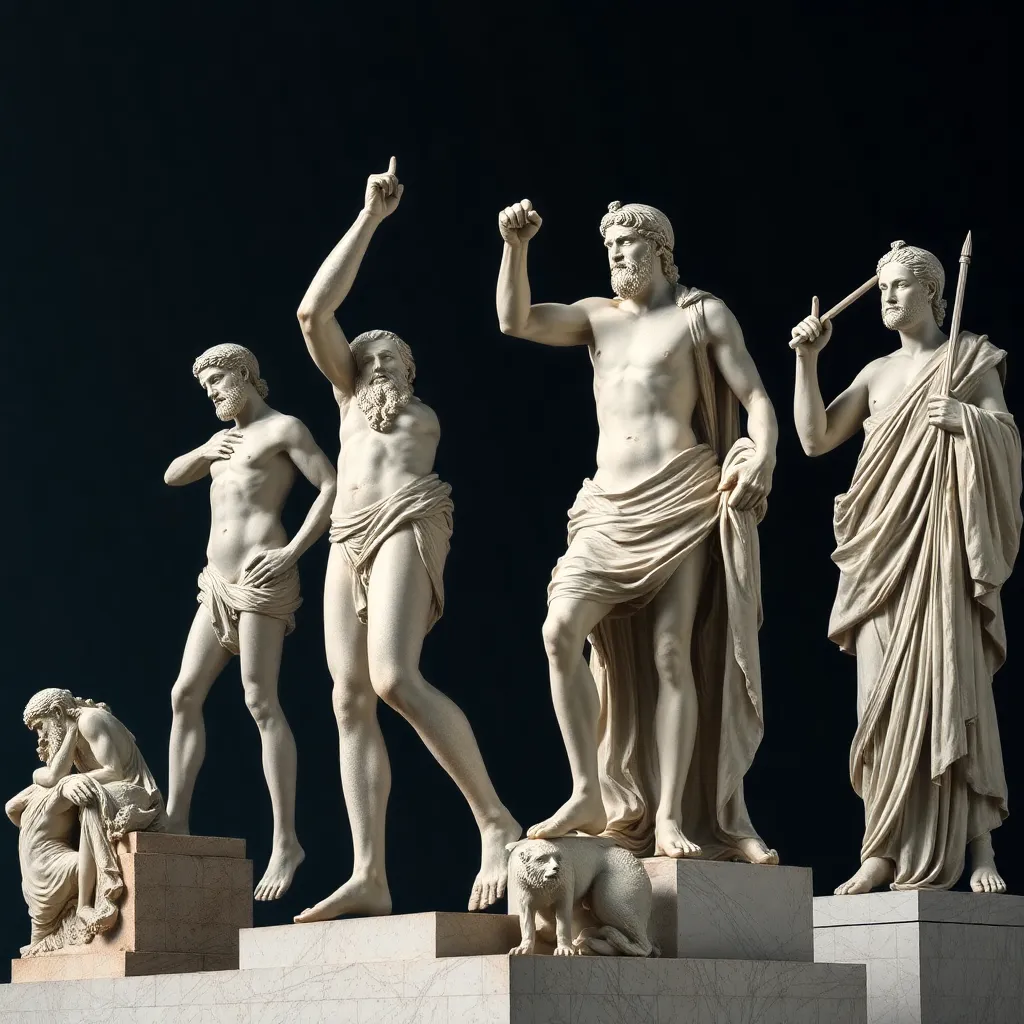
The Evolution of Greek Heroes in Art and Sculpture
I. Introduction
Greek mythology is rich with tales of heroes who embody the values and ideals of their culture. These characters not only served as pivotal figures in mythological narratives but also became central to the artistic expression of their time. The significance of Greek heroes lies in their portrayal of virtues such as bravery, honor, and sacrifice, which resonated throughout ancient Greek society.
This article explores the evolution of Greek heroes in art and sculpture, tracing their representation from the earliest artistic forms to their influence in later periods, including the Renaissance and Neo-Classical movements. By examining these transformations, we gain insight into how the perception of heroism has changed over time and its enduring legacy in contemporary art.
II. Early Representations of Greek Heroes
The concept of heroism in Greek mythology can be traced back to the earliest myths featuring demigods and mortals who exhibited extraordinary feats. These early heroes, such as Heracles and Achilles, became symbols of strength and valor.
During the Geometric and Archaic periods (circa 900-500 BCE), artistic depictions of heroes began to emerge. These representations were characterized by a stylized form and abstract designs. Notable features include:
- Geometric patterns adorning pottery and sculptures
- Simplified human figures with exaggerated physical traits
- Scenes depicting heroic exploits, often in battle or athletic contests
Key figures like Heracles and Achilles dominated early art, often shown in dynamic poses that emphasized their heroic nature. Heracles, for instance, is frequently depicted with his club and lion skin, symbolizing his strength and bravery.
III. The Classical Period: Idealization of Heroes
As Greek art progressed into the Classical period (circa 500-323 BCE), there was a notable shift towards realism and idealism. Artists began to focus on the accurate representation of the human form, striving for physical perfection. This era saw the emergence of prominent sculptors such as Polykleitos and Phidias, who pioneered techniques that enhanced the lifelike quality of their works.
Polykleitos, in particular, developed the “Canon,” a set of proportions that defined the ideal male figure. His sculptures, such as the “Doryphoros” (Spear Bearer), exemplify this quest for balance and harmony. Key characteristics of hero representation during this period include:
- Emphasis on athleticism and physical beauty
- Naturalistic poses that convey motion and vitality
- Inclusion of mythological themes that celebrate heroic deeds
Phidias is renowned for his monumental sculptures, including the statue of Zeus at Olympia and the Parthenon sculptures, which depicted various heroic and divine figures, further solidifying the idealized image of Greek heroes in art.
IV. The Hellenistic Era: Individuality and Emotion
The Hellenistic era (323-31 BCE) brought significant changes to the representation of Greek heroes. Artists began to explore emotional depth and individuality, moving away from the rigid idealism of the Classical period. This shift allowed for a more nuanced portrayal of heroes, reflecting human struggles and vulnerabilities.
Notable sculptures from this period include:
- Laocoön and His Sons: A dramatic depiction of the Trojan priest Laocoön and his sons being attacked by serpents, showcasing intense emotion and physical suffering.
- Belvedere Torlonia: This statue exemplifies the heroic figure’s emotional complexity, illustrating a moment of contemplation and internal conflict.
The emphasis on individuality allowed artists to convey the personal struggles of heroes, making them more relatable and humanistic, which resonated with audiences of the time.
V. Symbolism and Allegory in Heroic Representations
Symbolism played a crucial role in the depiction of Greek heroes, often conveying more profound meanings beyond the physical representation. Allegorical figures were employed to reflect the values and ideals associated with heroism.
Key examples include:
- Athena: The goddess of wisdom and war, often depicted with a helmet and spear, symbolizing strategic warfare and protection.
- Perseus: Frequently shown with the head of Medusa, representing triumph over monstrous adversities and the victory of good over evil.
These allegorical representations not only highlighted the heroes’ physical attributes but also their moral and ethical significance within Greek culture.
VI. Influence of Greek Heroes on Roman Art
The artistic legacy of Greek heroes profoundly influenced Roman art. Roman artists adapted Greek heroic themes, incorporating them into their own cultural narratives.
Key examples include:
- The Colosseum: This monumental structure featured reliefs depicting heroic battles and gladiatorial contests, echoing the valor of Greek heroes.
- Equestrian Statues: These statues often celebrated military leaders and heroes, drawing inspiration from Greek representations of equestrian figures.
The integration of Greek heroic themes into Roman culture served to elevate the status of Roman leaders, aligning them with the revered heroes of the past.
VII. The Renaissance and Neo-Classical Revival
The Renaissance marked a resurgence of interest in classical ideals, including those depicted in Greek art. Artists sought inspiration from Greek heroes, reawakening the themes of heroism and beauty in their works.
Influential Renaissance artists, such as:
- Michelangelo: His sculpture “David” epitomizes the idealized male form and embodies the heroic spirit of humanity.
- Antonio Canova: Known for his neoclassical sculptures, Canova’s works often depicted mythological heroes, demonstrating grace and elegance.
This revival of Greek ideals not only influenced artistic styles but also redefined the cultural perception of heroism in the modern world.
VIII. Conclusion
The evolution of Greek heroes in art and sculpture reflects the changing values and ideals of society throughout history. From the early geometric representations to the emotional depth of the Hellenistic era, and the revival during the Renaissance, these heroes have transcended time and culture.
Today, the impact of Greek heroism continues to resonate in modern art, literature, and popular culture. The themes of bravery, sacrifice, and the human condition remain relevant, inviting contemporary audiences to reflect on what it means to be a hero in their own lives.
In conclusion, the journey of Greek heroes through art and sculpture is not only a testament to their enduring legacy but also a mirror reflecting the complexities of the human experience throughout the ages.