The Parthenon: A Journey Through Its Most Significant Events
I. Introduction
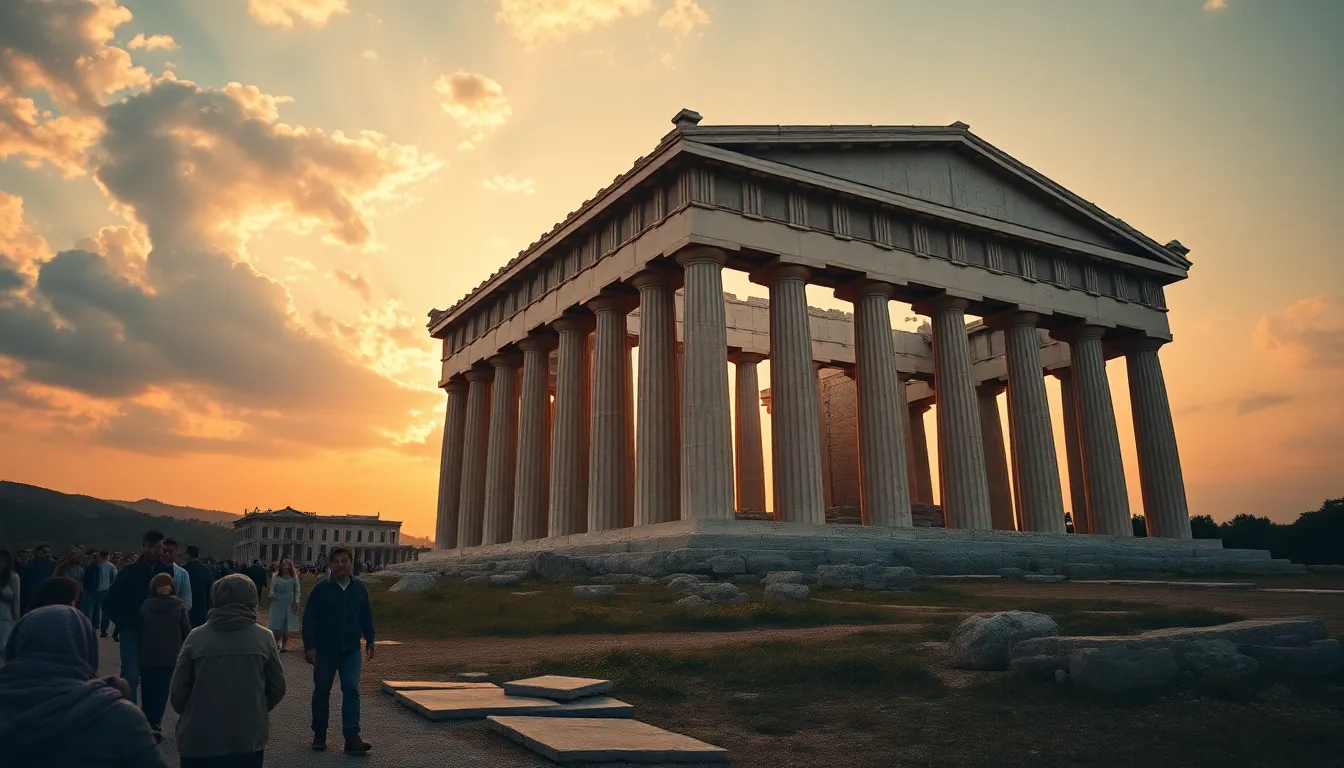
The Parthenon stands as one of the most iconic symbols of ancient Greece, representing the height of Athenian architectural achievement and the cultural zenith of the Classical period. Built in honor of the goddess Athena, the Parthenon is not only a temple but also a monument to the values and aspirations of Athenian society during its Golden Age.
This article aims to explore the key events in the history of the Parthenon, tracing its construction, its religious significance, its transformations through various historical epochs, and its enduring legacy in modern times.
II. Construction of the Parthenon (447-432 BC)
The Parthenon was constructed between 447 and 432 BC during a period known as the Golden Age of Athens, under the leadership of Pericles. This era was characterized by unprecedented political, cultural, and artistic advancements, and the construction of the Parthenon mirrored the city’s aspirations.
Architects Ictinus and Callicrates, along with the sculptor Phidias, played pivotal roles in the design and construction of the Parthenon. The temple is renowned for its architectural innovations, including:
- Doric columns: The Parthenon features the Doric order, which is simple and sturdy, embodying strength and elegance.
- Optical refinements: Slight curvature in the columns and steps creates the illusion of straight lines, enhancing the temple’s aesthetic appeal.
- Elgin Marbles: The exquisite sculptures that adorned the Parthenon, depicting various mythological scenes and the Panathenaic procession, were masterfully created by Phidias and his workshop.
These architectural features not only demonstrated the technical prowess of Athenian builders but also conveyed the cultural and religious significance of the temple.
III. The Parthenon as a Temple to Athena
Athena, the goddess of wisdom and warfare, was central to Athenian identity and culture. The Parthenon was dedicated to Athena Parthenos, or Athena the Virgin, and served as a focal point for religious worship and civic pride.
The temple housed a massive statue of Athena, crafted by Phidias, which stood approximately 12 meters tall and was made of gold and ivory. This statue, known as the Athena Parthenos, was not only a religious icon but also a symbol of Athenian power and artistic achievement.
The Parthenon played a crucial role in various religious practices, including:
- Panathenaic Festival: This major festival celebrated Athena and included a grand procession that culminated at the Parthenon.
- Offerings and sacrifices: Citizens would bring offerings to the temple, reinforcing their devotion to Athena and their connection to the city’s prosperity.
The Parthenon’s dedication to Athena solidified its status as a vital cultural and religious landmark in ancient Athens.
IV. The Parthenon During the Persian Wars
The Persian Wars (499-449 BC) had a profound impact on Athens and its citizens. After the destruction of the Acropolis and the original temples by the Persians in 480 BC, the Athenians sought to rebuild and reclaim their identity.
The decision to construct the Parthenon was symbolic of Athenian resilience and determination to restore their city. The new temple served as a declaration of their strength and unity in the face of adversity. Key points include:
- Symbol of defiance: The Parthenon represented not just a physical rebuilding but a cultural renaissance, embodying Athenian values of democracy and perseverance.
- Architectural statement: The grandeur of the Parthenon, with its innovative design and scale, illustrated Athens’ recovery and dominance in the Greek world.
The construction of the Parthenon thus became a pivotal event in Athenian history, marking a new chapter of power and cultural flourishing.
V. The Parthenon in the Roman Era
As Athens fell under Roman rule, the Parthenon underwent significant transformations. In 262 AD, it was converted into a Christian church dedicated to the Virgin Mary, which marked a substantial change in its function and structure.
This transformation included:
- Alterations to the interior: The original sculptures and the statue of Athena were removed or destroyed, and the interior was redesigned to accommodate Christian worship.
- Structural modifications: The Parthenon was adapted to fit the requirements of a church, including the addition of a chancel and other ecclesiastical features.
Despite these changes, the Parthenon remained a symbol of civic pride and cultural heritage, even as it adapted to new religious contexts.
VI. The Parthenon During the Ottoman Period
During the Ottoman period, the Parthenon was converted into a mosque, which brought further changes to the structure. This conversion had a lasting impact on the building’s preservation and condition.
Some notable aspects of this period include:
- Minaret addition: A minaret was constructed, altering the skyline of the Acropolis and the appearance of the Parthenon.
- Preservation challenges: The Parthenon faced neglect and deterioration, as the Ottomans repurposed materials for other construction projects.
Despite the challenges, the Parthenon remained a significant monument, symbolizing the confluence of cultures and religions in Athens.
VII. The Parthenon in Modern Times
The 19th and 20th centuries saw renewed interest in the Parthenon, leading to extensive restoration efforts aimed at preserving its historical integrity. These initiatives were fueled by a growing sense of national identity and cultural heritage in Greece.
Key restoration efforts included:
- Cleaning and stabilization: Restoration teams focused on removing pollutants and stabilizing the structure to prevent further damage.
- Reconstruction of missing elements: Restoration projects aimed to reconstruct missing sculptures and architectural features, utilizing original techniques and materials.
Today, the Parthenon stands as a symbol of cultural heritage and nationalism for Greece, representing the enduring legacy of ancient Athens and its contributions to art, architecture, and democracy.
VIII. Conclusion
The Parthenon has undergone a remarkable journey through various historical epochs, each leaving its mark on this magnificent structure. From its construction during the Golden Age of Athens to its transformation into a Christian church and later a mosque, the Parthenon has witnessed the ebb and flow of civilizations.
In contemporary society, the Parthenon continues to inspire awe and admiration, serving as a poignant reminder of the cultural and historical significance of ancient Greece. Its enduring legacy lies not only in its architectural grandeur but also in its representation of the values, beliefs, and resilience of the Athenian people.