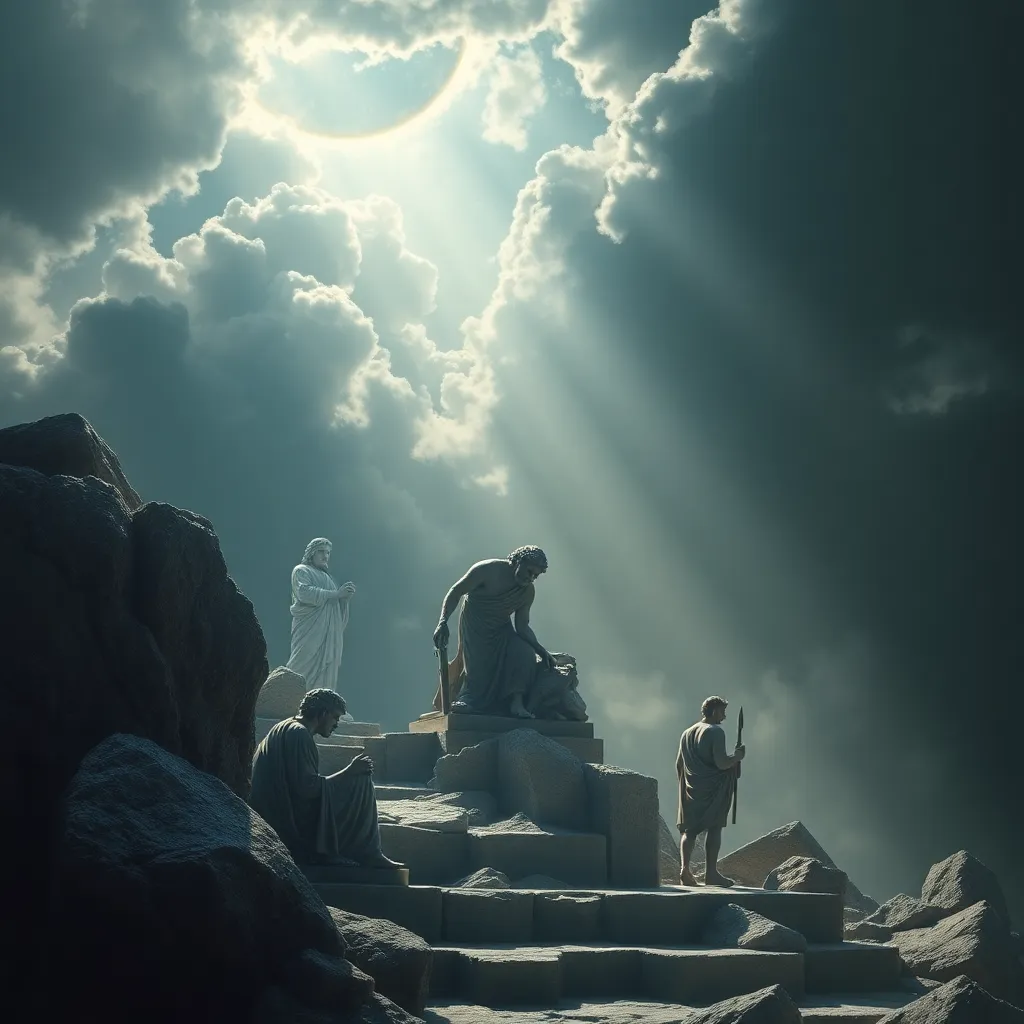
The Role of Suffering and Redemption in Greek Heroic Myths
I. Introduction
Greek heroic myths are a rich tapestry of stories that illustrate the complexities of human experience, particularly through the lens of suffering and redemption. These narratives often feature larger-than-life characters who face immense challenges, showcasing the struggle and resilience inherent in the human condition. The themes of suffering and redemption are integral to these myths, serving both as catalysts for character development and as reflections of Greek cultural values.
This article aims to explore the significance of suffering and redemption in Greek heroic myths, examining how these themes shape the journeys of iconic heroes and their relationships with the divine. Through a detailed analysis, we will uncover the profound implications these narratives hold for understanding the human experience.
II. Understanding Suffering in Greek Myths
A. Definition of suffering in the context of heroism
Suffering in Greek myths often manifests as physical pain, emotional turmoil, or existential despair. It is an essential element of the hero’s journey, marking the trials that test their strength, character, and resolve. Suffering serves not merely as a punishment but as a transformative experience that propels heroes toward growth and understanding.
B. The inevitability of suffering for Greek heroes
For many Greek heroes, suffering is an unavoidable aspect of their existence. The narrative structure of these myths often places heroes in situations where they must confront their own limitations, face the consequences of their actions, or endure trials imposed by fate or the gods.
C. Examples of suffering in key myths
- Prometheus: The Titan who defied Zeus by stealing fire for humanity faced eternal punishment, enduring the torment of having his liver eaten daily by an eagle.
- Odysseus: On his long journey home from the Trojan War, Odysseus faced numerous hardships, including the loss of his crew and a prolonged separation from his family.
III. The Concept of Redemption
A. Definition and significance of redemption
Redemption in Greek mythology often involves a hero’s journey toward atonement or restoration following suffering. It signifies a transformation, where heroes seek to rectify their wrongs or overcome their flaws, ultimately leading to personal growth or reconciliation.
B. How redemption contrasts with suffering
While suffering represents the trials and tribulations faced by heroes, redemption offers a glimmer of hope and renewal. It contrasts with suffering by highlighting the possibility of overcoming adversity and achieving a sense of peace or fulfillment.
C. The transformative power of redemption in hero narratives
Redemption transforms heroes, allowing them to emerge from their suffering with newfound wisdom or strength. This transformation is often essential not only for the hero’s personal journey but also for the greater narrative, providing moral lessons and insights.
IV. Case Studies of Heroes and Their Journeys
A. Heracles: Trials and ultimate redemption
Heracles, one of the most celebrated heroes in Greek mythology, is known for the Twelve Labors he undertook as penance for killing his family in a fit of madness induced by Hera. Each labor involved immense suffering, yet through these trials, Heracles achieved redemption. He became a symbol of strength and perseverance, ultimately ascending to Mount Olympus as a god.
B. Achilles: Suffering, rage, and the path to redemption
Achilles, the central figure of Homer’s “Iliad,” embodies the themes of suffering and pride. His wrath following the death of Patroclus leads to devastating consequences for the Achaeans. However, Achilles’ eventual reconciliation with Hector’s death, and his acknowledgment of his mortality, marks a journey toward redemption, as he learns the value of compassion and honor.
C. Oedipus: Tragic flaws and the quest for redemption
Oedipus is a tragic figure whose suffering stems from his inability to escape fate. His quest for truth leads to the discovery of his own actions that fulfilled the prophecy of killing his father and marrying his mother. Oedipus’ intense suffering ultimately leads him to seek redemption through self-exile, accepting responsibility for his fate and the suffering he caused.
V. The Role of the Divine in Suffering and Redemption
A. The influence of gods and fate on heroes’ journeys
The Greek gods play a significant role in the narratives of suffering and redemption. Often, they are depicted as both the architects of heroes’ trials and the sources of their eventual salvation. The interplay between divine will and human agency is a central theme in Greek mythology.
B. Divine interventions and their implications for redemption
Divine interventions can alter the course of a hero’s journey, providing opportunities for redemption. For instance, Athena aids Odysseus in overcoming obstacles, illustrating how divine support can facilitate a hero’s return to grace.
C. Myths illustrating the relationship between human suffering and divine will
- Job’s Parallel: Similar to the biblical figure Job, many Greek heroes experience suffering as a test of character imposed by the gods.
- Divine Retribution: The tale of Niobe demonstrates how hubris against the gods leads to profound suffering, yet the possibility of redemption through humility remains.
VI. Cultural and Philosophical Implications
A. How suffering and redemption reflect Greek values and beliefs
Greek myths often reflect the cultural values of resilience, honor, and the pursuit of knowledge. The experiences of suffering and subsequent redemption highlight the importance of facing one’s fate and the moral lessons derived from these trials.
B. The moral lessons derived from heroic myths
Through the journeys of heroes, Greek mythology imparts important moral lessons about the nature of suffering, the necessity of humility, and the value of redemption. These lessons resonate through the ages, providing insights into the human condition.
C. Comparisons to suffering and redemption in other cultures
The themes of suffering and redemption are not unique to Greek mythology; they appear across various cultures and religions. For instance, in Christianity, the suffering of Christ leads to redemption for humanity, paralleling the journeys of Greek heroes.
VII. Modern Interpretations and Relevance
A. The enduring legacy of Greek heroic myths in contemporary literature and media
Greek heroic myths continue to influence modern literature, film, and art. Contemporary stories often draw on the archetypes of suffering heroes and their quests for redemption, resonating with audiences today.
B. Psychological interpretations of suffering and redemption
Modern psychology often examines the themes of suffering and redemption through the lens of personal growth and resilience. The struggles of heroes can serve as metaphors for individual journeys toward healing and self-acceptance.
C. The relevance of these themes in today’s society
In a world where suffering is an undeniable part of life, the narratives of Greek heroes remind us of the potential for redemption. These themes resonate in contemporary discussions about mental health, personal resilience, and the human capacity for transformation.
VIII. Conclusion
In summary, the themes of suffering and redemption are central to Greek heroic myths, shaping the journeys of iconic characters and reflecting the complexities of the human experience. Through the trials endured by heroes like Heracles, Achilles, and Oedipus, we gain insights into the nature of resilience, morality, and the pursuit of redemption. These narratives not only highlight the struggles of individuals but also offer profound reflections on the human condition that continue to resonate today.
The lasting impact of suffering and redemption in shaping heroic narratives serves as a powerful reminder of our shared struggles and the potential for growth that lies within them. As we delve into these ancient myths, we uncover timeless truths about the nature of suffering and the possibility of redemption in our own lives.