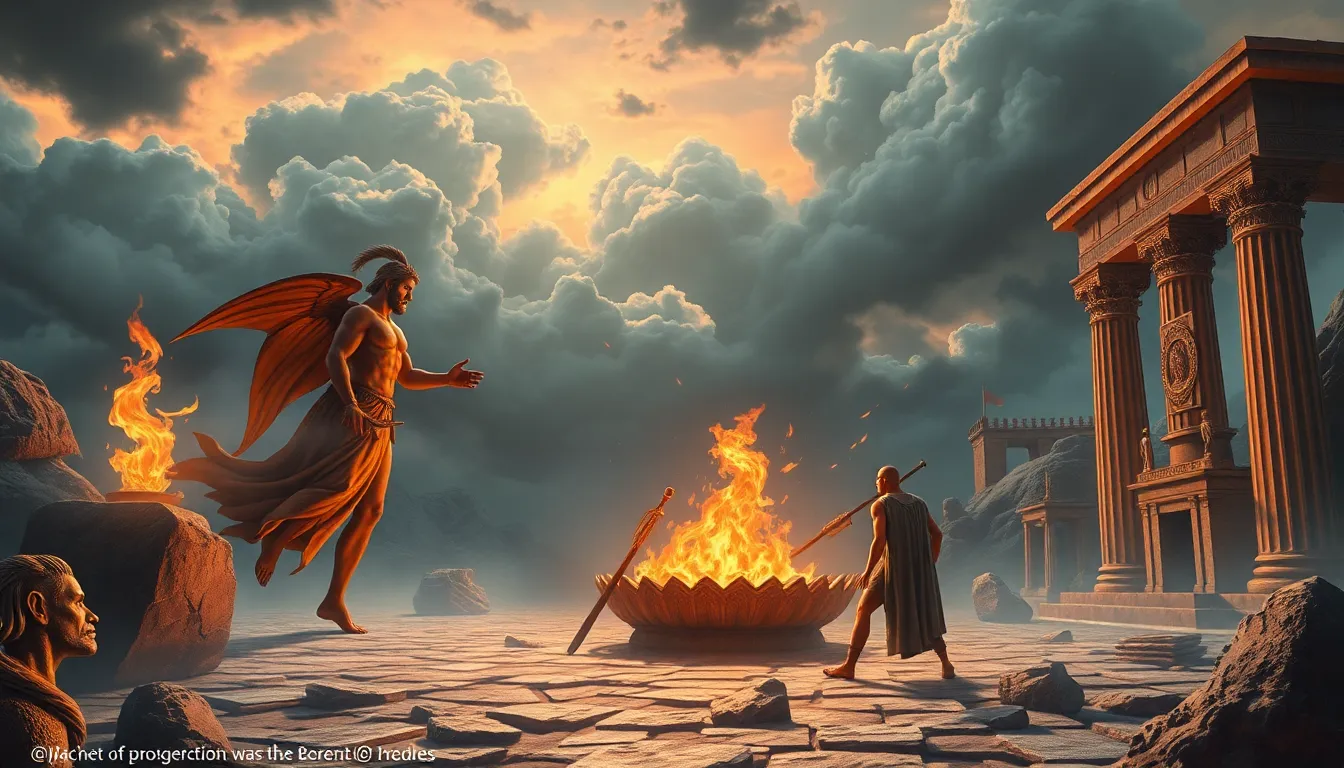
The Quest for the Sacred Fire: Prometheus’s Gift
I. Introduction
In the rich tapestry of Greek mythology, few figures stand as prominently as Prometheus. Often celebrated as a champion of humanity, he is best known for his audacious act of stealing fire from the gods and bestowing it upon mankind. This gift of sacred fire symbolizes not just the physical flame but also the light of knowledge, creativity, and enlightenment. The tale of Prometheus serves as a cautionary narrative about the consequences of defiance against divine order and the quest for knowledge. This article aims to explore the myth of Prometheus, the symbolism of fire, the repercussions of his actions, and the lasting legacy of his gift.
II. The Myth of Prometheus
A. Origins of the Promethean myth
The myth of Prometheus is deeply rooted in ancient Greek culture. His name, meaning “forethought,” indicates his cleverness and foresight. According to Hesiod’s “Theogony,” Prometheus was a Titan, a member of the primordial race that preceded the Olympian gods. Unlike many of his Titan kin, Prometheus sided with Zeus during the Titanomachy, the great war between Titans and Olympians, which ultimately led to the supremacy of Zeus and his siblings.
B. Prometheus’s relationship with humanity
Prometheus is often portrayed as a benefactor of humanity. He fashioned humans from clay and breathed life into them, demonstrating his deep connection to his creations. This relationship is characterized by affection and a desire to uplift humanity. Prometheus’s insights into human nature and his willingness to challenge the gods set him apart, making his bond with humanity both profound and tragic.
C. The act of stealing fire from the gods
In a pivotal moment of the myth, Prometheus steals fire from the workshop of Hephaestus, the god of blacksmiths and craftsmen. He smuggles the fire in a hollow fennel stalk and brings it to humanity, igniting a flame that symbolizes knowledge, technology, and progress. This act of defiance against Zeus is seen as both noble and reckless, illustrating the complex nature of Prometheus’s character.
III. Symbolism of Fire in Mythology
A. Fire as a symbol of knowledge and enlightenment
Fire has long been a potent symbol in various mythologies, representing knowledge, enlightenment, and the spark of creativity. In the context of Prometheus, fire embodies the potential for human advancement and the pursuit of wisdom. This gift allows humanity to cook food, forge tools, and create civilization.
B. The duality of fire: creation and destruction
While fire represents creation, it also embodies destruction. This duality is evident in the way that uncontrolled flames can lead to devastation. In many myths, fire is both a tool for transformation and a destructive force, reflecting the complexities of knowledge and power. The ability to wield fire symbolizes the potential for both progress and peril.
C. Fire in other cultures and myths
Fire appears in various mythologies around the world, often associated with gods and transformative events. For instance:
- In Hindu mythology, Agni is the god of fire and represents purification and sacrifice.
- The Native American legend of the Coyote who steals fire for humanity illustrates similar themes of defiance and benefaction.
- In Zoroastrianism, fire is a symbol of truth and the divine, representing the eternal struggle between good and evil.
IV. The Consequences of Prometheus’s Actions
A. Zeus’s punishment of Prometheus
Zeus, furious at Prometheus for his theft, metes out a severe punishment. He orders Prometheus to be bound to a rock in the Caucasus Mountains, where an eagle would devour his liver each day, only for it to regenerate overnight. This eternal torment symbolizes the price of defiance and serves as a grim reminder of the limits of human ambition.
B. The implications for humanity’s relationship with the divine
The punishment of Prometheus has broader implications for humanity’s relationship with the divine. It highlights the tension between the desire for knowledge and the obedience to divine authority. Prometheus’s gift of fire, while beneficial, brings forth the idea that humans must navigate the consequences of their advancements, which can lead to divine wrath.
C. The theme of sacrifice in the myth
Prometheus’s sacrifice underscores the theme of suffering for the greater good. He willingly endures punishment to ensure humanity’s progress, embodying the notion that true innovation often comes at a personal cost. This theme resonates with many aspects of the human experience, where sacrifices are made in pursuit of a greater purpose.
V. The Legacy of Prometheus
A. Prometheus as a symbol of defiance and rebellion
Throughout history, Prometheus has become a symbol of defiance against tyranny and oppression. His act of stealing fire is seen as a metaphor for challenging the status quo and the pursuit of freedom. As a cultural icon, Prometheus represents the spirit of rebellion against oppressive forces, inspiring countless movements and narratives.
B. Influence on literature and art through the ages
The legacy of Prometheus extends into literature and art, where he has been depicted as a tragic hero. Notable works include:
- Mary Shelley’s “Frankenstein,” where the character of Victor Frankenstein reflects Promethean themes of creation and hubris.
- Byron’s poem “Prometheus,” which portrays the Titan as a figure of tragic nobility.
- In modern art, Prometheus is often depicted in paintings and sculptures as a symbol of human aspiration and suffering.
C. Modern interpretations of Promethean themes
Today, Prometheus’s story is invoked in discussions about scientific advancement and ethical considerations. His legacy prompts questions about the responsibilities that come with knowledge, reflecting contemporary dilemmas surrounding technology, environmental issues, and social justice.
VI. The Quest for Knowledge and Innovation
A. Parallels between the myth and the pursuit of scientific advancement
The myth of Prometheus resonates with modern quests for knowledge and innovation. Just as Prometheus sought to elevate humanity through fire, scientists and innovators today strive to push the boundaries of understanding. This relentless pursuit mirrors the ancient desire for enlightenment, representing humanity’s innate curiosity.
B. Ethical considerations surrounding innovation
With great power comes great responsibility. The Promethean myth serves as a cautionary tale about the ethical implications of innovation. As we develop new technologies, we must consider:
- The potential impact on society and the environment.
- The moral implications of scientific experiments and their outcomes.
- The balance between progress and ethical responsibility.
C. The role of fire in technological progress
Fire has been a catalyst for technological progress throughout history. From the discovery of metallurgy to the advent of steam engines, fire has fueled human innovation. Today, as we navigate the complexities of digital technology and artificial intelligence, the spirit of Prometheus lives on, challenging us to harness our knowledge responsibly.
VII. Contemporary Relevance
A. Prometheus in modern society: environmental and social challenges
In contemporary society, the legacy of Prometheus is evident in our approach to environmental and social challenges. The fight against climate change, social inequality, and technological ethics reflects the ongoing quest for a “sacred fire” that can lead to a better future without the destructive consequences that often accompany it.
B. The ongoing quest for sacred fire in a digital age
As we delve deeper into the digital age, the quest for knowledge continues unabated. The internet, artificial intelligence, and biotechnology serve as modern equivalents of Prometheus’s fire, offering immense potential for progress, but also posing significant risks. The challenge lies in using these tools wisely and ethically.
C. Lessons from Prometheus for future generations
Prometheus’s tale offers timeless lessons for future generations. It reminds us that:
- Knowledge and innovation come with responsibilities.
- Defiance against oppressive systems can lead to both progress and peril.
- The pursuit of enlightenment must be balanced with ethical considerations.
VIII. Conclusion
In summary, the story of Prometheus and his quest for the sacred fire is a rich and multifaceted myth that resonates through the ages. It encapsulates the triumphs and trials of humanity’s relationship with knowledge, power, and the divine. Reflecting on Prometheus’s significance encourages us to consider the balance between the pursuit of knowledge and the responsibility that comes with it. As we continue to navigate the complexities of modern life, the enduring legacy of Prometheus’s gift serves as a guiding light,