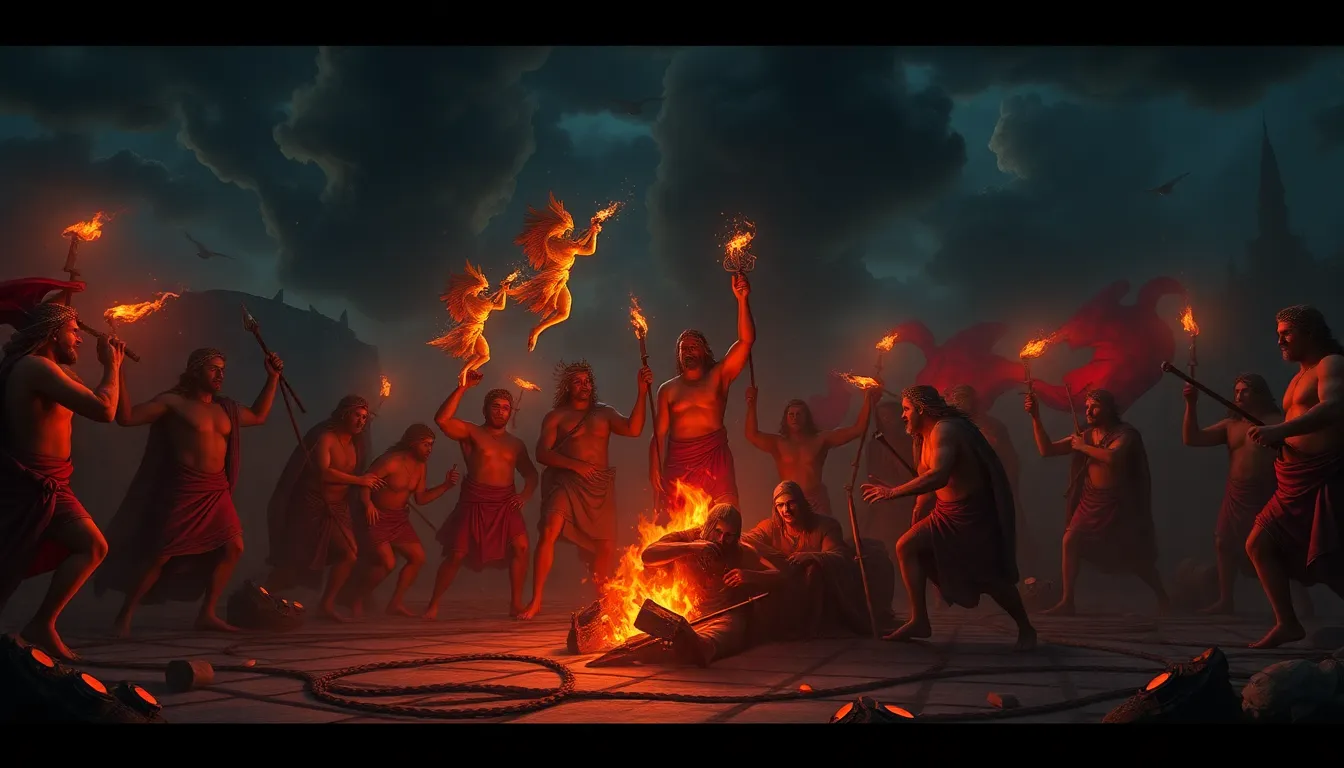
The Trials of Dionysus: Revelry, Madness, and Redemption
I. Introduction
Dionysus, the Greek god of wine, fertility, and festivity, stands as a quintessential figure in mythology, embodying the duality of joy and chaos. He is celebrated not only for his association with wine and revelry but also for the profound themes of madness and redemption that permeate his narrative. Throughout ancient texts and rituals, Dionysus illustrates the complexity of human experience, revealing the thin line that separates ecstasy from insanity. This article aims to explore the various trials of Dionysus, examining how they reflect broader themes of revelry, madness, and ultimately, redemption.
II. The Mythological Origins of Dionysus
Dionysus’ origins are steeped in myth and intrigue, showcasing a lineage that is both divine and human. He is often described as the son of Zeus and Semele, a mortal woman. When Semele was tricked by Hera into requesting to see Zeus in his true form, she perished from the sight of his divine brilliance. Zeus saved the unborn Dionysus by sewing him into his thigh, from which he was later born—a narrative that highlights the god’s dual heritage.
The symbolism surrounding Dionysus is rich and multifaceted. He represents:
- Wine: A symbol of life, joy, and intoxication, embodying both pleasure and the potential for chaos.
- Fertility: As a god of the vine, he is associated with the growth and renewal of nature.
- Ecstasy: The state of transcending normal consciousness, often through dance and celebration.
Dionysus embodies a duality that is essential to understanding his character. He is simultaneously a bringer of joy and a harbinger of chaos, illustrating the complex nature of human desires and instincts.
III. The Role of Revelry in Dionysian Cultures
The festivals dedicated to Dionysus, particularly the Dionysia, were pivotal in ancient Greek culture. These events celebrated not only the god himself but also the communal experience of revelry and creativity.
Key aspects of Dionysian festivals include:
- Theatrical Performances: The Dionysia featured dramatic competitions where playwrights showcased their works, blending storytelling with religious devotion.
- Wine Consumption: Wine played a central role, serving as both a libation to the gods and a means for participants to experience ecstasy and connection.
- Processions: Elaborate parades, often featuring masks and costumes, emphasized the communal nature of the celebrations.
The significance of wine and intoxication in these ancient societies cannot be overstated. It acted as a social lubricant, facilitating bonding and communal experiences while also serving as a medium for spiritual connection. Celebrations of Dionysus emphasized the importance of community, creativity, and the acceptance of life’s extremes.
IV. Madness: The Dark Side of Dionysian Influence
While Dionysus is often associated with joy and festivity, there is a darker aspect to his influence—madness. Several myths illustrate the devastating consequences of unchecked revelry and the god’s capacity to induce madness in mortals.
One of the most notable stories is that of Pentheus, the king of Thebes. His refusal to acknowledge Dionysus’s divinity leads to his tragic downfall. Disguised as a woman, Pentheus spies on the Bacchae, the female followers of Dionysus, and is ultimately torn apart by them, illustrating the catastrophic results of denying the god’s power.
The thin line between ecstasy and insanity is a central theme in these narratives. The psychological interpretations of Dionysian madness suggest that the god’s influence can lead to both liberation and destruction, reflecting the complexities of human emotion and the dangers of excess.
V. The Trials Faced by Dionysus
Dionysus’s journey is marked by numerous trials and challenges, both from mortals and gods. These encounters often highlight themes of rejection, acceptance, and transformation.
Some key trials include:
- The Rejection by Thebes: Upon his arrival in Thebes, Dionysus faces skepticism and rejection from its citizens, particularly from Pentheus.
- The Capture by Pirates: When captured by pirates who seek to exploit him, Dionysus transforms the ship into vines and summons a lion, showcasing his power and the folly of those who underestimate him.
- Confrontations with Hera: The trials imposed by Hera, due to her jealousy of Zeus’s affair with Semele, lead Dionysus on a quest for recognition and acceptance.
These trials serve not only as tests for Dionysus but also as transformative experiences that lead to growth for both himself and those who encounter him. They highlight the importance of embracing one’s true nature and the consequences of denial.
VI. Redemption Through Dionysian Experiences
The concept of redemption is intricately woven into the fabric of Dionysian mythology. Through various experiences, characters find healing and transformation, often through a deeper understanding of themselves and their connection to the divine.
Some key aspects of redemption in Dionysian experiences include:
- Community Healing: Festivals and communal celebrations often serve as a means of catharsis, allowing individuals to release pent-up emotions and find solace in shared experiences.
- Personal Transformation: Characters like Pentheus undergo profound transformations, albeit through tragic ends, highlighting the complexities of identity and acceptance.
- Spiritual Awakening: Dionysian experiences can lead to a greater awareness of one’s place in the cosmos, fostering a sense of belonging and unity.
These themes of redemption remind us of the potential for growth and healing through embracing the full spectrum of our emotions and experiences.
VII. Modern Interpretations of Dionysian Themes
The influence of Dionysian mythology extends beyond ancient texts, permeating contemporary art, literature, and psychology. Modern interpretations of Dionysian themes continue to resonate with audiences, reflecting the enduring relevance of revelry, madness, and redemption.
Some notable aspects include:
- Artistic Expression: Many artists and writers draw upon Dionysian themes to explore the complexities of human nature, often contrasting joy with despair.
- Psychological Insights: The archetype of Dionysus serves as a symbol for exploring the unconscious mind, where creativity and madness coexist.
- Social Commentary: Contemporary society grapples with themes of excess and the consequences of indulgence, echoing the lessons from Dionysian mythology.
These interpretations encourage individuals to reflect on their own lives, exploring the balance between revelry and restraint, and the importance of community in personal growth.
VIII. Conclusion
Dionysus remains a significant figure in mythology and culture, embodying the complexities of human experience through his trials of revelry, madness, and redemption. His narrative encourages us to embrace the full spectrum of our emotions, recognizing the potential for joy and chaos in our lives.
As we explore the enduring legacy of Dionysus, we are reminded of the importance of understanding our own struggles with ecstasy and insanity, and the transformative power of community and acceptance. In the spirit of Dionysus, let us celebrate the complexities of our existence and seek redemption in the shared experiences of life.