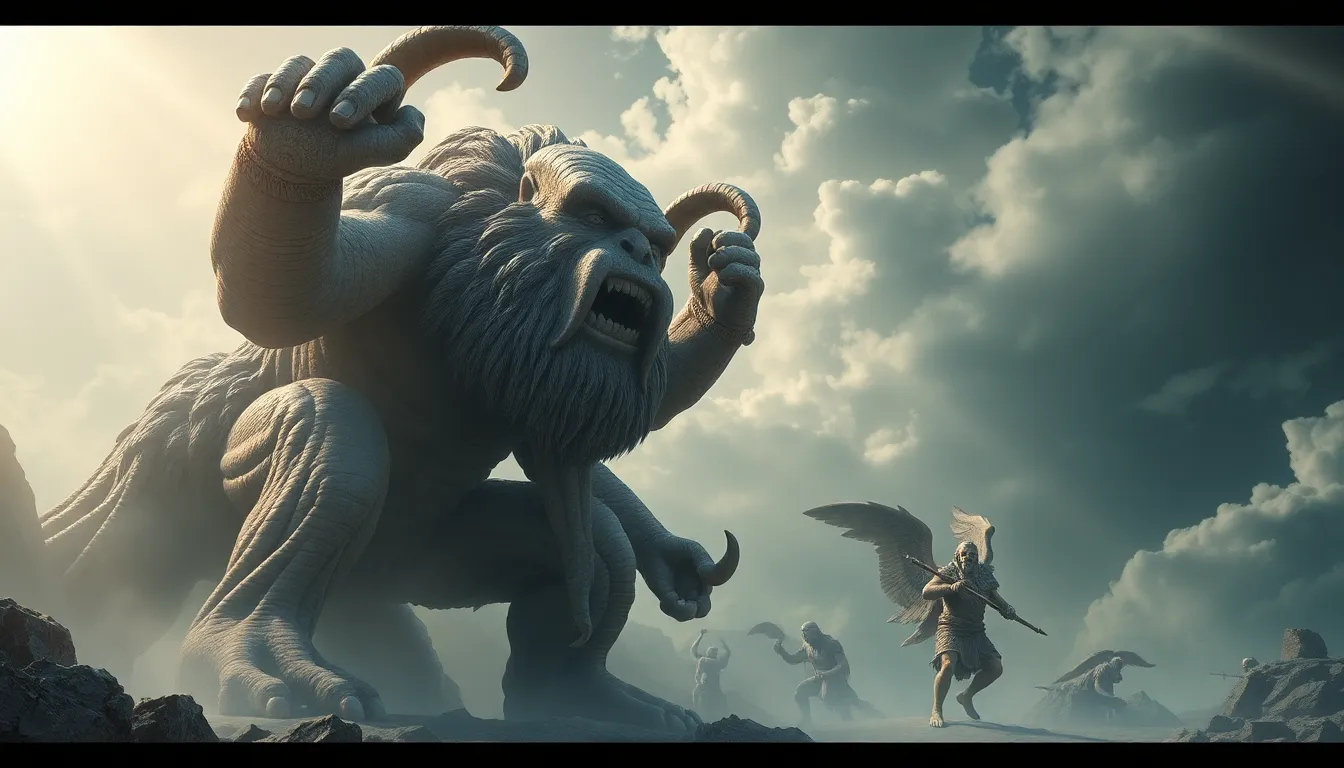
The Trials of the Cyclopes: Giants in the Face of Divine Wrath
I. Introduction to the Cyclopes
The Cyclopes, in ancient Greek mythology, are depicted as giant beings with a single eye in the center of their foreheads. These formidable creatures have captivated the imagination of many, embodying both the raw power of nature and the complexities of divine interaction. Known for their immense strength and craftsmanship, they have played significant roles in various myths, symbolizing both the might and the vulnerability of beings caught in the web of divine wrath.
In ancient Greek culture, Cyclopes were not merely monstrous figures; they represented the primal forces of the earth, capable of both creation and destruction. Their stories often reflect the theme of divine retribution, where the actions of gods lead to the trials and tribulations faced by these giants. This article delves into the origins, myths, and the lessons learned from the trials of the Cyclopes, illuminating their significant place in Greek mythology.
II. Origins and Family of the Cyclopes
The lineage of the Cyclopes can be traced back to the primordial deities Uranus (the Sky) and Gaia (the Earth). According to myth, they were born from the union of these two powerful entities. The Cyclopes are often classified into two distinct groups: the Elder Cyclopes, who are associated with the creation of thunderbolts, and the Later Cyclopes, who are more prominently featured in myths.
A. The lineage of the Cyclopes: From Uranus to Gaia
In Hesiod’s “Theogony,” the Cyclopes are described as the offspring of Uranus and Gaia, alongside the Titans. They are named for their single eye, which sets them apart from other giants in mythology. Their lineage represents the raw and untamed elements of the cosmos, a reflection of the chaotic nature of the universe.
B. The three prominent Cyclopes: Brontes, Steropes, and Arges
Among the Elder Cyclopes, three stand out:
- Brontes: Often associated with thunder, his name literally means “thunderer.”
- Steropes: Known as the “lightning” Cyclops, his name translates to “lightning.”
- Arges: The “bright” Cyclops, who is linked to the brilliance of the thunderbolt.
These three Cyclopes played a crucial role in the forging of Zeus’s thunderbolts, which became one of his primary weapons in the battle against the Titans.
C. The Cyclopes’ role in the creation of Zeus’s thunderbolts
As skilled craftsmen, the Cyclopes were instrumental in the armament of the Olympian gods. Their creation of Zeus’s thunderbolts marked a pivotal moment in the Titanomachy, enabling Zeus to assert his dominance over the Titans and secure his place as the king of the gods. This act of creation is a testament to their dual nature as both creators and victims of divine wrath.
III. The Cyclopes in Greek Mythology
The Cyclopes appear in various myths, illustrating their complexities as both allies and adversaries. Their stories highlight the tension between the divine and the mortal realms, as well as the consequences of divine wrath.
A. Key myths involving the Cyclopes
Two of the most significant myths involving Cyclopes are:
- The Odyssey: Polyphemus and Odysseus: The most famous Cyclops, Polyphemus, encounters the hero Odysseus. This myth explores themes of cunning versus brute strength, as Odysseus blinds Polyphemus to escape captivity.
- Hesiod’s Theogony and the Cyclopes’ involvement in the Titanomachy: The Cyclopes forge weapons for Zeus, playing a pivotal role in the war against the Titans, showcasing their loyalty to Zeus and the Olympians.
B. Portrayal of Cyclopes as both allies and adversaries
The Cyclopes are portrayed variably in myths. While they are often depicted as monstrous and brutish, as seen with Polyphemus, they are also shown as skilled craftsmen and loyal allies to the gods. This duality reflects the complexity of their existence, caught between the primal forces of nature and the divine order established by Zeus.
IV. Divine Wrath: The Concept in Greek Mythology
Divine wrath is a central theme in Greek mythology, manifesting through the gods’ retribution against mortals and other divine beings. This concept underscores the idea that actions have consequences, particularly in the context of the relationship between gods and mortals.
A. Understanding divine retribution and its implications
Divine retribution often serves as a moral lesson within myths. The actions of characters frequently provoke the wrath of the gods, leading to dire consequences. This interplay teaches the importance of humility, respect for the divine, and the acknowledgment of one’s place in the cosmic order.
B. Examples of divine wrath affecting the Cyclopes
The Cyclopes, despite their contributions to the gods, also face the repercussions of divine wrath. Their imprisonment by Zeus following the Titanomachy exemplifies this theme, as their fate is intricately linked to the decisions of the gods.
C. The relationship between gods and mortals in the context of Cyclopes’ trials
The trials faced by the Cyclopes highlight the complex dynamics between divine beings and their creations. The gods, while powerful, often rely on the Cyclopes for their strength and craftsmanship, yet they also impose harsh punishments, reflecting a tenuous balance of power and dependence.
V. The Trials Faced by the Cyclopes
The Cyclopes endure significant trials, particularly due to their association with Zeus and the tumultuous nature of divine wrath.
A. The imprisonment and fate of the Cyclopes by Zeus
After the Titanomachy, Zeus imprisoned the Cyclopes in Tartarus, a place of punishment for the defeated Titans. This act was both a precaution and a punishment, as Zeus sought to control the immense power of the Cyclopes while ensuring they could no longer challenge his authority.
B. Exploring the consequences of their actions and decisions
The Cyclopes’ fate serves as a cautionary tale about the consequences of their association with the Titans. Their loyalty to Zeus during the war was rewarded with powerful weapons, yet their subsequent imprisonment illustrates how divine favor can quickly turn into wrath.
C. The impact of divine wrath on their existence and legacy
The Cyclopes’ legacy is marked by their trials. While they are remembered for their craftsmanship and strength, their imprisonment also serves as a reminder of the volatility of divine favor and the precarious nature of their existence. Their story resonates as a narrative of strength overshadowed by vulnerability.
VI. Symbolism of the Cyclopes in Literature and Art
The Cyclopes have been depicted in various forms of literature and art, symbolizing the dual themes of strength and vulnerability.
A. The Cyclopes as symbols of strength and vulnerability
On one hand, Cyclopes represent immense strength and power, often associated with nature’s raw forces. On the other hand, their trials and tribulations illustrate their vulnerability in the face of divine wrath, making them relatable figures in human experience.
B. Artistic representations throughout history
Cyclopes have been portrayed in art from ancient pottery to modern films, often depicting their single eye and muscular forms. Notable representations include:
- Ancient Greek vases depicting the encounter between Odysseus and Polyphemus.
- Renaissance paintings that explore their mythological significance.
- Contemporary adaptations in literature and media that reinterpret their stories.
C. The influence of Cyclopean mythology in modern storytelling
The legacy of the Cyclopes continues to influence modern storytelling. Their narratives have inspired various adaptations, exploring themes of isolation, power dynamics, and the consequences of pride. The Cyclopes serve as archetypes for larger-than-life characters who grapple with their identities and destinies.
VII. Lessons from the Cyclopes’ Trials
The stories of the Cyclopes offer profound moral and ethical lessons that resonate through time.
A. Moral and ethical implications of their stories
The trials faced by the Cyclopes teach valuable lessons about the importance of humility, respect for power, and the consequences of one’s actions. Their narratives prompt reflection on the balance between strength